

July 26, 2026
Atiku Demands Accountability For 7.98 Trillion Oil Windfall
4 hours ago | General News
Atiku Demands Accountability For ₦7.98 Trillion Oil Windfall
Questions Massive Borrowing Spree During Revenue Boom
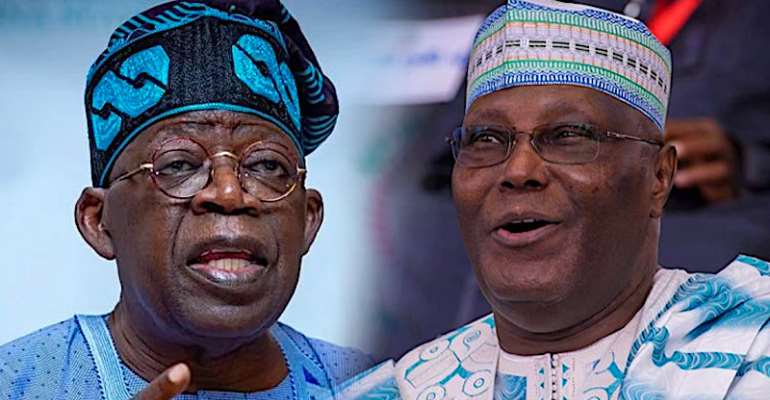
Former Vice President and ADC presidential candidate Atiku Abubakar has demanded that the Tinubu administration account for an unprecedented surge in domestic borrowing despite a massive oil revenue windfall driven by high global crude prices. In a statement issued by his media aide, Phrank Shaibu, Atiku argued that borrowing heavily during a revenue boom defies economic logic and places an unfair burden on the nation’s future.
He criticized the administration’s fiscal management as increasingly contradictory, opaque, and devoid of transparency. Atiku called on the government to open its books and clarify why a significant rise in oil earnings has not reduced the country’s reliance on record-breaking loans.
He noted that the Federal Government has already borrowed about ₦5 trillion from the domestic bond market in the first half of 2026—nearly 80 per cent of the amount borrowed during the same period in 2025.
“Such aggressive borrowing would only make sense if government revenues had collapsed,” Atiku said. “But the exact opposite is the case.”
According to him, the 2026 Appropriation Act benchmarked crude oil at $64.84 per barrel, while Brent crude has averaged about $92 per barrel between March 1 and July 14, 2026. Since Nigerian crude typically trades above Brent, he argued that the country’s actual earnings have been significantly higher than projected.
“This raises two unavoidable questions,” Atiku stated, adding, “why is a government enjoying an extraordinary oil windfall borrowing at almost twice last year’s pace as though the nation were in financial distress? And where has the money gone?”
He explained that the gap between the budget benchmark and prevailing oil prices represents an additional $27.15 on every barrel sold. At an average production of 1.5 million barrels per day, Nigeria would have earned approximately $42.7 million in extra revenue daily. Over the 135-day period from March 1 to July 14, this amounts to an estimated $5.76 billion, or roughly ₦7.98 trillion.
“Nigerians deserve a full accounting of this windfall,” Atiku said. “Where has the money gone? Why has there been no transparent disclosure of the proceeds from excess crude sales? Why is government borrowing heavily when oil revenues are significantly above budget projections?”
The former Vice President recalled that previous administrations maintained established fiscal mechanisms, including the Sovereign Wealth Fund and other fiscal buffers, for managing and reporting excess crude revenues.
“Today, Nigerians have been left completely in the dark. A government that cannot account for an estimated ₦7.98 trillion in additional oil receipts has no moral justification for plunging the country deeper into debt,” he said.
Atiku further lamented that despite higher oil revenues and the removal of fuel subsidies, millions of Nigerians continue to endure severe economic hardship.
He noted that recent United Nations findings indicate that nearly 80 per cent of Nigerians cannot afford a decent daily meal, while critical infrastructure continues to deteriorate despite repeated assurances that subsidy savings would be invested in roads, healthcare, education, and other essential sectors.
“It is becoming increasingly clear that this administration lacks the transparency, discipline, and competence required to manage the nation’s resources,” he said. “Rather than allowing Nigerians to benefit from favourable global oil prices, it has chosen a path of endless borrowing, mounting debt, and deepening poverty.”
Outlining his economic agenda, Atiku said an ADC-led government would institute a rules-based fiscal framework under which every naira earned above the budget oil benchmark would be transparently accounted for.
“We will deploy excess revenues to reduce Nigeria’s debt burden, strengthen fiscal buffers, and invest strategically in infrastructure, education, healthcare, agriculture, and other productive sectors that create jobs and drive sustainable economic growth,” he said.
He also pledged to restore transparency in oil revenue management through regular public reporting of excess crude earnings, reduce the cost of governance, eliminate waste, block leakages, and ensure that borrowing is undertaken only for productive investments capable of generating measurable economic returns.
“Nigerians deserve answers. They deserve accountability. Above all, they deserve a government that manages national wealth in the public interest—not one that presides over unprecedented opacity while asking future generations to repay debts accumulated in the midst of plenty,” Atiku cautioned.
Originally published on www.thenigerianvoice.com
