

July 30, 2026
THE WORLD CUP WALLET: Finding Real Value in Hosting the World’s Biggest Game


THE WORLD CUP WALLET: Finding Real Value in Hosting the World’s Biggest Game
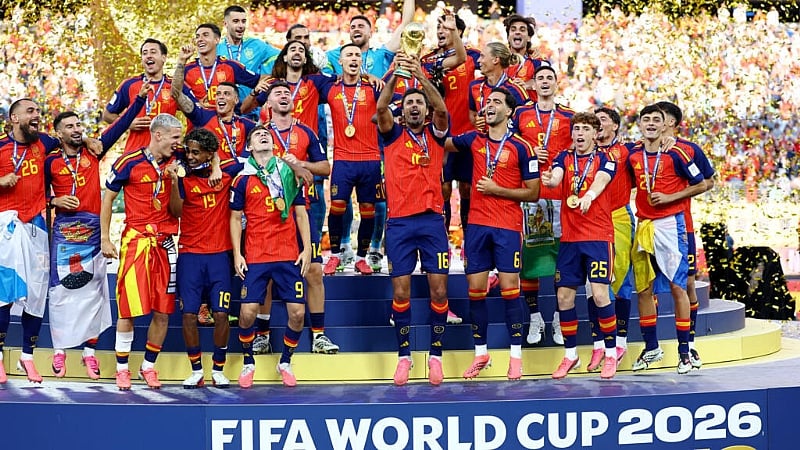
When a country wins the bid to host the biggest sporting event on earth, it is celebrated as a monumental economic victory. We are told stories of booming hospitality, endless tourist dollars, and a massive national wealth injection. But as the 2026 World Cup matches light up screens across North America, a different reality is unfolding behind the scenes.
While everyone is talking about tactical formations, star players, and dramatic knockout-stage finishes, it is time to look at the cold, hard cash component of it all. When the final whistle blows and the fans fly home, do the host countries profit, or are they left holding a massive, empty wallet?
Let’s delve into it.
The Illusion of the Big Numbers
If you listen to the pre-tournament hype, the financial outlook sounds spectacular. FIFA confidently predicts that the ongoing 2026 tournament will inject over $30 billion in economic impact into the host nations of the US, Canada, and Mexico. It sounds like a guaranteed jackpot, right? Well, independent economists have a one-word response to that staggering headline: illusion.
A massive global event does not automatically mean the host country gets richer. The massive headline figures floating around are gross revenue numbers, not net profit for the local communities.
When a fan buys a premium ticket to a match in Atlanta, orders a jersey at a fan zone in Vancouver, or watches a broadcast via a major network in Monterrey, where does that cash go? It doesn’t stay in the local economy to build schools, fix roads, or support small businesses.
Instead, it bypasses the host country completely and flows straight into FIFA’s tax-exempt bank account and the corporate balance sheets of official global sponsors such as Visa, Coca-Cola, Adidas, and Budweiser.
The Real Winners and Losers
For a select group of local businesses directly in the path of the tournament crowd, the revenue jump is very real. Bank of America credit and debit card data from the group stage shows that spending by non-local visitors jumped 16.7% in every World Cup.
Hotels are capitalizing heavily on this surge. For example, Vancouver has seen peak match-night prices hitting an average of $1,455 per night, while cities like Guadalajara saw room rates spike by up to 385% following the tournament draw. Restaurants, bars, and local transport operators near the stadiums are operating at absolute capacity.
However, this micro-boost hides a major phenomenon called the Substitution (or Displacement) Effect. While hotels fill up with high-paying soccer fans, they simultaneously lose their most profitable, steady clients. Regular tourists, business travellers, and corporate conventions actively avoid host cities during a mega-event to escape hyper-inflated prices, traffic gridlock, and heavy security checkpoints.
Data from hotel groups reveals an eye-opening trend: in Toronto, hotel occupancy during the third week of June dropped to 72%, down from 86% during the exact same week last year. Destination Vancouver also reported that overall, June booking paces dropped 20% compared to 2025 levels. The World Cup often doesn’t create entirely new wealth; it simply shifts money from normal corporate travel over to sports tourism.
Furthermore, much of the money spent by international visitors doesn’t stay local. This is known as Revenue Leakage. When a fan buys an international airline ticket or books a room at a multinational
hotel chain through a global digital travel platform, that cash immediately exits the host city and heads to overseas corporate headquarters, limiting the net economic gain left behind for the local community.
The Host Country’s Cost Bill
When it comes to paying for a World Cup, there is a massive difference between building everything from scratch versus just running the event. To understand the true cost, we must look at the severe financial damage past hosts suffered from building new stadiums, and the heavy operational bills that current hosts face.
In the past, host nations fell into a dangerous financial trap: spending billions of public taxpayer money to build brand-new, hyper-luxurious stadiums in cities that didn’t need them. Because these massive projects were handed to major corporate construction consortiums (such as Odebrecht and Andrade Gutierrez in Brazil), costs spiralled completely out of control due to overpricing and mismanagement.
The Mané Garrincha stadium in Brazil’s capital, Brasília, saw its construction budget triple to an eye-watering $900 million in public funds. Because Brasília has no top-flight professional soccer team to fill its 72,000 seats, the world’s second-most expensive stadium was famously used as a parking lot for municipal buses just a year after the tournament ended.
Brazil spent another $300+ million to build the Arena da Amazônia deep in the Amazon rainforest city of Manaus. With local league games drawing tiny crowds, the stadium cost $233,000 a month just to maintain, forcing local authorities to consider selling it off to private companies just to stop draining the city’s coffers.
Qatar spent roughly $6.5 billion to $10 billion purely on constructing seven ultra-modern stadiums and renovating an eighth. For a small nation, keeping these venues running post-tournament presents a massive financial deficit, prompting plans to completely dismantle or downsize multiple arenas.
What Host Countries Spend on Today
For the ongoing 2026 World Cup, the US, Canada, and Mexico sidestepped the stadium construction trap entirely. By utilizing existing NFL and Mexican stadiums, their baseline construction bill was $0.
However, even with the stadiums already built, a host government’s operational bill still stretches into a few millions.
FIFA mandates highly specific stadium conditions. Stadiums like MetLife Stadium in New Jersey had to execute over $100 million in structural upgrades. Because FIFA forbids artificial turf, venues had to pay millions to rip out their synthetic NFL turf and execute massive engineering projects to install temporary, high-tech natural grass pitches. They even had to physically remove sections of lower-bowl steel seating just to make the field corners wide enough for soccer rules.
Also, security remains the single largest operational expense. Host governments and federal agencies are spending over $1 billion on tournament security. This money funds advanced anti-drone defence systems, heavy cybersecurity frameworks, counter-terrorism operations, and thousands of extra police officers working overtime to guard expansive fan zones.
Furthermore, moving millions of international fans between airports, hotels, and stadiums requires intense logistics. Transit authorities in individual host regions have had to allocate between $35 million and $48 million just to scale up train frequencies, run 24-hour bus routes, and handle the localized transportation bottleneck.
How to Actually Make a Profit
Despite the heavy operational bills, hosting a World Cup is not a guaranteed financial loss. If a country abandons the old strategy of using the tournament as a vanity trophy and instead treats it like a strategic corporate investment, they can absolutely come out ahead.
Here is the exact financial playbook that host nations use to turn a six-week tournament into a long-term profitable asset.
The ultimate goal of a modern World Cup isn’t to break even during the six weeks of matches. The goal is to use the event as the world’s largest, prime-time television commercial.
During the tournament, billions of global viewers watch broadcasts showcasing the host cities. If a city that isn’t traditionally a global tourism hotspot such as Kansas City, Monterrey, or Vancouver delivers a seamless, vibrant experience for fans, it alters the city’s international destination image. The financial payoff is deferred but massive: a fan who has an incredible experience is highly likely to return over the next decade as a luxury vacationer, bring business conventions to the area, or recommend the destination to others, driving long-term foreign exchange inflows.
Secondly, capital spent on a sports stadium that sits empty after the finals is dead, non-performing capital. However, capital spent on foundational urban infrastructure is highly productive. Smart host countries tie their World Cup operational budgets to pre-existing, long-term national development plans. Good examples of this are expanding local subway lines to handle match traffic, upgrading airport terminal capacities for international arrivals, widening critical highway networks near venue hubs. Once the tournament ends, that infrastructure does not disappear. It remains in place for the next 30 years, lowering logistics costs, reducing commuting times for the local workforce, and making the city’s entire economy run faster and more efficiently.
Moving on, a modern stadium should never be just a sports venue; it must be treated as a commercial real estate asset. Savvy host cities use the momentum of the World Cup to transform stadium perimeters into year-round, active entertainment districts. By leasing out the surrounding land to international hotel chains, fine-dining restaurants, and retail brands post-tournament, the local government creates a permanent commercial hub. When you combine this with selling the corporate naming rights of the upgraded stadium to major financial institutions or global brands, the asset generates continuous commercial licensing fees and a reliable, permanent stream of property and sales tax revenue for the public coffers.
In conclusion, building shiny, multi-million-dollar stadiums from scratch is a proven financial trap that leaves host nations with empty venues and massive taxpayer debt. A smarter gameplan avoids construction costs entirely, focusing capital instead on permanent infrastructure like transit networks and long-tail global tourism branding. While FIFA walks away with the short-term ticket revenue, a disciplined host country skips the vanity sprint to win the long-term economic marathon.
Erica Tenkorang
[email protected]
Disclaimer: “The views expressed in this article are the author’s own and do not necessarily reflect ModernGhana official position. ModernGhana will not be responsible or liable for any inaccurate or incorrect statements in the contributions or columns here.”
Follow our WhatsApp channel for meaningful stories picked for your day.

Top Stories


6 hours ago


Originally published on www.modernghana.com
