

August 15, 2026
‘My goal was never to become an influencer’ – Dr George, one of Ghana’s leading public health voices online, opens up on his journey
Advertisement
‘My goal was never to become an influencer’ – Dr George, one of Ghana’s leading public health voices online, opens up on his journey
)
,fit(700:467))
‘My goal was never to become an influencer’ – Dr George, one of Ghana’s leading public health voices online, opens up on his journey
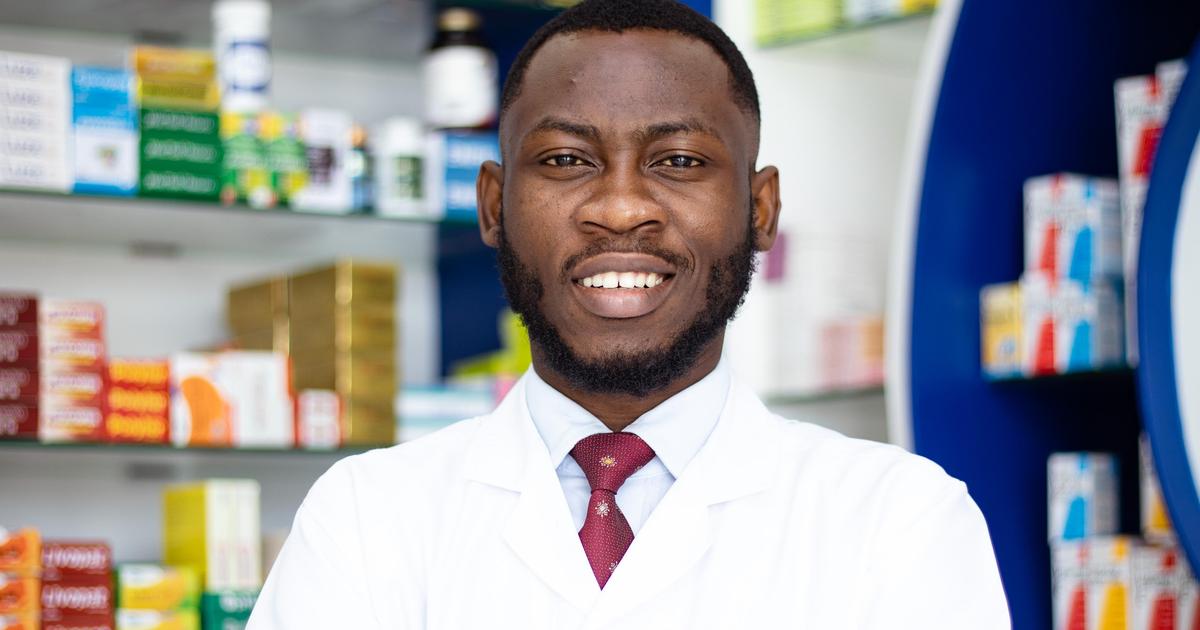
The pharmacy counter is where patient care begins for many healthcare professionals, but for Dr George Anagli, it became the starting point for something much bigger.
Advertisement
-
Pulse Ghana speaks exclusively to Dr George Anagli about his journey into public health advocacy.
-
He reveals how a last-minute switch from Petroleum Engineering to Pharmacy shaped his career.
-
Dr George explains how COVID-19 inspired his digital health advocacy and mission to fight misinformation.
Advertisement
In an exclusive interview with Pulse Ghana, the pharmacist and public health advocate opened up about the unexpected path that led him into pharmacy, the personal experiences that shaped his commitment to health education, and how a decision made during the COVID-19 pandemic eventually turned him into one of Ghana’s recognised voices in digital health.
His growing presence on social media may have earned him recognition as a trusted health voice, but becoming an influencer was never part of the plan. His motivation came from something much closer to home.
Beyond social media, Dr George sees himself first as a pharmacist and public health advocate.
My greatest passion is helping people make informed decisions about their health. Whether I’m in a pharmacy counselling a patient, speaking at a community health programme, or creating a short educational video online, the mission is the same: to make accurate health information understandable and accessible.
Advertisement
That conviction was shaped by both his professional experience and personal reality. During his training and professional practice, he noticed that many health problems were not caused by a lack of medicines alone, but by a lack of reliable information.
People delayed seeking care, misused medications or fell victim to misinformation because they did not know where to find trustworthy advice.
)
‘My goal was never to become an influencer’ – Dr George, one of Ghana’s leading public health voices online, opens up on his journey
The issue was also personal for Dr George, who saw family members and close relatives, including well-educated people, struggle to make informed decisions about their health and medications.
Advertisement
That realization wasn’t only shaped by my professional experience, it was also deeply personal. I saw family members and close relatives, many of whom were well educated, struggle to make informed decisions about medications and their health simply because they lacked access to reliable information.
Also Read: Malt and milk does not give blood or treat anaemia, pharmacist Dr Anagli debunks viral myth
He continued:
Some genuinely wanted to do the right thing but had been misinformed, while others didn’t know where to turn for trustworthy advice. It made me ask myself: if people within my own family face these challenges, how many more people across Ghana and beyond are experiencing the same thing?
That question became a defining moment in his journey.
Advertisement
I realised that my responsibility as a pharmacist shouldn’t end at the dispensary. It should extend into homes, schools, marketplaces and, in today’s world, digital spaces where millions of people seek answers every day.
That conviction eventually inspired the creation of RxWithDrGeorge and his decision to use digital platforms to make health information easier to understand and more accessible.
My goal was never to become an influencer; it was simply to make health information easier to understand and more accessible to everyone.
From Petroleum Engineering to Pharmacy
)
‘My goal was never to become an influencer’ – Dr George, one of Ghana’s leading public health voices online, opens up on his journey
Dr George did not grow up dreaming of becoming a pharmacist. His initial ambition was to pursue a completely different career.
Growing up, I never imagined I would become a pharmacist. In fact, my initial ambition was to study Petroleum Engineering.
Everything changed during his final year at Presbyterian Boys’ Secondary School (PRESEC Legon), when he began researching the different programmes available at university.
Pharmacy caught his attention, particularly because of the combination of science and service.
Advertisement
The more I read, the more I became fascinated, not just by medicines themselves, but by the science behind them and the role pharmacists play in improving people’s lives.
I realised that pharmacy offered something I was truly looking for: the opportunity to combine science with service and make a meaningful difference in people’s health every single day.
The decision came shortly before he submitted his university application.
Without anyone influencing me, I changed my first-choice programme from Petroleum Engineering to Pharmacy just before submitting my application. Looking back, it remains one of the best decisions I have ever made.
Advertisement
That last-minute decision ultimately shaped the direction of his career.
Today, I have absolutely no regrets. Pharmacy has given me opportunities far beyond what I imagined, not only to care for patients, but also to educate thousands of people through digital media, advocate for better healthcare, and contribute to conversations that shape public health in Ghana. It has become more than a profession; it has become my purpose.
Also Read: Child Online Safety: 5 things parents should do before handing over a device to their children
COVID19 and When healthcare education moved online
)
Advertisement
The idea of reaching people with health information had been developing long before the COVID-19 pandemic. The lockdown, however, gave Dr George the opportunity to act on it.
In 2020, he was a fourth-year Doctor of Pharmacy student when universities closed and students returned home. With more time available, he rebranded his social media platforms under the name Dr George and committed himself to creating simple, evidence-based health education content.
His approach was to treat every piece of content as an extension of the counselling he would provide to a patient.
I often say that every post I create is like counselling a patient except that instead of educating and empowering one person across the pharmacy counter, I have the opportunity to educate and empower thousands of people at once.
Advertisement
Dr George never set out to build a large following or become a recognised social media personality.
I didn’t have a target number of followers, and I certainly didn’t envision becoming one of the recognised voices in Ghana’s digital health space. I was simply doing what I loved, sharing knowledge, correcting misinformation, and helping people make better health decisions.
His audience grew through consistency, although several posts and campaigns helped introduce his work to a wider audience.
One of his early posts focused on asthma and encouraged people living with the condition to remember their inhaler when leaving home.
Advertisement
If you are living with asthma, remember to pick your inhaler before you pick your mobile phone whenever you are leaving home.
Another memorable moment came during an RxWithDrGeorge X Space on sickle cell disease, when one of his guests, Dr Amanski, made a statement that sparked conversations about genotype awareness.
If you know your partner’s favourite sexual position but you do not know their genotype, then your priorities need to be reconsidered.
His advocacy for Pharmacist House Officers over unpaid salaries also brought new attention to his platform and demonstrated how healthcare professionals could use digital platforms to advocate for accountability and change.
Despite these moments, Dr George does not attribute his growth to one particular post or campaign.
Honestly, I would not attribute my growth to one particular post or campaign. If there is one thing that has shaped my journey, it is consistency.
He believes people stayed because they found value in the information he consistently shared.
I believe people did not begin following me because of one viral post. They stayed because they consistently found value in what I shared.
Also Read: From toilet attendant to UMaT Vice-Chancellor: The inspiring story of Professor Kumi-Boateng
I’ve summarized some important things you need to know about kidney health in this video. Take your time, watch, learn and share… pic.twitter.com/J6BUiJpm53
— Dr. George (@GeorgeAnagli) March 12, 2026
Building a stronger voice for healthcare professionals
His experience in the digital space also exposed Dr George to a wider gap in healthcare communication.
Ghana has many highly skilled healthcare professionals with valuable knowledge and expertise, but communicating that knowledge to the general public in simple and relatable language requires a different skill.
Many healthcare professionals want to educate the public but struggle to translate complex medical concepts into language that ordinary people can easily understand. Others are unsure how to build authentic personal brands, establish credibility or use digital platforms effectively.
Dr George now coaches healthcare professionals and organisations on social media branding and digital health communication.
The goal is not simply to grow their online presence. The goal is to increase their impact and ensure that credible health voices are heard.
He believes this work is particularly important because misinformation and disinformation can spread rapidly online.
This is especially important today because misinformation and disinformation spread faster than ever before.
If credible healthcare professionals are not visible and actively communicating, misinformation will continue to fill that space.
His ambition, therefore, goes beyond helping healthcare professionals gain followers.
My goal is not to create influencers. My goal is to help create a generation of trusted health communicators who use digital platforms to improve public health.
Also Read: FDA confiscates smoked fish after Buzstop Boys expose unhygienic fish handling in Tema Newtown
Why rural healthcare needs more than postings
)
Dr George’s public health work has also given him insight into some of the challenges facing healthcare delivery in rural Ghana.
Dr George’s public health work has also given him insight into some of the challenges facing healthcare delivery in rural Ghana.
He believes most healthcare professionals genuinely want to serve wherever they are posted, but the realities of working and living in some rural communities can make it difficult to accept or remain in such postings.
Inadequate infrastructure and equipment remain major concerns. Healthcare professionals need the right tools, diagnostic services and medicines to provide the standard of care for which they have been trained.
Living conditions can also influence decisions about rural postings. In some communities, healthcare workers face inadequate accommodation, unreliable electricity and water supply, limited internet connectivity, poor road networks and fewer educational opportunities for their children and families.
Career development is another factor, with specialist training, research opportunities and mentorship often more accessible in urban centres.
For Dr George, the solution requires more than simply assigning healthcare professionals to rural areas.
The solution, therefore, goes beyond simply posting healthcare professionals to rural areas. We need to make rural practice attractive.
That means investing in modern healthcare infrastructure, improving staff accommodation, providing incentives and competitive remuneration, creating opportunities for continuous professional development, strengthening security where necessary, and ensuring healthcare workers have the resources they need to succeed.
He also believes healthcare professionals have a responsibility to serve communities where they are needed.
Rural communities deserve the same quality of healthcare as urban communities.
Also Read: Do you know keeping your wallet in your back pocket could be causing your back pain? Here’s why
His three priorities for Ghana’s healthcare system
If appointed Minister for Health, Dr George says his priorities would focus on disease prevention, the healthcare workforce and digital health.
His first priority would be to move Ghana’s healthcare system towards greater disease prevention through community screening programmes, stronger vaccination campaigns and health education.
I would significantly expand community health screening programmes, strengthen vaccination campaigns, and make health education a core part of our educational system from the basic school level.
Also Read: 5 thoughtful things women can do for their partners (that mean more than expensive gifts)
His second priority would be strengthening and protecting the healthcare workforce.
I would invest in better working conditions, modern equipment, continuous professional development, and meaningful incentives for healthcare professionals serving in underserved communities.
His third priority would be digital health, which he believes has the potential to improve access and efficiency across the healthcare system.
I would support the expansion of telemedicine services, strengthen electronic health records, improve digital appointment and referral systems, and encourage innovation by supporting credible digital health platforms that provide reliable health information and services.
Ultimately, Dr George wants Ghana to build a healthcare system that does more than respond to illness.
Ultimately, my vision would be to build a healthcare system that prevents more disease than it treats, empowers healthcare professionals to deliver their very best, and uses innovation to make quality healthcare accessible to every Ghanaian, regardless of where they live.
His journey from a last-minute decision to study Pharmacy to becoming a public health advocate has been shaped by a desire to serve beyond the traditional healthcare setting.
The audience may have grown, but the purpose has remained the same.
For Dr George, every post is still an opportunity to counsel a patient, only now that patient could be thousands of people scrolling through their phones.
Advertisement
Latest Videos

Advertisement
Videos
)
)
)
Advertisement
Advertisement
More from Pulse Ghana
,fit(112:112))
,fit(112:112))
,fit(112:112))
,fit(112:112))
)
Advertisement
Originally published on www.pulse.com.gh
