

July 16, 2026
Lessons FromTthe Western Region’s Developmental Revolution
4 hours ago | Public Statement
Lessons FromTthe Western Region’s Developmental Revolution

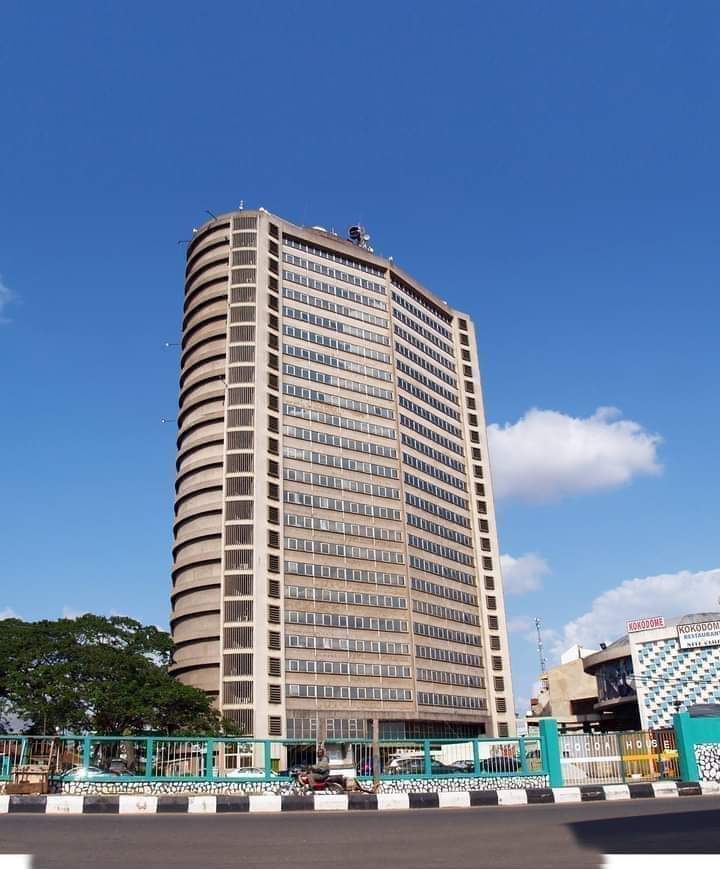
Cocoa House Ibadan (Built 1964)
Has an Omoluwabi Economy ever existed in practice?
Yes.
We called it the Western Region.
Not because the Western Region was perfect.
Not because every policy succeeded.
And not because its leaders were infallible.
Rather, because it remains the clearest example in Nigerian history of a developmental philosophy rooted in the cultural values of a people and translated into measurable economic, educational, and social outcomes.
The Western Region did not merely generate wealth.
It developed people.
That is the distinction.
And that is why its experience remains relevant to the discussion of an Omoluwabi Economy today.
The Cocoa Myth
Whenever the achievements of the Western Region are discussed, the immediate response is often the same:
“The West had cocoa.”
That statement is true.
But it misses the point entirely.
Cocoa was not the achievement.
Cocoa was the resource.
The achievement was the ability to transform agricultural revenue into human development.
Many societies possess natural resources.
Some become prosperous.
Others remain poor.
The difference is not the resource.
The difference is the philosophy guiding its utilization.
The Western Region used cocoa revenues to build schools, train teachers, expand healthcare, establish farm settlements, develop infrastructure, support cooperative institutions, and create industrial enterprises.
The question therefore is not whether the Region had cocoa.
The question is why it chose to invest cocoa revenues in people rather than consume them.
The answer lies in its developmental philosophy.
Developing People Before Balance Sheets
In Part II, we defined the Omoluwabi Economy as a system in which economic activity serves human development and human development becomes the primary source of wealth creation.
The Western Region embodied this principle long before the term “Omoluwabi Economy” was conceived.
Its leaders understood a simple truth:
A society becomes prosperous when it develops its people before it develops its balance sheet.
That understanding shaped policy.
Universal Primary Education was not merely an educational policy.
It was an economic policy.
The expansion of healthcare was not merely a social policy.
It was an economic policy.
The promotion of agricultural modernization was not merely a farming policy.
It was an economic policy.
The Region treated knowledge, skill, discipline, and productivity as assets capable of generating future wealth.
Human capital was placed at the centre of development.
That was the true innovation.
Freedom for All, Life More Abundant
The developmental revolution of the Western Region did not emerge in a vacuum.
It was rooted in the philosophy of the Egbe Omo Oduduwa and later translated into governance through the Action Group.
Its guiding principle was captured in the phrase:
“Freedom for All, Life More Abundant.”
This was more than a political slogan.
It was a statement of political economy.
It recognized that freedom without opportunity is incomplete.
It recognized that prosperity without social responsibility is unsustainable.
And it recognized that development must be measured by the advancement of the people rather than the accumulation of state power.
The objective was not simply economic growth.
The objective was the creation of capable citizens.
That objective remains central to the Omoluwabi Economy.
The Human Capital Revolution
Perhaps the greatest achievement of the Western Region was not Cocoa House.
It was the creation of a generation.
The schools built during that era produced teachers, engineers, doctors, lawyers, scientists, administrators, entrepreneurs, and professionals whose influence extended far beyond the Region itself.
This is an important distinction.
Physical infrastructure can deteriorate.
Buildings can decay.
Industries can collapse.
But investments in people continue to generate returns across generations.
That is why the true legacy of the Western Region was not “concrete”.
It was human capital.
The Region understood that knowledge is the only resource capable of reproducing itself indefinitely.
That lesson is even more relevant in the twenty-first century than it was in the twentieth.
From Cocoa House to the Knowledge Economy
The challenge before Yorubaland today is fundamentally different from the challenge faced by the Western Region.
The world economy is no longer driven primarily by agricultural exports.
It is increasingly driven by knowledge, technology, innovation, data, research, and intellectual property.
Yet the underlying principle remains unchanged.
Yesterday’s cocoa has become today’s knowledge.
Yesterday’s farm settlement has become today’s innovation hub.
Yesterday’s regional schools have become today’s research institutions.
The central question remains exactly the same:
How do we transform available resources into human development?
The Omoluwabi Economy answers that question by placing education, technology, entrepreneurship, language development, and innovation at the centre of economic strategy.
Its purpose is not merely to participate in the global economy.
Its purpose is to compete within it.
The Federalism Factor
There is another lesson from the Western Region that cannot be ignored.
Its developmental success occurred within a Federal structure that provided substantial regional autonomy.
The Region possessed sufficient political space to experiment, innovate, and pursue its own priorities.
That space no longer exists in the same form.
As political and economic power became centralized, regional initiative became increasingly constrained.
This is why discussions about Restructuring are not merely Constitutional debates.
They are development debates.
A people cannot fully pursue a developmental philosophy if they lack the political authority to implement it.
The question therefore is not simply whether Federalism is desirable.
The question is whether meaningful development is possible without it.
The experience of the Western Region suggests otherwise.
The Western Region was not alone in pursuing a distinctive developmental vision during the post-colonial era.
Across Africa, newly independent states experimented with different models of development.
Tanzania pursued Ujamaa under Julius Nyerere.
Ghana under Kwame Nkrumah embarked on an ambitious state-led modernization programme.
Each sought to define a uniquely African path to development.
Yet many of these projects gradually receded from everyday political consciousness.
They remain important historical references, but they no longer function as living developmental traditions capable of mobilizing their peoples around a shared political-economic vision.
The Western Region presents a different case.
More than sixty years later, its achievements remain part of Yoruba political memory.
Its educational revolution, social welfare programmes, cooperative institutions, and developmental ambitions continue to be invoked in contemporary debates.
The reason is not nostalgia alone.
It is because the Region’s developmental philosophy was deeply connected to the cultural life of the people themselves.
The developmental project did not stand apart from Yoruba society.
It emerged from it.
The principles that animated the Western Region were not abstract theories imported from elsewhere.
They drew strength from an existing cultural framework that emphasized education, responsibility, self-improvement, communal advancement, and public service.
Just as importantly, the Federal structure of the period provided the political space necessary for those values to be translated into policy.
This distinction matters.
Developmental ideas endure when they become part of a people’s self-understanding.
They fade when they exist only as state programmes.
Even Tanzania, the union between Tanganyika and Zanzibar, despite its longevity and substantial external partnerships, including extensive Chinese engagement, did not generate the kind of regional developmental identity that the Western Region embedded within Yoruba political consciousness.
The lesson is not that one model was superior to another.
The lesson is that culture, political autonomy, and development reinforce one another.
When a people possess the freedom to develop according to their own priorities, development becomes more than an economic programme.
It becomes part of their collective identity.
The Western Region is still remembered because it was not merely a development programme; it was the political expression of a people developing according to their own values within a Federal framework.
That is what happened in the Western Region.
And that is one of the most important lessons for the Omoluwabi Economy
The Lesson
The lesson of the Western Region is not that Yorubaland should return to the 1950s.
History does not move backwards.
The lesson is that a people with confidence in its values, clarity of purpose, and freedom of action can transform its society.
The Omoluwabi Economy is not an exercise in nostalgia.
It is an attempt to recover the developmental logic that made the Western Region successful and adapt it to contemporary realities.
The challenge before us is not to recreate “Cocoa House”.
The challenge is to build its twenty-first-century equivalent.
Not merely a building.
Not merely an institution.
But a civilization capable of producing knowledge, innovation, prosperity, and human flourishing.
That is the unfinished work of the Omoluwabi Economy.
In Part IV, we shall examine one of the most neglected foundations of economic development:
Language, Human Capital, and Wealth Creation: Why Mother-Tongue Education Matters.
Editorial Board
Yoruba Referendum Committee
Originally published on www.thenigerianvoice.com
