

July 30, 2026
10 key constitutional recommendations accepted by Government in new reform proposals
Advertisement
10 key constitutional recommendations accepted by Government in new reform proposals
)
,fit(700:467))
Top 10 constitutional recommendations accepted by Government in new reform proposals
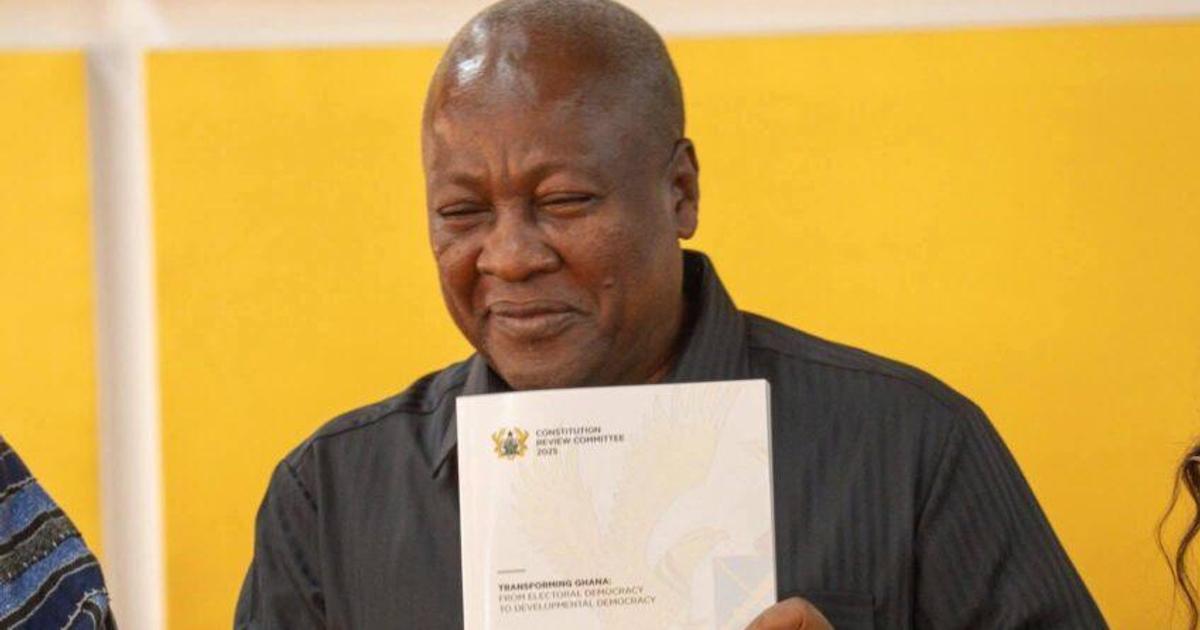
The government has accepted several far-reaching recommendations from the Constitutional Review Committee, signalling what could become the most significant changes to Ghana’s 1992 Constitution in decades if approved through the required constitutional amendment process.
Advertisement
-
The article highlights 10 key constitutional reform recommendations accepted by the government from the broader proposals submitted by the Constitutional Review Committee.
Advertisement
-
The selected recommendations focus on major areas of governance, including the Presidency, Parliament, Judiciary, political parties and local government.
-
The proposed changes form part of ongoing efforts to review and modernise Ghana’s constitutional framework, subject to the required amendment processes.
The reforms, outlined in the government’s White Paper and presented by Attorney-General and Minister for Justice, Dr Dominic Ayine, seek to modernise key aspects of governance, strengthen democratic institutions and improve public accountability. They touch on the Presidency, Parliament, the Judiciary, political parties, local government and the country’s electoral system.
Among the headline proposals are extending the presidential and parliamentary term from four to five years, lowering the minimum age for presidential candidates from 40 to 35 years, capping the number of ministers and Members of Parliament, requiring the President to pay taxes on salary and allowances, and introducing the election of all Metropolitan, Municipal and District Chief Executives (MMDCEs).
Advertisement
)
Constitutional Review Committee proposes 5-year presidential term, 30-year age limit
The government has also endorsed reforms aimed at strengthening political party democracy, expanding opportunities for Ghanaians with dual citizenship to hold public office, reforming the judiciary and setting constitutional timelines for resolving presidential election petitions.
Below are the 10 key constitutional reform recommendations accepted by the government.
1. Extend Presidential and Parliamentary Terms from Four to Five Years
Advertisement
)
Swearing in of Ghana’s President John Mahama
-
The tenure of the President will be increased from four (4) years to five (5) years.
-
The term of Parliament will also be extended to five (5) years to align with the presidential cycle.
-
The objective is to provide governments with more time to formulate, implement and assess policies while reducing the disruption caused by frequent election cycles.
Also Read: Attorney-General heads to Supreme Court to challenge Court of Appeal’s acquittal of Ex-MASLOC boss
2. Reduce the Minimum Age Requirement for Presidential Candidates
-
The constitutional age requirement for presidential candidates will be reduced from 40 years to 35 years.
-
This differs from the committee’s recommendation of 30 years.
-
The reform is intended to promote greater youth participation in national leadership while ensuring candidates have sufficient maturity and experience for the presidency.
Advertisement
3. Reform Presidential Election Timetable and Petition Process
)
EC Chairperson, Jean Mensa
-
Presidential elections will be held during the first week of November as determined by the Electoral Commission through a constitutional instrument.
-
Presidential election petitions must be filed within 14 days after the declaration of results.
-
The Supreme Court will be required to determine election petitions within 30 days.
-
The Electoral Commission will be required to provide all relevant election data to the courts and parties involved in election disputes.
Also Read: Government endorses 5-year presidential term and 35 years as minimum age for presidential candidates
4. End Presidential Tax Exemptions
-
The President will be required to pay taxes on:
-
Salary
-
Allowances
-
Applicable indirect taxes on goods and services
-
-
However, presidential retirement gratuity and pension will remain exempt from taxation.
5. Place a Constitutional Cap on the Number of Ministers
-
The number of ministers appointed by any President will be constitutionally limited to 60.
-
Ministers may be appointed from Parliament or outside Parliament.
6. Cap Parliament’s Size and Introduce Reserved Seats
)
Parliament of Ghana
Advertisement
-
The maximum size of Parliament will be capped at 300 members.
-
The existing 276 constituency seats will remain.
-
An additional 24 seats will be introduced through proportional representation for:
-
Women
-
Persons with disabilities
-
The youth
-
7. Expand Public Office Opportunities for Dual Citizens
-
Ghanaians by birth who hold dual citizenship will be allowed to contest parliamentary elections without renouncing their second citizenship.
-
Dual citizens will also be eligible to hold several constitutional offices, including:
-
Chief Justice
-
Chairperson of the Electoral Commission
-
Speaker of Parliament
-
-
The restriction will remain for the offices of President and Vice-President.
8. Reform the Judiciary
Advertisement
)
Supreme Court of Ghana
-
The Chief Justice will serve a single, non-renewable 10-year term, subject to the mandatory retirement age.
-
The membership of the Supreme Court will be capped at 19 justices, comprising:
-
The Chief Justice
-
Eighteen (18) Supreme Court Justices
-
9. Strengthen Political Party Democracy and Regulation
)
NPP and NDC rallies
Advertisement
-
Registered political parties will be required to provide members in good standing with equal voting rights in selecting presidential and parliamentary candidates.
-
A Political Parties Regulatory Commission will be established to register and regulate political parties.
-
The commission will oversee issues including:
-
Campaign financing
-
The proposed Democracy Fund
-
Political party regulation
-
10. Introduce Election of Metropolitan, Municipal and District Chief Executives (MMDCEs)
-
All District Chief Executives will be elected instead of adopting a phased approach.
-
The President will nominate five (5) candidates, including at least two (2) women.
-
After vetting, three (3) candidates, including at least one woman, will be shortlisted to contest the election.
Advertisement
Latest Videos
)
Advertisement
Videos
)
)
)

Advertisement
Advertisement
More from Pulse Ghana
,fit(112:112))
,fit(112:112))
)
)
)
)
Advertisement
Originally published on www.pulse.com.gh
