

August 14, 2026
Where Digital Systems Live: Lessons from an AT Ghana Engagement with UPSA Developers Hub
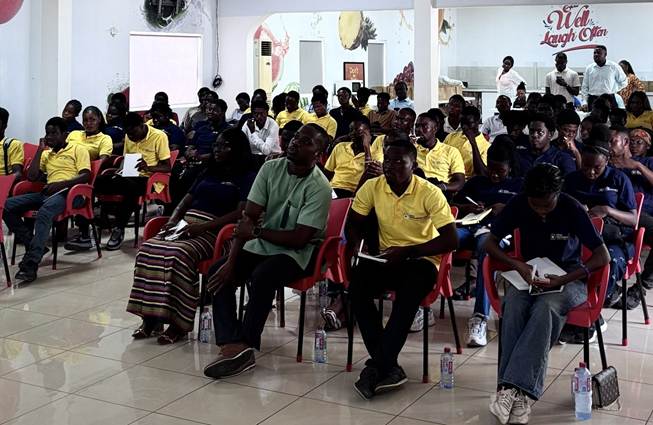


Where Digital Systems Live: Lessons from an AT Ghana Engagement with UPSA Developers Hub
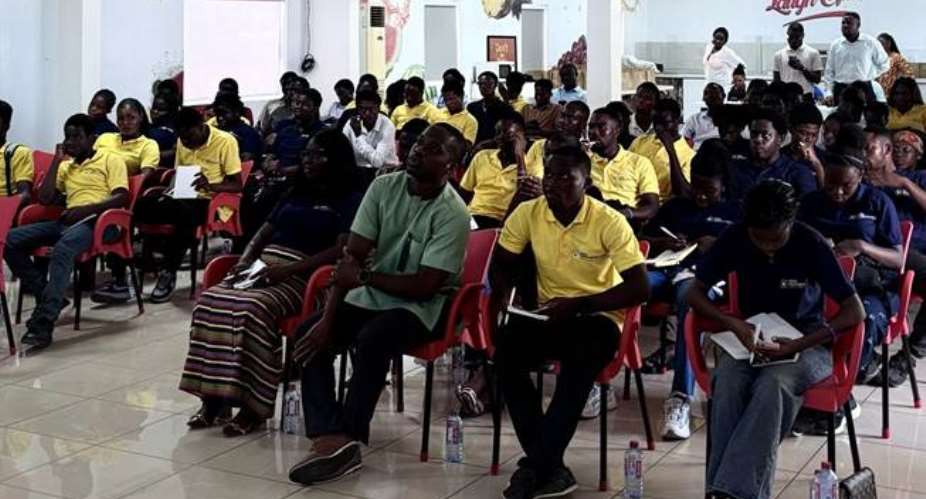
Dr. Augustina Dede Agor and Kojo Fraiku Clement with a cross-section of participating UPSA Developers Hub members during the educational engagement at AT Ghana.
Students routinely design and use digital systems with limited exposure to the infrastructure and engineering work that sustain them after deployment. Lectures, laboratories and software projects provide essential foundations, but industry engagement can reveal dimensions of computing practice that are difficult to reproduce in the classroom.
Following a request from the UPSA Developers Hub, AT Ghana hosted an academic-industry engagement on 13 May 2026, at its Head Office in Accra. All participating students were members of the UPSA Developers Hub, with almost all enrolled in Networking Development and Management, a semester-long course offered at the University of Professional Studies, Accra.
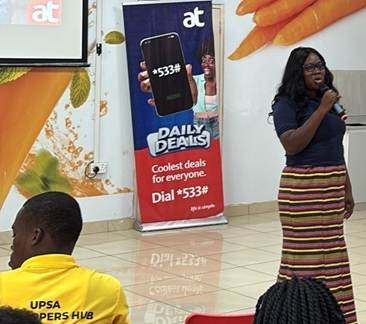 Dr. Augustina Dede Agor introducing the UPSA Developers Hub to members of the AT Ghana team during the engagement.
Corporate and Technical Sessions
The programme began with a corporate orientation led by AT Ghana’s Marketing Team, which introduced the organisation and its products and services before the technical sessions.
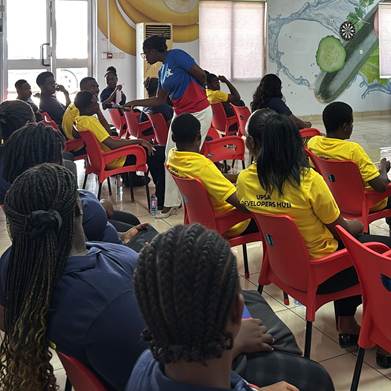 A member of AT Ghana’s Marketing Team interacting with the students during the corporate orientation session.
Kojo Fraiku Clement, Head of Enterprise Networks, welcomed the participants and introduced the technology team. Angela Anison, Head of Governance and Contracts, explained network architecture fundamentals, including access, aggregation and core layers, using AT Ghana’s network context to illustrate how these functions are organised.
Samuel Nkrumah, Head of Network Transport/Transmission, explained how fibre-optic and microwave links carry traffic between geographically distributed network locations and why transmission availability is critical to maintaining connectivity. AT Ghana professionals also discussed monitoring, incident management, change control and field intervention.
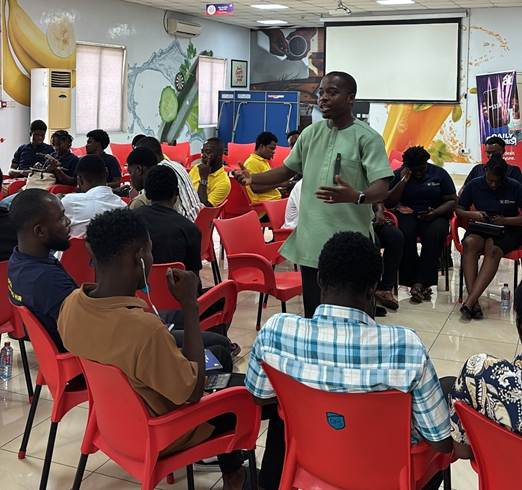 Kojo Fraiku Clement, Head of Enterprise Networks, engaging students during an interactive technical session.
Data Centre and Supporting Infrastructure
Students were organised into groups for the infrastructure component. While technical discussions continued with the seated groups, each group in turn rotated through the data centre and selected supporting facilities. Matthew Bemia Ackah, Head of Network Operations, led this component, where students were introduced to enterprise computing and IP networking equipment, including servers, routers, switches, firewalls and transmission systems, alongside resilient power, environmental controls, access management and surveillance.
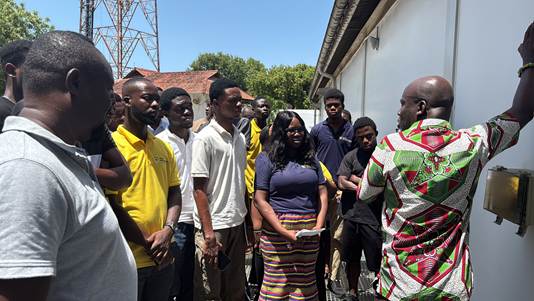 Matthew Bemia Ackah, Head of Network Operations, leading participants through AT Ghana’s technical infrastructure during a group-based technical session.
Throughout the group-based sessions, AT Ghana professionals explained the role of redundancy and coordinated engineering response, while students engaged them with questions about the equipment, facilities and operational processes under discussion.
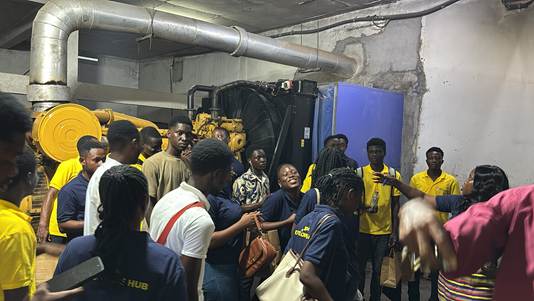 Students at the backup power generation facility during a group-based technical session.
What the Experience Clarified
The engagement clarified an important distinction: developing a digital solution and sustaining a reliable service are different but connected engineering responsibilities. A system may meet its functional requirements during development yet fail in operation when the supporting infrastructure is unavailable, poorly monitored or inadequately protected.
The engagement also illustrated the interdependence of software, networks, cybersecurity, power, physical facilities and service management. A weakness or decision in one area can affect the availability of the whole service.
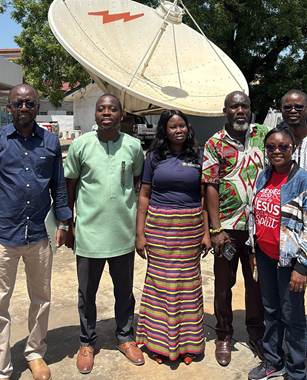 A post-engagement moment with AT Ghana’s technical team.
Acknowledgements
I sincerely thank the Management of AT Ghana for hosting the students and providing access to the organisation’s technical and operational environment. I am particularly grateful to Kojo Fraiku Clement for facilitating the request and helping to make the engagement possible. Special appreciation goes to AT Ghana’s Marketing Team for coordinating the engagement, including the logistical and hospitality arrangements, and to all other staff and departments who contributed to its success.
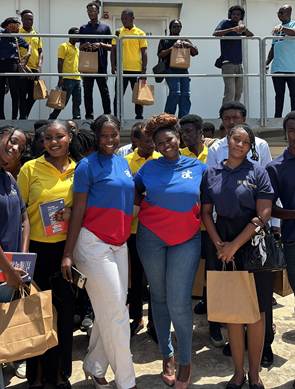 Two members of AT Ghana’s Marketing Team with some UPSA Developers Hub participants at the close of the engagement.
About the Author
Dr. Augustina Dede Agor, PhD (Computer Science), is a Senior Lecturer in the Department of Information Technology Studies at the University of Professional Studies, Accra (UPSA), Ghana. Her instructional experience spans diploma and undergraduate computing programmes in Ghana and undergraduate and postgraduate programmes in Europe. Her instructional portfolio includes artificial intelligence, programming, design and analysis of algorithms, programming languages, data structures, systems analysis and design, databases, networking development and management, multimedia applications and standards, mobile computing and online education strategies. She has supervised and examined undergraduate and postgraduate research across several universities in Ghana. Her research interests include artificial intelligence, optimisation and metaheuristics, computer networks and communications, biometrics and cybersecurity. She has served as an editor and reviewer for several international peer-reviewed journals. As Patron of the UPSA Developers Hub, she provides academic leadership and mentorship for an initiative that complements formal instruction through guided practice, collaborative software development and academic–industry engagement.
Disclaimer: “The views expressed in this article are the author’s own and do not necessarily reflect ModernGhana official position. ModernGhana will not be responsible or liable for any inaccurate or incorrect statements in the contributions or columns here.”
Follow our WhatsApp channel for meaningful stories picked for your day.

Top Stories





Originally published on www.modernghana.com
