

August 11, 2026
When The Perpetrator Becomes The Victim


Tue, 11 Aug 2026 Feature Article
When The Perpetrator Becomes The Victim
The NPP, Selective Justice and Ghana’s Convenient Political Memory
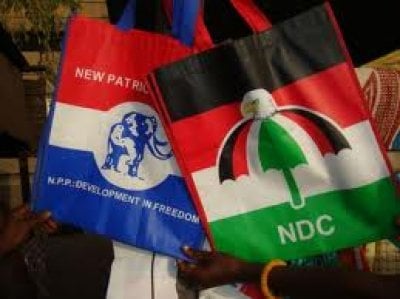
There is something deeply ironic about Ghanaian politics. Whenever the National Democratic Congress (NDC) is in government, the New Patriotic Party (NPP) warns us that democracy is under threat. Whenever the NPP is in government, the NDC tells us precisely the same thing.
Then the government changes. And, almost magically, the roles are reversed. The former government becomes the victim. The former opposition becomes the alleged oppressor. Yesterday’s defender of democracy becomes today’s defender of state power. Yesterday’s critic of police brutality becomes today’s justification for police action. And the Ghanaian citizen is expected to forget. That is the real problem.
Ghana’s greatest democratic weakness may not be that our democracy is collapsing. It may be that our political parties have developed a remarkable ability to remember the abuses committed against them while forgetting those committed when they themselves held power.
The NPP’s latest claim that the NDC is practising selective justice and placing democracy “under siege” must therefore be examined against the historical record of the Fourth Republic. Not selectively. Not emotionally. Not through the partisan lens of NPP versus NDC.
But from 1992 to today.
And when that history is examined honestly, one conclusion becomes difficult to escape, the NPP cannot credibly present itself as the perpetual victim of Ghana’s selective justice. It has, at different times, been a beneficiary, practitioner and defender of the very political culture it now condemns. That does not make today’s alleged abuses by the NDC acceptable. It makes the NPP’s selective memory unacceptable.
2001: The NPP takes power, and the hunters become the hunted
In 2000, Ghana achieved one of the most important milestones in its democratic history. The NPP defeated the NDC. In January 2001, John Agyekum Kufuor became President. It was the first peaceful transfer of power from the NDC to the NPP under the Fourth Republic. It should have marked the beginning of a new political culture. Instead, Ghana soon witnessed another familiar phenomenon: the prosecution of former government officials by the new government. Again, let us be clear. There is nothing inherently wrong with investigating former government officials. Corruption is not protected by an election result. A former minister does not become untouchable simply because he served under a previous president. But accountability becomes dangerous when the public begins to believe that every change of government is followed by a political purge. And that is precisely what happened.
Tsatsu Tsikata: The church, the police and a prosecution that would not die
Few episodes illustrate the problem better than the case of Tsatsu Tsikata. In March 2002, police officers attempted to arrest the former Chief Executive of the Ghana National Petroleum Corporation at Asbury Dunwell Church in Accra. Let us get the facts right.
Tsikata was not successfully arrested inside the church. The officers attempted to arrest him, church leaders intervened, and the officers eventually left after Tsikata agreed to make himself available to the police. Contemporary reporting records that the incident disrupted the church service, in fact, it might!
That distinction matters because historical accuracy is more powerful than exaggeration. But it does not make the episode insignificant. Why should the attempted arrest of a former senior public official take place during Sunday worship? Why should two plain-clothes policemen trail a citizen to church? Why did a criminal prosecution acquire such an intensely political character? Tsikata was subsequently prosecuted for causing financial loss to the state. He was eventually convicted and sentenced to five years imprisonment. But years later, the Court of Appeal overturned the conviction and acquitted him, finding that the trial had resulted in a miscarriage of justice. That does not prove that Tsikata was innocent of every allegation ever made against him. It does, however, demonstrate something extremely important: a prosecution launched with enormous political significance can ultimately collapse under judicial scrutiny. So, when the NPP now talks about selective justice as though it were invented by the Mahama administration, history asks a very simple question: Where were these principles when the NPP was prosecuting its political opponents?
The Victor Selormey case and the politics of prosecution
Victor Selormey, a former Deputy Minister of Finance under the NDC, was another prominent figure prosecuted after the NPP came to power. His arrest and prosecution became part of the wider political confrontation between the new NPP administration and officials of the Rawlings era. Again, the issue is not whether former officials should ever be prosecuted. The issue is whether Ghana should accept a system in which under the NDC government, NPP prosecutes NDC officials and the NPP government, NDC prosecutes NPP officials. If that becomes the normal mechanism of political accountability, then what we have built is not a mature justice system. We have built a revolving political courtroom.
The NDC returns, and discovers that power has consequences
In 2009, the NDC returned to power under President John Evans Atta Mills. The NPP went back into opposition. And, predictably, complaints about politically motivated state action returned. An NPP sympathiser, Alexander Adu Gyamfi, was arrested in 2010 after referring to President Mills as a “chimpanzee” on radio. The matter was subsequently dropped after intervention by President Mills. This episode may seem minor compared with the major political prosecutions of the Fourth Republic. It is not. It illustrates a principle that Ghanaian governments repeatedly forget: Freedom of speech is not supposed to depend on whether the person speaking supports the president. If insulting an NDC president is criminal when the NDC is in power but acceptable political rhetoric when the NPP is in opposition, then neither party believes in freedom of expression. They believe in freedom for their own people.
That is not democracy. That is tribalised constitutionalism.
2017: The NPP returns, and the vigilantes arrive
Then came another change of government. The NPP returned to power in 2017 under Nana Addo Dankwa Akufo-Addo. And within months, Ghana witnessed the ugly spectacle of the Delta Force. In March 2017, members of the group, described in contemporary reports as aligned with the governing NPP, stormed the Ashanti Regional Coordinating Council and attacked personnel over the appointment of a regional security coordinator. The NPP condemned the incident and denied sanctioning it. Thirteen alleged members were later arraigned on charges including assault, causing unlawful damage and preventing a public officer from performing his duty. The NPP cannot fairly be blamed for every action of every individual who claims allegiance to the party. But the incident exposed something bigger: political vigilantism had become embedded in Ghana’s partisan ecosystem. And the problem was not confined to one party. Both NDC and NPP have had their political vigilante groups. Both have benefited from political foot soldiers during elections. Both have struggled to control them. Both have condemned them when their behaviour became embarrassing.
And both have been accused of rewarding them with state opportunities when political power changed hands. So, when a party tells us today that democracy is under siege, the question should be: What did you do about political vigilantism when you controlled the state?
Ayawaso West Wuogon: when the security state goes wrong
In January 2019, Ghana witnessed one of the most disturbing incidents of electoral violence in the Fourth Republic. The Ayawaso West Wuogon by-election descended into violence involving armed security personnel, leaving several people injured. President Akufo-Addo’s government established the Emile Short Commission of Inquiry to investigate what happened.
The Commission recommended, among other measures, restructuring aspects of the national security architecture and clearer lines of responsibility and command. Again, the NPP cannot be accused of personally ordering every action that occurred that day.
But the political responsibility of government is precisely this: When state security personnel abuse their authority, the government must answer for the system under which those personnel operate. That standard cannot apply only when your party is in opposition.
The right to demonstrate: Ghana’s great political hypocrisy
This is where the NPP’s current argument becomes particularly uncomfortable. When the NPP was in opposition, demonstrations were an essential democratic weapon. When it came to government, demonstrations became a matter of security, traffic management, public order and legal restrictions. In 2021, the FixTheCountry movement faced legal restrictions on its planned demonstration.
In 2022, the Arise Ghana protest against economic hardship resulted in clashes between demonstrators and police. Police said protesters had departed from court-approved routes and that officers were injured and police property damaged. In September 2023 came OccupyJulorbiHouse. Demonstrators were arrested. Journalists were caught up in the police response. And in May 2026, the High Court delivered a remarkable verdict on that episode. The court found that police officers had violated the rights of three protesters and journalists through assault, unlawful detention and abuse of authority. It awarded GH¢150,000 in damages and ordered the Police Service to publish an unqualified apology. This is not an allegation from the NDC. It is not propaganda from social media. It is a judicial finding. And it happened under an NPP government. So perhaps we should ask: Was democracy not under siege then?
And then came 2024
The story did not end with OccupyJulorbiHouse. In September 2024, Democracy Hub protesters were arrested during demonstrations over governance and illegal mining. Dozens were brought before the courts. Some were remanded in custody. The prosecution alleged unlawful assembly, damage, offensive conduct and assault on police officers, while defence lawyers challenged aspects of the arrests and detention. This is important because it happened during the final months of the NPP administration. Therefore, when the NPP now speaks about citizens being arrested for protesting, the Ghanaian public is entitled to respond: We remember.
Jubilee House: who is allowed to approach the President?
There is another claim that deserves scrutiny. It is often suggested in political rhetoric that citizens were simply prevented from taking petitions to Jubilee House under the NPP. The historical record is more complicated. There were demonstrations during the NPP administration where protesters were prevented from reaching the seat of government or were directed to alternative routes. But there were also occasions where disputes arose because organisers attempted to use routes or locations that police said were restricted or subject to court orders. The 2024 Democracy Hub case, for example, involved a High Court order prohibiting a demonstration at Revolutionary Square and the Police proposing alternative locations. That is why serious criticism must distinguish between: “The government prevented a demonstration because it disagreed with the protesters” and “The government restricted a demonstration under a lawful order that itself may or may not have been constitutionally justified.” The latter can be challenged in court. And that is precisely what democracy requires.
But here is the inconvenient fact the NPP would rather we forget
On 5 May 2025, after the NPP returned to opposition, its own supporters participated in the “Save the Judiciary” demonstration. They marched through Accra. They went to the Supreme Court. They went to Parliament. And they went to Jubilee House. Their petition was received at Jubilee House by the Deputy Chief of Staff responsible for Operations. So, the claim that opposition voices have somehow been completely shut out of Jubilee House cannot be sustained as a description of Ghana’s political reality.
The NPP itself demonstrated. It marched. It petitioned. It criticised the government. And its petition was received. That is not evidence of a perfect democracy. But neither is it evidence that democracy has disappeared.
The real selective justice
The phrase “selective justice” is actually useful. But perhaps the NPP should look at it from a different angle. Ghana’s selective justice is not simply the selective prosecution of politicians. It is the selective application of democratic principles by political parties.
When the NPP is in opposition: Demonstrations are democracy.
When the NPP is in government: Demonstrations can threaten public order.
When the NDC is in opposition: Arrests are political persecution.
When the NDC is in government: Arrests are law enforcement.
When an NPP government prosecutes an NDC official: Fight against corruption.
When an NDC government investigates an NPP official: Witch-hunt.
When an NPP supporter insults an NDC president: Freedom of expression.
When an NDC supporter insults an NPP president: Criminality.
When a court rules against your party: The judiciary is not independent.
When the court rules against your political opponent: The judiciary has done justice.
This is the real disease. Not NDC. Not NPP. This is Partisan double standards.
The NPP cannot claim innocence
Let us therefore be precise. The NPP is entitled to complain about every unlawful arrest of its members. It is entitled to challenge politically motivated prosecutions. It is entitled to defend freedom of speech. It is entitled to organise demonstrations. It is entitled to demand equal treatment before the law. But it cannot credibly tell Ghanaians that it is a perpetual victim of state abuse. Its history in government contains too many examples to permit that narrative.
The attempted arrest of Tsatsu Tsikata at church. The politically charged prosecutions following the 2000 election. The Delta Force episode. Ayawaso West Wuogon. The restrictions and clashes surrounding demonstrations. The arrests and alleged abuses during OccupyJulorbiHouse (the name they chose to call the seat of government, Jubilee House). The treatment of protesters during the final period of the Akufo-Addo government. These are not inventions of the NDC. They are part of Ghana’s public record.
But let us not make the opposite mistake
There is an important danger in making this argument. If we say, “The NPP did it, therefore the NDC can do it,” then we have learned absolutely nothing. That would merely reproduce the disease. The NDC must not be allowed to say: “You did it when you were in power.” That is not a constitutional defence. If the NDC arrests political opponents without proper grounds, it must be condemned. If the police use excessive force against demonstrators, they must be held accountable. If prosecutors selectively pursue critics of government while ignoring identical conduct by government supporters, that is unacceptable. If state institutions are weaponised against political opponents, it is unacceptable.
The Constitution does not change depending on who occupies the Seat of Government.
The Fourth Republic’s unfinished business
After more than three decades of constitutional government, Ghana should have moved beyond this. But we have not. Since 1992, power has changed hands between NDC and NPP repeatedly. Each transition has taught the same lesson: The institutions of the state are too closely associated with the political party controlling government.
The police are perceived as partisan. Prosecutorial decisions are viewed through political lenses. Appointments to state institutions become political rewards. Political party foot soldiers expect benefits. Government supporters believe their opponents deserve punishment. Opposition parties believe every prosecution is persecution. And citizens are left wondering whether justice is actually blind, or merely waiting to see who won the election.
Ghana’s democracy is not dead. But it is being abused.
This is where I disagree with the slogan that Ghanaian democracy is simply “under siege.” No. That description is too convenient. Ghana’s democracy is under pressure. It is imperfect. It is vulnerable to political abuse. It is undermined by partisan hypocrisy. But it is not dead. Why? Because the institutions still fight back. The courts sometimes rule against governments. Citizens still demonstrate. Journalists still investigate. Opposition parties still campaign. Governments still lose elections. And power still changes hands constitutionally.
The 2026 High Court judgment against the Police over “OccupyJulorbiHouse” is actually an example of democratic resilience: citizens challenged state power, and a court found the state liable. That is precisely what a functioning constitutional democracy is supposed to permit.
The question the NPP should answer
Before the NPP tells Ghana that democracy is under siege, perhaps it should answer a few simple questions. Was democracy under siege when Tsatsu Tsikata was being pursued during church worship? Was democracy under siege when former NDC officials were prosecuted under the Kufuor administration? Was democracy under siege when political vigilantes associated with the governing NPP attacked the Ashanti Regional Coordinating Council? Was democracy under siege at Ayawaso West Wuogon? Was democracy under siege when “OccupyJulorbiHouse” protesters and journalists were arrested and allegedly abused? Was democracy under siege when Democracy Hub protesters were arrested and remanded in 2024?
If the answer to these questions is yes, then the NPP must admit something else: It was not merely the NDC that put democracy under pressure. An NPP government did so too, possibly in a larger scale. And if the answer is no, then the NPP must explain why the same conduct becomes a democratic emergency when it happens to NPP supporters.
The Ghanaian people deserve better than this
Ghanaians deserve a democracy in which the rights of an NDC supporter are defended by an NPP supporter. A democracy in which the rights of an NPP supporter are defended by an NDC supporter. A democracy in which a journalist does not have to reveal his or her political affiliation before receiving protection. A democracy in which a protester does not have to prove which party he voted for before being allowed to demonstrate. A democracy in which prosecution is based on evidence, not electoral arithmetic or calculus. A democracy in which the police protect demonstrations rather than becoming the political weapon of whichever government is in office. And, above all, a democracy in which justice is justice, even when it hurts your own party.
The final verdict
The NPP is right about one thing: Any abuse of state power under the Mahama administration must be confronted. But it is wrong if it believes that history has forgotten what happened when the NPP itself controlled the state. Ghana’s political history from 1992 to 2026 does not tell a story of one permanently innocent party and one permanently guilty party. It tells a much more disturbing story.
It tells the story of two parties that have repeatedly changed positions without changing the political culture. The NDC becomes the government and discovers the power of the state. The NPP becomes the government and discovers the power of the state. The opposition complains. The government justifies. The police arrest. The politicians defend. The courts intervene. The election comes. Power changes hands. And the entire performance starts again. That is not the democracy Ghanaians fought for. The real battle, therefore, should not be NDC versus NPP. It should be: the citizen versus the abuse of state power. Because democracy does not belong to the NDC. It does not belong to the NPP. It belongs to the Ghanaian people. And the Ghanaian people must stop allowing politicians to tell us that an injustice becomes justice simply because it is committed against their opponents. The greatest threat to Ghana’s democracy is not that one party will destroy it overnight. It is that both parties will slowly normalise the abuse of power, and then take turns pretending to be its victim.

Alexander Bediako, © 2026
This Author has published 24 articles on modernghana.comColumn: Alexander Bediako
Disclaimer: “The views expressed in this article are the author’s own and do not necessarily reflect ModernGhana official position. ModernGhana will not be responsible or liable for any inaccurate or incorrect statements in the contributions or columns here.”
Follow our WhatsApp channel for meaningful stories picked for your day.

Top Stories


Originally published on www.modernghana.com
