

July 23, 2026
When State Rhetoric Meets The Street: How Electoral Promises Fed South Africa’s Afrophobic Incidents

4 hours ago | Opinion
When State Rhetoric Meets The Street: How Electoral Promises Fed South Africa’s Afrophobic Incidents
Political campaigns are often built on promises designed to reassure anxious citizens. Candidates pledge to restore order, tighten security, protect jobs, reduce crime, and strengthen national borders. In democratic societies, there is nothing inherently wrong with such commitments. Governments have a legitimate duty to regulate immigration, enforce laws, and protect national interests. The challenge, however, lies not merely in the policies themselves but in how political rhetoric surrounding them is interpreted by an already frustrated public.
South Africa’s latest wave of Afrophobic incidents in 2026 offers a sobering reminder that political messaging rarely remains confined to the halls of government. Once campaign language enters communities already burdened by unemployment, poverty, crime, and social frustration, it can acquire meanings far beyond what policymakers intended.
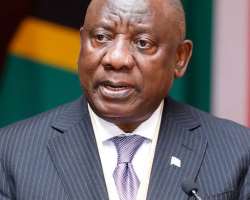
President Cyril Ramaphosa’s electoral commitments on immigration were officially framed as institutional responses to growing public concerns. They included strengthening border security, creating specialized immigration and deportation courts, intensifying operations against undocumented migrants, and ensuring stricter enforcement of immigration laws. On paper, these are functions of a sovereign state. Every nation reserves the right to determine who enters its territory and under what conditions foreigners may remain. Yet politics does not operate solely on paper.
Words spoken during campaigns often acquire lives of their own. They shape perceptions, reinforce prejudices, and sometimes embolden individuals who believe they are merely implementing, in crude form, the political mood they hear from national leaders. This is where the South African experience becomes deeply instructive.
The recent attacks on African migrants, foreign-owned businesses, and immigrant communities were officially condemned by the government. Police were deployed. Arrests followed in some locations. Political leaders reiterated that violence would not be tolerated.
However, many observers across Africa could not ignore the uncomfortable contradiction. If the dominant national conversation repeatedly frames undocumented migration as a central source of crime, unemployment, housing shortages, and pressure on public services, can society be entirely blamed when some citizens begin viewing all foreigners as legitimate targets?
That question deserves honest reflection. South Africa has struggled with periodic outbreaks of anti-foreigner violence for well over two decades. The violence witnessed in 2008 left more than 60 people dead and displaced tens of thousands. Similar episodes erupted in 2015, 2019, and again in subsequent years. Although each episode had immediate triggers, they all shared remarkably similar underlying themes: economic hardship, competition over scarce opportunities, weak public trust, and political narratives that increasingly portrayed migrants as contributors to national problems.
This recurring pattern suggests that Afrophobia is not simply a law-and-order problem. It is also a communication problem. Political communication matters because citizens frequently interpret campaign promises not as carefully worded policy proposals but as moral signals. When leaders repeatedly emphasize removing undocumented migrants, securing borders, or prioritizingcitizens, many listeners hear something broader: foreigners are the problem.
Of course, no responsible analysis should claim that President Ramaphosa instructed anyone to attack migrants. Such a conclusion would be inaccurate and unfair. Governments cannot be held directly responsible for every criminal act committed by private citizens.Nevertheless, leaders must recognize that rhetoric has consequences beyond intention.
History repeatedly demonstrates this reality. Political scientists have long argued that elite discourse shapes public behaviour by defining who belongs, who threatens society, and whose interests deserve protection. During election periods especially, emotionally charged language tends to simplify complex economic challenges into easily identifiable targets. Immigration often becomes one such target.
South Africa’s unemployment crisis certainly provides fertile ground for such narratives. According to official statistics from Statistics South Africa, the country’s official unemployment rate stood at around 32.9 percent in the first quarter of 2026, while youth unemployment remained above 45 percent for many age categories. Millions of young South Africans face prolonged exclusion from meaningful employment. These are alarming figures.
When jobs are scarce, housing remains inadequate, electricity shortages persist, and inequality continues to rank among the highest globally, political pressure inevitably seeks visible explanations. Migrants become convenient scapegoats. Yet empirical evidence presents a far more nuanced picture.
Numerous studies by organizations including the International Organization for Migration (IOM), the African Centre for Migration & Society, and other academic institutions have consistently found limited evidence that migrants are the principal drivers of unemployment or crime. In many sectors, including construction, agriculture, hospitality, transport, domestic work, informal retail, and healthcare, migrant labour often fills gaps rather than displacing local workers. Many
immigrant-owned small businesses also create employment opportunities for South Africans while expanding access to affordable goods in underserved communities.
Similarly, research has repeatedly shown that crime is influenced far more by socioeconomic inequality, policing capacity, organized criminal networks, education, and governance than by immigration status alone.Unfortunately, perceptions frequently outweigh evidence.When economic frustration becomes widespread, facts struggle to compete with political narratives. This is hardly unique to South Africa.
Across Europe, North America, and parts of Asia, immigration has become one of the most politically sensitive issues of the twenty-first century. Campaigns promising stronger borders, stricter deportations, or reduced migration often attract significant public support during periods of economic uncertainty.
The difference lies in institutional safeguards. Countries with stronger civic institutions, consistent political messaging, and rapid law-enforcement responses are generally better positioned to prevent public frustration from degenerating into mob violence. South Africa continues to grapple with this challenge.
Its remarkable democratic Constitution remains one of the world’s most progressive, affirming equality before the law irrespective of nationality. Yet constitutional ideals often collide with everyday realities in communities struggling with poverty and inadequate public services. This disconnect creates fertile ground for populism.
Political actors, intentionally or otherwise, may discover that migration offers an emotionally powerful campaign issue because it provides visible targets for invisible structural failures.
Instead of confronting decades-old challenges in education, industrial policy, energy supply, urban planning, corruption, and economic inclusion, it becomes politically easier to promise crackdowns on undocumented migrants.
The danger is that once public discourse increasingly associates foreigners with national decline, extremist actors begin believing they possess popular legitimacy.Street vigilantism then emerges as a distorted extension of state rhetoric.
Ironically, such violence ultimately weakens the very country it claims to protect. South Africa remains Africa’s most industrialized economy and one of the continent’s largest investment destinations. Its manufacturing sector, financial markets, tourism industry, mining operations, logistics networks, and retail chains depend heavily on regional economic integration.
Millions of Africans contribute directly and indirectly to this interconnected economy. Violence against fellow Africans damages investor confidence, disrupts supply chains, undermines tourism, strains diplomatic relations, and weakens regional cooperation under frameworks such as the African Continental Free Trade Area (AfCFTA).
In fact, Xenophobic happenings over the years contradict South Africa’s own liberation history. During apartheid, numerous African countries, including Nigeria, Zambia, Tanzania, Angola, Zimbabwe, and others, provided sanctuary, diplomatic support, educational opportunities, and material assistance to South African freedom fighters.That solidarity helped sustain the anti-apartheid movement during some of its darkest years.
For many Africans, today’s attacks therefore carry not only humanitarian implications but also painful historical symbolism. They appear to betray a continental legacy built upon shared struggle.
Not only that, it makes responsible political communication even more important. Therefore, governments must distinguish carefully between enforcing immigration law and creating narratives that stigmatize entire communities.The distinction is subtle but essential.
A state may legitimately pursue undocumented migration through professional policing, efficient immigration courts, intelligence-led enforcement, and judicial oversight. Such actions reinforce the rule of law.
What must be avoided is language that unintentionally frames foreigners collectively as economic enemies, security threats, or social burdens.
Political leaders should equally emphasize that criminality is individual, not national; that undocumented status is not synonymous with violence; and that lawful migrants deserve equal protection under the Constitution.
In fact, Communication should unite rather than divide.Equally important is addressing the deeper structural frustrations that fuel Afrophobic violence in the first place.No immigration policy, however stringent, will resolve unemployment created by slow economic growth. No deportation programme will repair failing municipal services. No border fence will eliminate inequality.
These challenges require sustained investment in education, infrastructure, industrial expansion, entrepreneurship, skills development, and governance reforms.
Until such structural problems receive equal political attention, public frustration will continue searching for convenient targets. The responsibility also extends beyond government.
Civil society, religious institutions, traditional leaders, labour unions, schools, universities, and the media all have critical roles in challenging misinformation, promoting social cohesion, and encouraging evidence-based public debate.
Media organizations, in particular, should resist sensational narratives that reduce complex socioeconomic issues to simplistic blame games. Ultimately, South Africa stands at an important crossroads.
It can continue allowing immigration to dominate political discourse in ways that unintentionally legitimize hostility toward fellow Africans. Or it can demonstrate that effective border management and constitutional human rights are not mutually exclusive.
The continent is watching. Africa’s most advanced democracy carries responsibilities that extend beyond its borders. Its political language influences not only domestic opinion but also continental perceptions of African unity.Campaign promises should inspire confidence in institutions, not encourage confidence in mobs.
The painful lesson from South Africa’s recurring Afrophobic violence is that political rhetoric, however well intentioned, does not always stop where politicians expect it to. Once words leave campaign podiums and enter streets filled with fear, unemployment, anger, and hopelessness, they can acquire dangerous interpretations.That is why leadership requires more than winning elections. It requires speaking in ways that uphold the rule of law while protecting the dignity of every human being, regardless of nationality.
In fact, when state rhetoric inadvertently fuels street justice, everyone loses, including the very nation political leaders seek to protect.
Disclaimer: “The views expressed on this site are those of the contributors or columnists, and do not necessarily reflect TheNigerianVoice’s position. TheNigerianVoice will not be responsible or liable for any inaccurate or incorrect statements in the contributions or columns here.”
Originally published on www.thenigerianvoice.com
