

August 12, 2026
When Heaven Becomes Corruptions Laundromat: A Response To Prince Charles Dickson
4 hours ago | Opinion
When Heaven Becomes Corruption’s Laundromat: A Response To Prince Charles Dickson

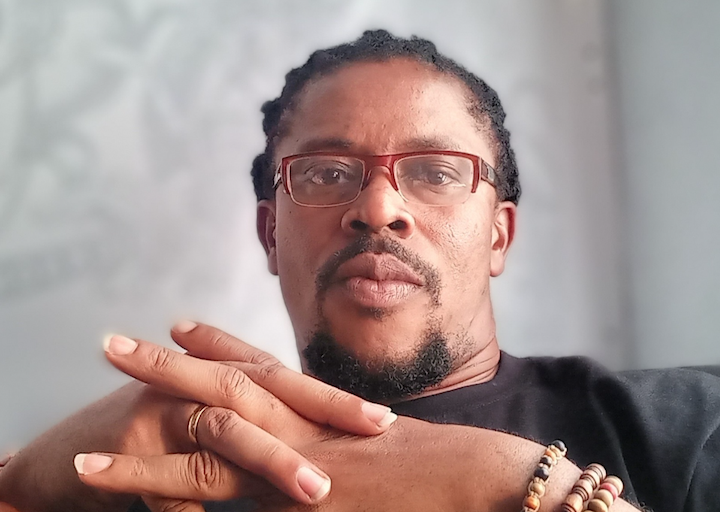
Prince Charles Dickson Ph.D.
In Support of the Prince on the Plateau
Prince Charles Dickson’s thesis deserves support because he has located corruption where official statistics and criminal codes often fail to look: inside the moral arrangements by which a society teaches itself to tolerate its own dispossession. The problem is no longer simply that public money is stolen. The more dangerous development is that the social order has acquired rituals through which theft is converted into prestige, prestige into authority, and authority into innocence.
The corrupt politician does not survive by corruption alone. He requires an environment that receives the proceeds, gives them new names and returns them to society purified of their history. Money taken from a hospital becomes a donation to a church. Money removed from a school becomes a contribution to a mosque. Money extracted from a road becomes pilgrimage sponsorship. At each stage the original victim disappears from view. What remains is the spectacle of generosity.
This is how domination reproduces itself. The citizen is first impoverished by the misuse of public power and is then invited to become grateful when a fraction of what was taken returns as private benevolence. The same hand that participates in his deprivation appears before him as the hand of charity. The violence is therefore doubled: material deprivation is followed by the conquest of moral perception.
A people subjected long enough to this arrangement may eventually cease to ask how wealth was acquired. They ask instead whether some of it reached their village, their congregation, their ethnic group, their family or their political faction. At that point corruption has achieved something greater than the concealment of theft. It has reorganised the consciousness of its victims.
This is why the question of religion is central to Dickson’s argument. The issue is not whether Christianity or Islam produces corruption. Neither does. Nor is the issue whether a corrupt person should be permitted to worship. Religion that closes its doors to sinners would soon have empty buildings. The issue is what happens when religious authority ceases to confront power and begins instead to confer moral legitimacy upon wealth whose origin society has good reason to question.
The mosque and the church possess an authority that the politician cannot manufacture by decree. They speak to conscience. They confer honour. They interpret virtue.. The corrupt political class understands this. It therefore seeks not merely the silence of religious authority but its embrace. A photograph with the cleric, a title bestowed before the congregation, a prominent seat at a religious ceremony and a public prayer for the benefactor are not politically neutral gestures when the benefactor’s fortune cannot withstand ordinary questions.
Here the transaction becomes profound. Political wealth purchases religious proximity; religious proximity produces social legitimacy; social legitimacy weakens the appetite for scrutiny. What began as an economic crime acquires cultural protection.
The tragedy is that the poor themselves may participate in this transformation. A community deprived of public goods may celebrate the man who privately supplies what functioning institutions should have provided as a right. The politician who helped weaken the state then becomes indispensable because the state is weak. He distributes food where economic policy and honest administration should have secured livelihoods. He pays medical bills where public hospitals should have treated citizens. He awards scholarships where schools should have functioned. Dependency becomes gratitude, and gratitude becomes political obedience.
The benefactor is thus manufactured from the ruins of citizenship.
This is why unexplained wealth cannot be treated as merely a private matter. Dickson is correct to distinguish wealth from theft. Prosperity is not an offence. Enterprise, inheritance, investment and professional success can lawfully produce great fortunes. But public office introduces a special moral and civic obligation. Where the visible accumulation of an officeholder bears no intelligible relationship to lawful income, prior assets or demonstrable enterprise, the citizen has the right to ask for an explanation.
The essential democratic word is not “rich.” It is “how.”
How was the wealth accumulated? What existed before office? What was acquired during office? What income produced it? What taxes were paid? What assets were declared? What businesses generated the returns? What documentary trail supports the explanation?
These questions do not persecute wealth. They protect the republic.
For the public treasury is not an abstraction. Every appropriation represents an anticipated human consequence. A budget for a hospital is ultimately a child receiving medicine, a woman surviving childbirth, an old man receiving treatment. A budget for education becomes a teacher in a classroom, a laboratory, a book, a roof over pupils. A road allocation becomes movement, trade and lives not lost to avoidable accidents. When such resources are stolen, what disappears is not simply money. Human possibilities disappear with them.
The language of financial crime can conceal this violence. We speak of diversion, misappropriation, inflation of contracts and abuse of office. Behind these bloodless expressions are people whose suffering never enters the case file.. The pensioner who waits. The patient who dies. The farmer cut off from a market. The pupil studying beneath a leaking roof. The unemployed graduate encountering an economy weakened by predation. Corruption is experienced by them not as an accounting irregularity but as a material assault on life.
Then comes the final obscenity: some of the proceeds return to the victims as charity.
The community applauds. The religious institution announces the donation. The politician is praised for compassion. Nobody reconstructs the journey of the money. Nobody asks whether the benefactor is giving what belongs to him or returning, selectively and ceremonially, what belonged to the public.
This is the laundromat Dickson describes. Its machinery is not theological. It is social and political. Religion becomes useful to corruption only when religious institutions permit themselves to become instruments in the production of innocence.
The responsibility of religious leadership must therefore extend beyond preaching personal morality. It is easy to regulate the visible conduct of the powerless. It requires little courage to lecture the poor trader, the young woman, the struggling family or the ordinary worshipper about sin. Moral authority proves itself when it can speak with equal severity to the wealthy man whose convoy fills the courtyard and whose donation can finance the institution.
A religion that is fearless before the weak but diplomatic before the powerful has ceased to be a moral force. It has become part of the architecture of power.
Nor can society escape responsibility by transferring justice entirely to God. “God will judge them” may express faith, but in public life it can also become the vocabulary of surrender. A republic has laws because earthly conduct requires earthly accountability. It has auditors because accounts must be examined. It has investigators because suspicion must be tested against evidence. It has courts because guilt must be lawfully established. It has journalists because power must be questioned. It has citizens because sovereignty cannot exist only on paper.
To invoke divine judgment while disabling human institutions is not piety. It is an abdication of citizenship.
The deeper struggle, however, lies within society itself. Corruption survives because Nigerians too often condemn it abstractly and negotiate with it concretely. The corrupt politician from elsewhere is a criminal; the corrupt politician from home is a benefactor. The opponent’s unexplained fortune is evidence; the ally’s unexplained fortune is divine favour. Ethnicity, religion, region and party become devices for suspending the moral principles we demand from others.
In this way the oppressed population can be recruited into defending the very system that impoverishes it. The convoy arriving in the village becomes a theatre of success. Titles are conferred. Songs are composed. Clerics pray. Families celebrate. Young people observe. The lesson is absorbed without being formally taught: public office is valuable because it permits accumulation, and accumulation becomes honour when enough of it is redistributed among those whose applause is politically useful.
A society that teaches this lesson should not be surprised when each generation enters politics determined to reproduce it.
The transformation required is therefore larger than prosecution, necessary as prosecution is. Nigeria must reconstruct the social meaning of wealth and public service. Legitimate prosperity should command respect. Productive enterprise should be celebrated. Innovation, investment and honest success should be encouraged without apology. But unexplained enrichment from public office must lose its glamour.
There must again be shame in possessing what one cannot explain.
The public official whose fortune is inconsistent with lawful earnings should encounter questions before honours, scrutiny before titles and documentary examination before public canonisation. Religious institutions should be especially careful not to provide ceremonial absolution where civic accountability remains unresolved. A donation does not answer an audit query. A pilgrimage does not extinguish a fiduciary obligation. A prayer cannot substitute for a bank trail.
The struggle is ultimately over consciousness. So long as Nigerians see the redistribution of questionable wealth as generosity, the corrupt order will continue to reproduce itself through the consent of those it injures. The moment society begins to see the same act as the partial return of resources extracted from the public, the moral balance changes.
Then the benefactor must explain himself.
Then the cleric must decide whether proximity to wealth is worth the loss of prophetic authority.
Then the community must decide whether a bag of rice is sufficient compensation for a missing hospital, an abandoned school, an unpaid pension or a road never built.
Then citizenship begins to recover its dignity.
Prince Charles Dickson’s argument should therefore not be reduced to an indictment of hypocritical politicians who pray after stealing. It is an indictment of a wider system that converts economic domination into social honour and recruits religious symbolism into the process. The politician’s corruption is only the first act. The more enduring danger lies in the institutions and communities that transform the proceeds into legitimacy.
Nigeria will not overcome corruption merely when politicians become afraid of investigators. It will begin to overcome corruption when stolen or unexplained wealth can no longer purchase admiration; when the poor refuse to celebrate their own dispossession; when religious authority becomes dangerous to injustice rather than useful to power; and when the citizen standing before the wealthy officeholder recovers the confidence to ask the simplest question in a republic:
How did you acquire this?
Until that question becomes ordinary, persistent and fearless, corruption will continue to possess not only the treasury but part of the national consciousness. And when corruption has conquered consciousness, it no longer needs to hide. It dresses itself in honour, enters the sanctuary, takes the front seat and waits to be blessed.
Disclaimer: “The views expressed on this site are those of the contributors or columnists, and do not necessarily reflect TheNigerianVoice’s position. TheNigerianVoice will not be responsible or liable for any inaccurate or incorrect statements in the contributions or columns here.”
Originally published on www.thenigerianvoice.com
