

July 20, 2026
There’s no age any man can say ‘I’ve known it all’



There’s no age any man can say ‘I’ve known it all’

There is an old saying that the greatest school is life itself, and the remarkable thing about this school is that no one ever truly graduates from it. Every sunrise presents new lessons. Every encounter offers fresh opportunities to learn, to unlearn or to relearn. Every success comes with pride or humility, while every failure reminds us of our limitations. Yet, despite the evidence that life is a long journey in the learning process, some people seem to arrive at the dangerous conclusion, long before the end of their lives, that they have known it all. Nothing could be further from the truth.
The greatest minds in history were not those who claimed to possess knowledge of everything there was to know. They were those who acknowledged that there was always something more to discover, something to learn. They were people who knew that wisdom did not consist in having all the answers. Rather, wisdom remains humble, willing to learn, and willing to accept correction whenever the need arises.
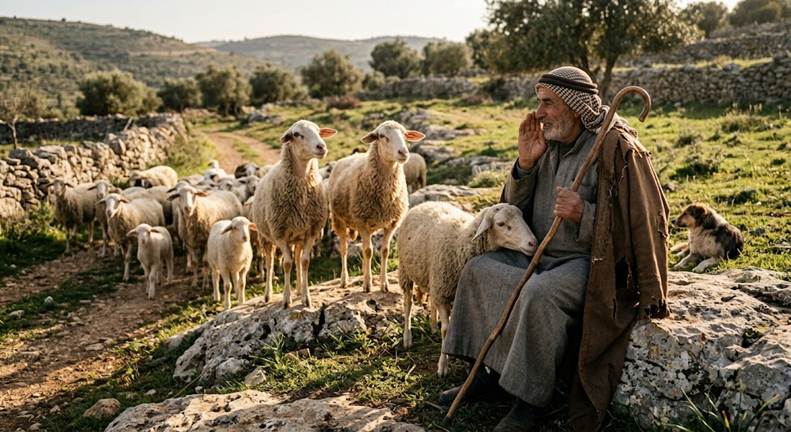
It is perhaps for this reason that one of the most enduring images Jesus Christ uses to illustrate his teaching is that of the shepherd and his sheep. “My sheep know my voice,” Jesus declared, emphasizing the importance of the sheep-relationship that is always built on recognition, trust and obedience. Sheep are known for following their shepherd because they have confidence in his guidance. They may not understand every twist and turn of the journey, but they implicitly trust the one who is leading them.
By contrast, goats have acquired a reputation for stubbornness, resistance and self-will across many cultures. In many African societies, including the Igbo nation, calling someone a goat is never meant to be a compliment. It suggests a person who refuses advice, resists correction and persists in a course that commonsense shows to be destructive. Such an individual is not celebrated for independence but chastised for foolish obstinacy.
This symbolism provides a deeper appreciation of Jesus’ teaching about the separation of the sheep from the goats. While the passage concludes with the sheep commended for their obedience, for recognising their master’s voice and following him and the goats condemned for their indifference, the distinction begins much earlier, with disposition. Sheep listen. Sheep follow. Sheep remain teachable. Goats resist. Goats insist on their own way. Goats refuse guidance even when it is clearly in their interest to accept it.
Human behaviour follows a similar pattern. A heart that is willing to learn naturally understands compassionate actions because such a person remains open to truth, correction and growth. Conversely, a stubborn heart often expects selfishness, pride and indifference because it has closed itself to instruction. Each character eventually reveals itself in its conduct.
Sadly, this lesson appears increasingly forgotten in an age that overflows with information but often lacks wisdom. Worldly knowledge is mistaken for God’s wisdom, title holders are regarded as the final authority, and positions of authority are treated as evidence of infallibility. The result is a growing reluctance to admit mistakes or reconsider long-held assumptions. Instead of confronting oneself with questions like: “What can I still learn?” some are contented to declare, “No one can teach me anything.”
This attitude is not confined to politics, business or academia. It has found a comfortable home within even religious communities. One would naturally expect that those who preach humility would themselves embody what they preach. After all, the Christian faith places enormous emphasis on repentance, confession and continual spiritual growth. The disciple is, by definition, a learner. The word itself implies someone who follows a teacher. Christianity will cease to function effectively when, and if, learning gives way to arrogance, impunity or a sense of entitlement. Unfortunately, there are Christians who have become more interested in defending their opinions than in discovering God’s truth. There are Church leaders who consider correction as insult rather than a blessing. Some reject accountability because they mistake leadership for perfection. Others surround themselves only with voices that affirm their actions and dismiss every challenge as rebellion. Such attitudes bear little resemblance to the sheep that know the Shepherd’s voice.
The irony is difficult to ignore. Those entrusted with guiding others sometimes become the least willing to be guided themselves. The very people expected to model humility occasionally display remarkable resistance to counsel. Titles accumulate, positions expand and worldly influence grows, but the willingness to listen to the “small voice of calm” steadily diminishes. Yet neither ordination nor clerical seniority exempts anyone from the lifelong responsibility of learning.
No age exists at which a human being can honestly declare, “I have known it all.” The elderly still learn from the young. Parents learn from their children. Teachers learn from their students. Leaders learn from those they lead. Every generation contributes something the previous generation overlooked. To reject learning because of age, status or achievement is to reject one of God’s greatest gifts.
Even Scripture repeatedly portrays growth as a continuing process rather than a completed destination. Spiritual maturity is never presented as static. Believers are encouraged to grow in wisdom, knowledge and understanding. Such growth becomes impossible the moment pride convinces us that we have already arrived. History is filled with examples of individuals and institutions that collapsed, not because they lacked intelligence, but because they refused correction. Stubbornness has destroyed families, divided communities, ruined businesses and weakened nations. It has also damaged Churches. Many conflicts that have fractured congregations could have been resolved if people had simply listened to one another with humility. Many scandals that brought shame upon Christian witness might have been prevented had leaders accepted timely correction. Pride often whispers: “You cannot be wrong.” Wisdom quietly suggests: “Examine yourself again.”
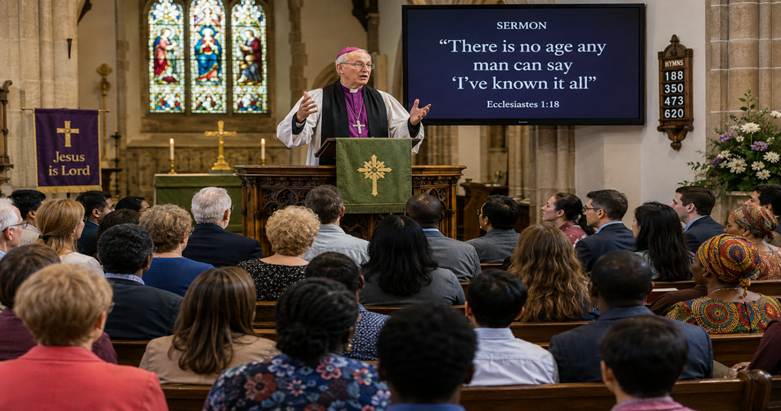
This is where the lesson of the sheep becomes especially relevant. Sheep are not celebrated because they possess extraordinary intelligence. They are commended because they recognise the shepherd’s voice and respond to it. They remain willing to learn. By the same token, genuine Christian maturity is measured less by the ability to quote Scripture than by the willingness to submit one’s life continually to its instruction. Memorizing sacred texts and refusing their correction achieves very little. The purpose of divine teaching is transformation, not simply information and every genuine Christian must understand that clearly.
The danger of the goat-like spirit is that it disguises stubbornness as strength. Society often admires those who never change their minds, interpreting such rigidity as conviction. Yet conviction without a sense of humility easily degenerates into arrogance and subsequently into impunity. There is a profound difference between standing firmly for truth and refusing to acknowledge one’s own limitations. A wise person changes course when better understanding emerges. Such change is not weakness. It is evidence of growth. And this is particularly important for religious leaders whose words influence countless of lives. Every sermon preached carries responsibility. Every decision taken, affects families and communities. Those entrusted with spiritual authority must therefore cultivate the humility to learn continually, recognising that no office places anyone beyond correction. Leadership should increase responsibility, not diminish the willingness to learn.
Congregations also have their responsibilities. Christians should avoid elevating leaders to a status that discourages honest dialogue. Respect should never become unquestioning admiration. The greatest leaders are not those who appeared flawless but those who demonstrated the courage to admit mistakes, seek forgiveness and continue with the learning process.
Life has an interesting way of humbling those who imagine they know everything. Circumstances change. New experiences emerge. Fresh insights appear. What once seemed certain could later require re-consideration. Every season reminds humanity of its dependence upon the wisdom that is greater than its own. And perhaps, that is one reason children sometimes teach adults profound lessons without intending to do so. They teach us to obey. They teach us to trust. They are the sheep that know mum’s voice and obey her without questions. They are the sheep that know the shepherd and follow instructions. And they teach us all that, without intending to do so. Their curiosity, openness and willingness to innocently ask questions expose how quickly maturity can harden into complacency. The child asks because the child desires understanding. The proud adult often refuses to ask because asking might reveal his ignorance. Yet there is no shame in not knowing. The real shame has its place in refusing to learn.
As Christians reflect upon Jesus’ teaching concerning the sheep and the goats, it would be worthwhile to look beyond the final separation and examine the attitudes represented by each. The sheep remind us that listening, trusting and following are marks of authentic discipleship. The goats are our warning against the destructive consequences of pride, stubbornness and self-seeking sufficiency. Every day presents a choice between these two dispositions. We may choose humility over arrogance, learning over stubbornness, obedience over self-will and compassion over indifference. These choices gradually shape both our characters and subsequently, our destiny.
The greatest classroom remains life itself. No certificate marks its completion. No graduation ceremony announces the end of learning. As long as breath remains, lessons continue. And perhaps the wisest words anyone can utter are not: “I know it all,” but, “Teach me your ways, Lord, that I may know you well.” The person who remains willing to learn never stops growing. The one who continues listening never ceases to discover. The one who follows the Shepherd’s voice finds that every stage of life still holds another lesson worth learning. And indeed, there is no age at which anyone can truthfully say, “I’ve known it all.” So, to all Christians out there, let us keep learning like the sheep. Let us keep recognising the master’s voice. And let us see less of the goat and more of the sheep in our lives while we walk with Jesus.

Emeka Asinugo, PhD., M.A., KSC, © 2026
A London-based veteran journalist, author and publisher of ROLU Business Magazine (Website: https://rolultd.com)Column: Emeka Asinugo, PhD., M.A., KSC
Disclaimer: “The views expressed in this article are the author’s own and do not necessarily reflect ModernGhana official position. ModernGhana will not be responsible or liable for any inaccurate or incorrect statements in the contributions or columns here.”
Follow our WhatsApp channel for meaningful stories picked for your day.

Top Stories


Originally published on www.modernghana.com
