

August 3, 2026
The Best Way to Shut People’s Mouths in Democracy is to Govern to Promote Their Well-Being and Not…



Mon, 03 Aug 2026 Feature Article
The Best Way to Shut People’s Mouths in Democracy is to Govern to Promote Their Well-Being and Not…
The Arrest of a Citizen’s Curiosity
In a functioning constitutional democracy, asking questions is not a crime—it is the very oxygen that keeps the republic alive. When a video circulates on social media in which President John Mahama is captured telling a National Security official, “Like I said earlier on, unless they give me 150 million,” public curiosity is not merely predictable; it is mandatory.
When Godfred Ansu Damoah, a young Ghanaian, took to his X (formerly Twitter) account to raise what any reasonable citizen would consider a fundamental query: “If that statement is authentic and accurately understood, the obvious question is: who is the National Security Coordinator expected to take the 150 million from on the President’s behalf?”—he was exercising a right protected under the 1992 Constitution of Ghana.
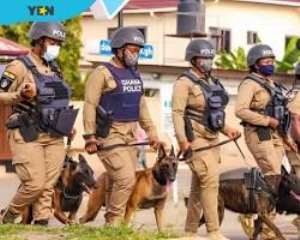
Yet, reports that police officers subsequently picked up Godfred for posing this question have sent shockwaves across the political landscape, sparking fierce condemnation from the New Patriotic Party (NPP) quarters and civil society alike. The outrage is justified. The message sent by this state action is as clear as it is chilling: citizens must keep quiet, look away, and never audit the utterances of those in power.
The Danger of a Security Apparatus Turned Mind-Police
The Ghana Police Service must be reminded of its true constitutional duty. The police exist to protect the life, liberty, and property of citizens, to prevent crime, and to maintain public order. They are not the public relations officers of the executive arm of government, nor are they the personal bodyguards of a President’s political reputation.
When state security apparatuses paint themselves as tools for silencing political commentary or stifling public discourse, they cross a treacherous line. They shift from being guardians of public safety to agents of political coercion.
When a police force detains a citizen for asking a question about a video involving a sitting President, it creates a dangerous precedent:
In the first place, this precedent causes the danger of “The Chilling Effect.” Thus, Self-censorship becomes the order of the day. Journalists, activists, youth, and ordinary citizens begin to measure their words not against the truth, but against the threat of nocturnal police visits.
The police could lose Public Trust. When citizens view the police as an arm of political intimidation rather than a neutral enforcer of law, respect for state institutions collapses. This will render this important security apparatus ineffective since its efficiency largely depends on the cooperation and support of the citizens.
It will also undermine democratic foundations. A state that criminalizes political inquiry gradually trades its democratic credentials for authoritarian control.
Democracy is Built on Interrogation, Not Intimidation
Free speech is not a privilege graciously granted by government officials or police commanders; it is an inalienable human right. Power inevitably invites scrutiny. If a video clip circulating in the public domain is misleading, contextually distorted, or outright fake, the appropriate response from the presidency or security agencies is clarification, evidence, and open communication. Handcuffs and interrogation cells should not be the answer.
If the quote attributed to the President was misunderstood, explain the context. Some of us praised the Minister for Government Communications, Hon. Felix Kwakye Ofosu, for clarifying the issue when political propagandists circulated it with the intention of giving the president a bad name. If the video was edited maliciously, demonstrate the truth through factual disclosure. Arresting the person who merely asked for clarity does not debunk the video; it amplifies suspicion, fuels conspiracy theories, and convinces the public that there is indeed something to hide.
Governing for Well-Being vs. Governing by Fear
The headline of this feature carries a timeless truth that every leader and security agency must digest: The best way to shut people’s mouths in democracy is to govern to promote their well-being and not to intimidate them into silence.
Governments do not earn silence by sending police officers to arrest critics on social media. They earn silence—or rather, constructive approval—when:
- Institutions are Transparent: Citizens do not need to leak or dissect secret videos when governance is open, accountable, and transparent.
- Economic and Social Realities Improve: When schools function, healthcare is accessible, jobs are available, and the economy thrives, political hostility naturally fades into public satisfaction.
- The Rule of Law Applies Equally: Citizens respect leadership when law enforcement operates without political bias or selective justice.
A Word of Caution to the Police Service
To the Ghana Police Service: history is an uncompromising judge. Governments come and go; political administrations rotate through the ballot box; but the institution of the police remains. Whenever security forces allow themselves to be weaponized for partisan battles, they compromise their own integrity long after the political actors have left office.
Let Godfred Ansu Damoah go, and let every Ghanaian speak without fear of retribution. Free speech is not a threat to democracy—it is its very shield. If the state wishes to quiet the voices of critique, it must do so not through the iron fist of law enforcement, but through the undeniable evidence of good governance, accountability, and service to the people.
Disclaimer: This feature article does not intend to criticize the government of the day. It rather seeks to correct the excesses of the police, which may cause Ghana to lose its respect as a beacon of democracy and free speech on the continent.

Bala Ali, © 2026
Bala Ali is a Pan Africanist with biased interest towards the continent’s progress. More I am a Pan Africanist and a utilitarian who is passionate about the progress of the African continent. I believe that the progress of Africa is the duty of Africans and until Africans realise this and begin to entrust the administration of their countries into the hands of selfless Pan Africanists, the growth of the continent will forever remain a phantasmagoria of the fantasies of the real Pan Africanists.Column: Bala Ali
Disclaimer: “The views expressed in this article are the author’s own and do not necessarily reflect ModernGhana official position. ModernGhana will not be responsible or liable for any inaccurate or incorrect statements in the contributions or columns here.”
Follow our WhatsApp channel for meaningful stories picked for your day.

Top Stories


Originally published on www.modernghana.com
