

August 18, 2026
Should We End “Automatic Promotion” In Our Schools?


Should We End “Automatic Promotion” In Our Schools?
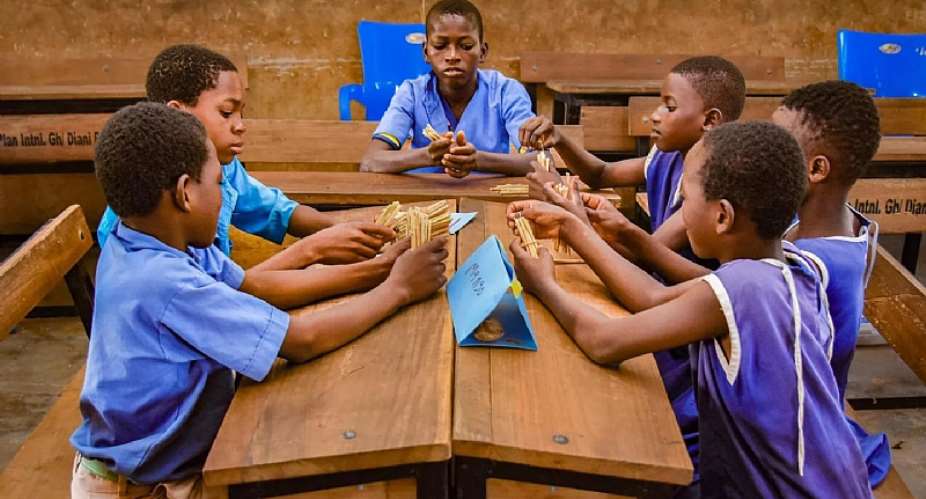
There has been an ongoing debate in Ghana’s education space about the Ghana Education Service (GES) discouraging repetition in schools. On paper, the idea sounds progressive: no child should be “left behind” or forced to repeat a class simply because they are struggling. But in practice, we must ask a harder question—are we truly helping the child, or are we simply moving them forward on paper?
1. THE CORE PROBLEM
Promotion does not automatically mean progress.
If a learner moves from Basic 5 to Basic 6 without being able to read fluently, write properly, or handle basic numeracy, what has really changed? In reality, the child enters a more demanding class with the same learning gaps. The teacher is then expected to teach new content while also fixing foundational issues that should have been addressed earlier.
This creates a system where learners are promoted, but not prepared.
2. THE PROS AND CONS OF REPETITION
Possible Benefits of Repetition
In some cases, repetition can be the more responsible option. It gives a learner time to rebuild weak foundations, especially when combined with proper academic support. A child who is not ready for the next level may benefit from revisiting key concepts in a less pressured environment.
The Limitations of Repetition
However, repetition alone is not a solution.
If a child repeats a class but continues to receive the same teaching approach, the same level of support, and no targeted intervention, nothing changes. We are simply repeating the problem, not fixing it.
There is also a psychological risk. A struggling learner who is repeatedly held back may begin to internalise failure, lose confidence, withdraw in class, and start believing they are “not smart,” especially when peers continue to progress.
3. WHAT SHOULD ACTUALLY CHANGE (THE REAL SOLUTION)
This debate should not be reduced to a simple choice between promotion and repetition. The real issue is system support.
We should be asking:
What structures exist to support learners who are falling behind?
Possible solutions include:
- Early assessment and identification of learning gaps
- Strong remedial teaching programmes
- One-on-one or small group intervention support
- Better-trained intervention teachers
- Active parental involvement
- Regular learning evaluations to track progress
For some learners, these interventions can close gaps without repetition. For others, repetition—combined with structured support—may be necessary to rebuild a strong foundation.
What is not acceptable is automatic promotion without accountability for learning outcomes.
Moving a child forward in class is not the same as moving them forward academically.
4. CONCLUSION
Repetition should not be banned outright. It should be a deliberate educational decision based on a learner’s actual needs—not a punishment, and not something avoided for convenience.
If Ghana is serious about reducing repetition, then we must also be serious about strengthening the systems that support struggling learners.
What do you think?
Should Ghana continue discouraging repetition, or is it time to rethink how we support learners who are clearly not ready for the next level?

Alpha Osei Amoako, © 2026
This Author has published 33 articles on modernghana.comColumn: Alpha Osei Amoako
Disclaimer: “The views expressed in this article are the author’s own and do not necessarily reflect ModernGhana official position. ModernGhana will not be responsible or liable for any inaccurate or incorrect statements in the contributions or columns here.”
Follow our WhatsApp channel for meaningful stories picked for your day.

Top Stories



Originally published on www.modernghana.com
