

May 4, 2026
Peter Obi leaves ADC Joins NDC Alongside Rabiu Kwankwaso Ahead of 2027 Elections
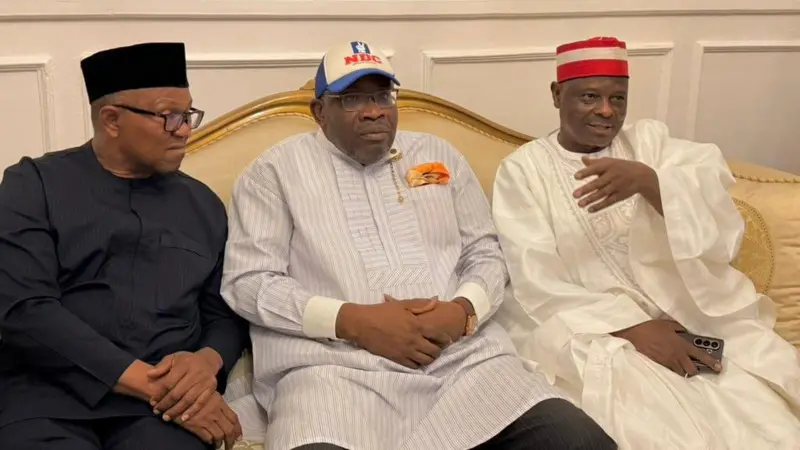
Peter Obi the former governor of Anambra State and presidential candidate of the Labour Party in the 2023 general elections has officially joined the Nigeria Democratic Congress. This development follows his recent resignation from the African Democratic Congress where he had been a member for only about six months. Obi made the announcement alongside former Kano State governor Rabiu Kwankwaso during a formal ceremony at the NDC national secretariat in Abuja on 3 May 2026.
The move comes as both politicians prepare for potential roles in the 2027 presidential election. Obi cited deepening internal crises within the ADC including toxic politics endless court cases suspicion division and what he described as interference by agents of the Nigerian state. In a public statement he stressed that the decision was driven by the urgent need to rescue the nation rather than any personal disagreements with ADC leaders such as David Mark or Atiku Abubakar. He maintained respect for those leaders while highlighting broader systemic pressures that had made continued participation untenable.
The Nigeria Democratic Congress is a relatively new party registered by the Independent National Electoral Commission in February 2026. Party officials including national leader Senator Seriake Dickson and national chairman Cleopas Moses Zuwoghe welcomed Obi and Kwankwaso by presenting them with membership cards. Dickson described the arrivals as a sign of growing public trust in the NDC which positions itself as a stable platform focused on youth women and vulnerable groups. Allies of the new members including Buba Galadima have indicated that the 2027 presidential ticket has been zoned to the South raising speculation about a possible Obi Kwankwaso pairing for the election.
Obi who finished third in the 2023 presidential race and Kwankwaso who placed fourth have both sought platforms outside their previous parties in pursuit of stronger opposition structures. The ADC which had attracted several defectors in recent months described the exits as a non fatal setback. Political observers note that the realignment could reshape the opposition landscape ahead of 2027 by consolidating influential figures into a single vehicle potentially challenging the ruling All Progressives Congress more effectively.
This latest party switch marks another chapter in Obi political journey which has seen him move through multiple platforms in recent years. Supporters view the NDC affiliation as a strategic step toward a litigation free and issue-based campaign while critics question the frequency of such changes. As the 2027 election cycle gains momentum the developments underscore ongoing fluidity in Nigerian opposition politics and the search for viable alternatives to the status quo.
