

August 5, 2026
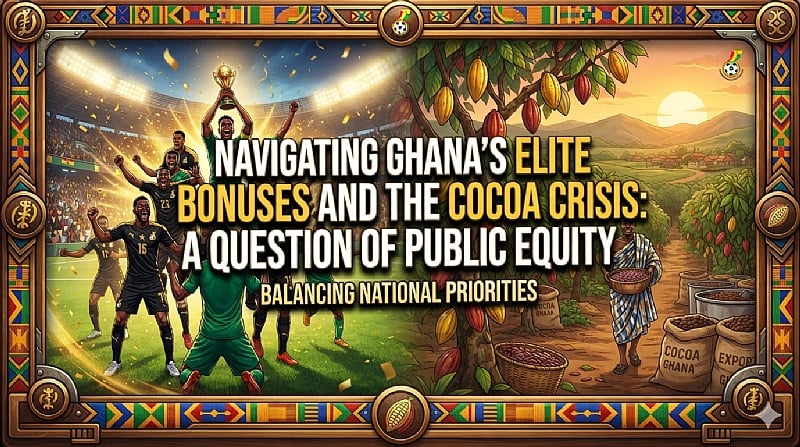
Navigating Ghana’s Elite Sports Bonuses and the Cocoa Crisis: A Question of Public Equity


Navigating Ghana’s Elite Sports Bonuses and the Cocoa Crisis: A Question of Public Equity
Examining the Financial Friction Between a GH₵32.9 Billion COCOBOD Debt and a $13.7 Million World Cup Campaign
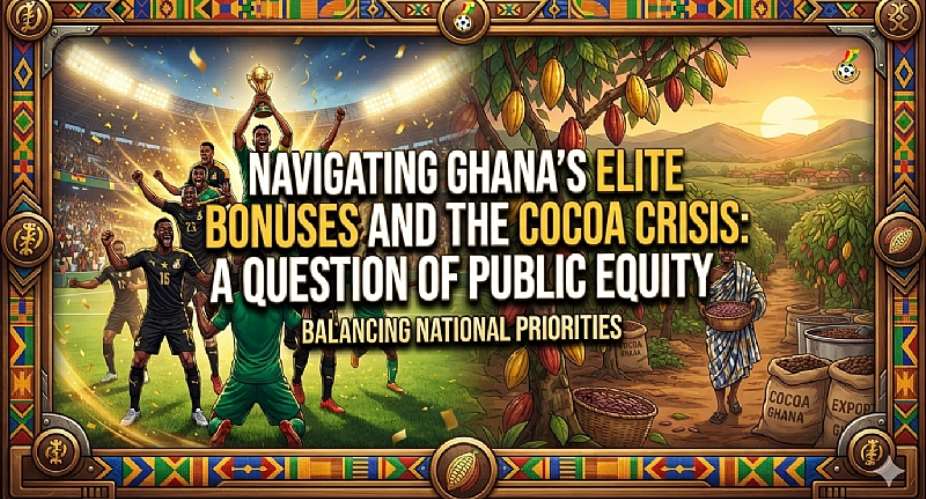
The intersection of public sector governance and elite sports administration in Ghana has once again ignited a fierce national debate. At the center of this storm is Dr. Randy Abbey, who concurrently serves as the Chief Executive Officer of the Ghana Cocoa Board (COCOBOD) and the Chairman of the Black Stars Management Committee. This dual capacity has drawn intense public and political scrutiny, highlighting a profound contrast between high-stakes sports spending and severe economic austerity within Ghana’s primary agricultural sector.
The public outcry intensified following parliamentary disclosures revealing that while rural cocoa structures are straining under immense financial liabilities, sports administrators are receiving lucrative payouts. This investigative commentary weaves together the newly unclassified data from the 2026 Mid-Year Budget Review and official parliamentary submissions to examine the true cost of elite dual-governance in a time of national economic recovery.
1. The World Cup Ledger: High Stakes and Heavy Bonuses
The financial footprint of Ghana’s 2026 FIFA World Cup campaign has faced heavy criticism, primarily driven by a stark imbalance between administrative payouts and realized tournament outcomes.
- The Campaign Budget: The Ghana Football Association (GFA) submitted an expansive $13.7 million total budget to the Ministry of Youth and Sports to fund the tournament logistics and allowances.
- The Government Pre-Financing: To keep the campaign afloat, the state disbursed a direct GH¢58 million pre-financing package to cover immediate group-stage operational needs.
- The Management Bonus Pool: A total of $310,000 was allocated for the five-member management committee. This pool enabled a highly controversial $50,000 per-member tournament appearance fee for just two weeks of service—an amount critics note represents nearly six months of an executive salary at COCOBOD.
- Player vs. Admin Payouts: Active squad members received a base appearance fee of $100,000 each. This means a single committee official’s “appearance fee” was valued at exactly half of what an on-pitch elite athlete earned.
- The FIFA Payout Deficit: While a Round of 16 placement would have secured a $16 million FIFA prize, the Black Stars exited in the Round of 32. This locked in an $11 million FIFA payout, leaving a net deficit against the initial multi-million dollar campaign architecture funded by the state.
2. The COCOBOD Crisis: Austerity on the Farm
While elite sports administrators faced lucrative tournament payouts, the domestic cocoa sector—which forms the backbone of Ghana’s rural economy—faced unprecedented fiscal tightening.
- The Debt Legacy: Upon taking over management, the administration inherited an unprecedented GH₵32.9 billion in structural liabilities, alongside a crippling GH₵3.8 billion negative equity position.
- The Cocoa Road Exposure: A significant driver of this debt was a massive GH₵26 billion exposure to cocoa road contracts awarded by the previous administration, with GH₵4.4 billion in certified work certificates sitting completely unpaid at the cash office.
- The Producer Price Drop: To stabilize these severe balance-sheet cracks, COCOBOD enforced a sharp 28.6% reduction in the cocoa producer price, forcing over one million farming families to shoulder the burden of state-level austerity.
- The Stranded Beans Market: The non-competitive farmgate pricing directly triggered a major market disruption. Over 50,000 tonnes of premium cocoa beans remained completely stranded with local farmers because buyers refused to purchase at uncompetitive rates.
- Legislative Restructuring: To prevent further collapse, the newly amended Ghana Cocoa Board Act legally stripped COCOBOD of its quasi-fiscal powers. The law permanently halted its direct financing of infrastructure like “cocoa roads” to stem systemic cash drainage.
3. The Political Battleground: Demands for Accountability
The optics of managing a struggling agricultural state enterprise while concurrently traveling for high-paying elite football assignments turned Dr. Abbey into a prime political target.
- The Minority Pushback: Citing the 28.6% farmer pay cut alongside the parallel $50,000 sports bonuses, the parliamentary Minority Caucus formally petitioned President John Dramani Mahama demanding Abbey’s immediate dismissal.
- The Defense of Dual Roles: Dr. Abbey and his backers rejected the calls for his resignation. They argued that the collapse of the 32-year-old international syndicated loan model was a structural failure of past management, and that administrative success behind the scenes equally warrants fair financial recognition.
- The Policy Pivot: COCOBOD management maintains that its long-term strategy—including enforcing a legal 70% minimum world market price guarantee for farmers and backing domestic processors—will ultimately cure the structural defects.
Strategic Recommendations and Suggestions
To rebuild public trust and ensure fiscal sanity across both state enterprises and sports federations, Ghana must institute immediate, data-driven structural reforms:
- Enact a Dual-Role Ban for State Executives: The Executive should establish a clear policy prohibiting sitting CEOs of critical state enterprises from holding demanding roles in sports management. Dr. Abbey’s dual commitment split his focus while managing a GH₵32.9 billion COCOBOD debt and a GH₵3.8 billion negative equity position, all while overseeing a $13.7 million football campaign.
- Implement Performance-Indexed Sports Payouts: The Ministry of Youth and Sports must abolish flat “appearance fees” for officials. Paying out $50,000 per management member for a two-week tournament—funded by a GH¢58 million direct government pre-financing package—is unsustainable. Payouts must be strictly back-ended and indexed to progression milestones.
- Establish Independent Sports Budget Audits: Parliament should mandate an independent audit of the $13.7 million World Cup campaign budget. With Ghana exiting in the Round of 32 and securing an $11 million FIFA payout, the state must reconcile the remaining multi-million dollar deficit to ensure no public funds were misallocated on unearned bonuses.
- Accelerate the Local Processing Transition: COCOBOD must aggressively leverage the structural shifts of its new bill. By permanently shedding the GH₵26 billion cocoa road contract exposure from its books and strictly enforcing the legal 70% minimum world market price guarantee, COCOBOD can redirect funds to support domestic processing, moving away from the failed international syndicated loan model.
The controversy surrounding Dr. Randy Abbey’s dual roles exposes a deeper, systemic issue within Ghanaian governance: the disconnect between corporate austerity and institutional privilege. It remains politically and socially unsustainable to ask over a million cocoa farmers to absorb a painful 28.6% income cut while state officials justify thousands of dollars in sports appearance bonuses over a two-week period.
If Ghana is to successfully navigate its ongoing economic recovery, public service must be defined by synchronized sacrifice. True accountability requires that the structural reforms promised under the new COCOBOD legal frame are matched by an equally rigorous clean-up of how elite sports campaigns are budgeted, managed, and rewarded.
✍️ Submitted by:
Retired Senior Citizen
For and on behalf of all Senior Citizens of the Republic of Ghana 🇬🇭
Teshie-Nungua
[email protected]

Atitso Akpalu, © 2026
A Voice for Accountability and Reform in Governance. More Atitso Akpalu is a prominent Ghanaian columnist known for his incisive analysis of political and economic issues. With a focus on transparency, accountability, and reform, Akpalu has been a vocal critic of mismanagement and corruption in Ghana’s governance. His writings often highlight the need for decentralization, local governance empowerment, and robust anti-corruption measures. Akpalu’s work aims to foster a more equitable and just society, advocating for policies that benefit all Ghanaians.
He is a passionate advocate for transparency and accountability. His columns focus on critical analysis of political and economic issues, with a particular interest in the energy sector, financial services, and environmental sustainability. He believes in the power of informed citizenry to drive positive change and am committed to highlighting the challenges and opportunities facing Ghana today.Column: Atitso Akpalu
Disclaimer: “The views expressed in this article are the author’s own and do not necessarily reflect ModernGhana official position. ModernGhana will not be responsible or liable for any inaccurate or incorrect statements in the contributions or columns here.”
Follow our WhatsApp channel for meaningful stories picked for your day.
Top Stories


Originally published on www.modernghana.com
