

August 7, 2026
Ghana’s inflation declines to 4.6% in July
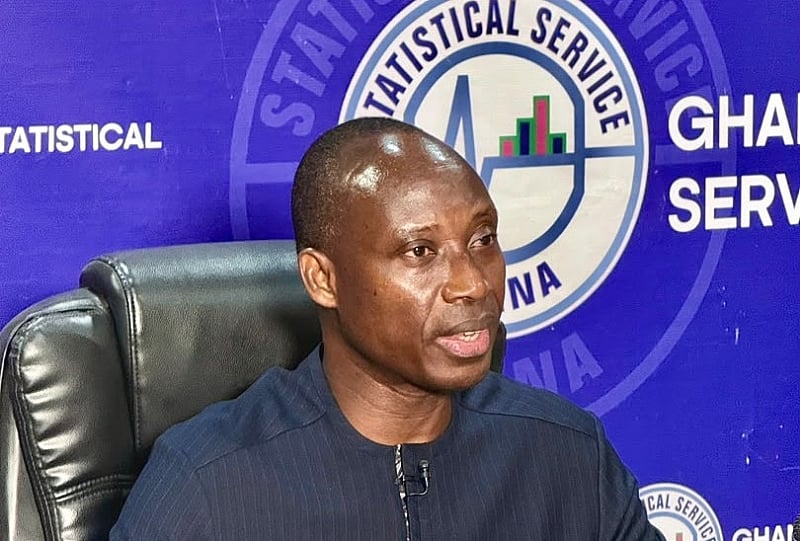


Ghana’s inflation declines to 4.6% in July

Ghana’s headline inflation slowed to 4.6 per cent in July 2026 from 5.3 per cent in June, marking its lowest level in recent months and a sharp decline from 12.1 per cent recorded in July 2025, the Ghana Statistical Service (GSS) has reported.
The GSS said the national Consumer Price Index (CPI) rose to 271.1 in July from 270.9 in June, with month-on-month inflation at 0.1 per cent, indicating that consumer prices remained broadly stable during the month.
Food inflation eased to 3.1 per cent in July from 3.9 per cent in June, while non-food inflation stood at 6.1 per cent, reflecting continued price pressures in services, including transport, housing, health and education.
Goods inflation slowed to 3.4 per cent from 3.7 per cent in June, while services inflation declined to 8.5 per cent from 9.4 per cent. Despite the moderation, services inflation remained more than twice the rate of goods inflation.
Presenting the figures in Accra on Thursday, Government Statistician Dr Alhassan Iddrisu said inflationary pressures continued to ease after a temporary uptick between March and June.
“Prices are still rising, but far more slowly. Inflation eased to 4.6 per cent in July 2026, 7.5 percentage points below the level recorded in July 2025,” he said.
Dr Iddrisu said the 0.1 per cent month-on-month inflation rate suggested greater stability in the cost of everyday goods and services.
The GSS attributed the broad-based moderation in inflation to easing food prices, lower transport costs, reduced imported inflation and improvements in domestic supply chains, although services continued to record relatively strong price increases.
The report said locally produced goods and services accounted for 86.7 per cent of overall inflation, while imported inflation was two per cent, reflecting relative exchange-rate stability.
“At 8.5 per cent, services remain the most stubborn component of the inflation basket and the main risk to further disinflation,” Dr Iddrisu said.
Across the 13 divisions of the CPI basket, food and non-alcoholic beverages contributed the largest share of inflation at 32.4 per cent.
Housing, water, electricity, gas and other fuels accounted for 22.8 per cent of overall inflation, with annual inflation for the category increasing to 8.3 per cent from 7.9 per cent in June.
Regional inflation rates continued to vary widely, ranging from 10.8 per cent in the North East Region to negative 3.8 per cent in Bono East Region, where prices declined over the year. Ashanti and Greater Accra regions together accounted for 62 per cent of national inflation.
Among individual items, ginger recorded the highest annual price increase at 111.3 per cent, followed by mangoes at 89.0 per cent. In contrast, kontomire and garden eggs registered annual price declines of 41.2 per cent and 34.5 per cent, respectively.
The GSS identified rent, tomatoes and ginger among the largest contributors to overall inflation during the month.
Dr Iddrisu urged businesses to use the official inflation rate in pricing decisions and contract negotiations, while advising policymakers to continue fiscal discipline and targeted interventions in high-inflation regions to sustain the disinflation trend.
GNA

Top Stories


Originally published on www.modernghana.com
