

July 14, 2026
Ghana’s Highest Offices Must Belong To Those With Undivided National Allegiance
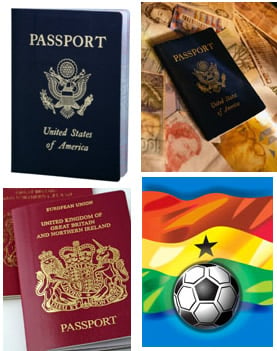


Tue, 14 Jul 2026 Feature Article
Ghana’s Highest Offices Must Belong To Those With Undivided National Allegiance
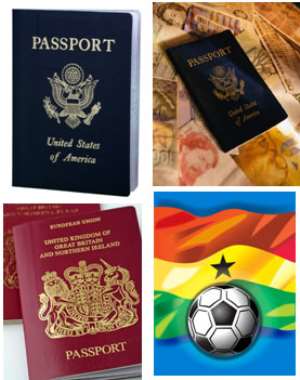
A passport is more than a travel document.
It is a covenant between a citizen and a nation.
It carries rights, responsibilities, and an oath of allegiance. That is why the debate over dual citizenship is not simply about remittances, investment, or global mobility. It is about one fundamental question:
Should those entrusted with leading Ghana owe constitutional allegiance to only one country or to two?
The reported decision by the Chairman of the Council of State, Right Honourable Edward Doe Adjaho, to reject calls for legislation that would permit dual citizens to occupy Ghana’s highest constitutional offices deserves serious national reflection.
This debate should not be driven by emotion or by the amount of money sent home through remittances. It should be guided by one overriding principle: the protection of Ghana’s sovereignty and national interest.
No one disputes the enormous contributions of Ghanaians living abroad. Every year, the Ghanaian diaspora supports families, invests in businesses, builds homes, creates jobs, and contributes billions of dollars to the economy through remittances. These contributions are invaluable and should continue to be encouraged.
However, economic contribution alone should not determine eligibility for the nation’s highest public offices.
Citizenship is not merely about economic value. It is about constitutional responsibility, accountability, and undivided allegiance.
Ministers, national security officials, members of Cabinet, and the President are entrusted with sensitive state secrets, foreign policy decisions, military matters, and the long-term strategic interests of Ghana.
It is therefore reasonable to ask whether those occupying such positions should have a single, unquestioned constitutional allegiance.
Supporters of expanding eligibility often argue that dual citizens bring international experience, investment opportunities, and valuable expertise. There is truth in that argument. Many members of the Ghanaian diaspora possess exceptional skills that can help national development.
Yet expertise does not require holding the country’s highest constitutional offices.
Diaspora professionals can serve Ghana as advisers, investors, academics, consultants, entrepreneurs, and technical experts without creating constitutional uncertainty over questions of allegiance.
Another important issue is civic responsibility.
Citizenship carries obligations as well as privileges. Depending on the laws of another country, citizens may have legal duties such as taxation, jury service, military obligations, or compliance with foreign legal requirements. These obligations vary from country to country, but they illustrate why questions of competing legal responsibilities deserve careful consideration before expanding eligibility for the highest offices of state.
The world is also becoming increasingly unpredictable.
Recent years have witnessed tighter immigration policies, growing nationalism, geopolitical tensions, and changing relationships between states. These developments remind us that every country ultimately places its own national interests first.
During periods of international disagreement or diplomatic tension, questions may arise fairly or unfairly about competing loyalties. Whether or not such concerns are justified, public confidence in national leadership depends on citizens believing that their leaders’ allegiance is beyond question.
This is not an argument against the Ghanaian diaspora.
Nor is it an argument against dual citizenship itself.
Many countries benefit enormously from citizens who maintain ties to more than one nation. Dual citizenship can promote trade, education, investment, tourism, and international cooperation.
The issue before Ghana is narrower and more significant.
It concerns whether the highest constitutional offices those responsible for protecting the sovereignty, security, and future of the Republic should be reserved for citizens whose legal allegiance rests solely with Ghana.
That principle does not diminish the patriotism of dual citizens. Many have demonstrated extraordinary commitment to Ghana despite living abroad.
Rather, it reflects the unique responsibilities attached to leadership at the highest level of government.
The debate should therefore move beyond personalities and politics.
It should focus on constitutional integrity, national security, public confidence, and the long-term protection of Ghana’s democratic institutions.
Every nation has the sovereign right to determine the qualifications for its highest offices.
Whatever Parliament ultimately decides the guiding principle should remain clear:
The highest positions in the Republic of Ghana must always place Ghana’s interests above every other consideration.
The future of the nation deserves nothing less.
A word to the wise is enough.
https://www.youtube.com/live/2VhIBFt4_7Q

Stephen Armah Quaye, © 2026
Broadcast Journalist and News Reporter based in Toronto, Ontario, Canada
Column: Stephen Armah Quaye
Disclaimer: “The views expressed in this article are the author’s own and do not necessarily reflect ModernGhana official position. ModernGhana will not be responsible or liable for any inaccurate or incorrect statements in the contributions or columns here.”
Follow our WhatsApp channel for meaningful stories picked for your day.

Top Stories


3 hours ago


<!–
–>
Originally published on www.modernghana.com
