

July 11, 2026
Ebonyi GBV Taskforce Holds 2nd Quarter Coordination Meeting, Receives Stakeholders’ Applause as National Model
4 hours ago | General News
Ebonyi GBV Taskforce Holds 2nd Quarter Coordination Meeting, Receives Stakeholders’ Applause as National Model

The leadership of Ebonyi State Gender-Based Violence Taskforce have been lauded for its passion which has launched the taskforce into international limelight and a medel for other states to copy.
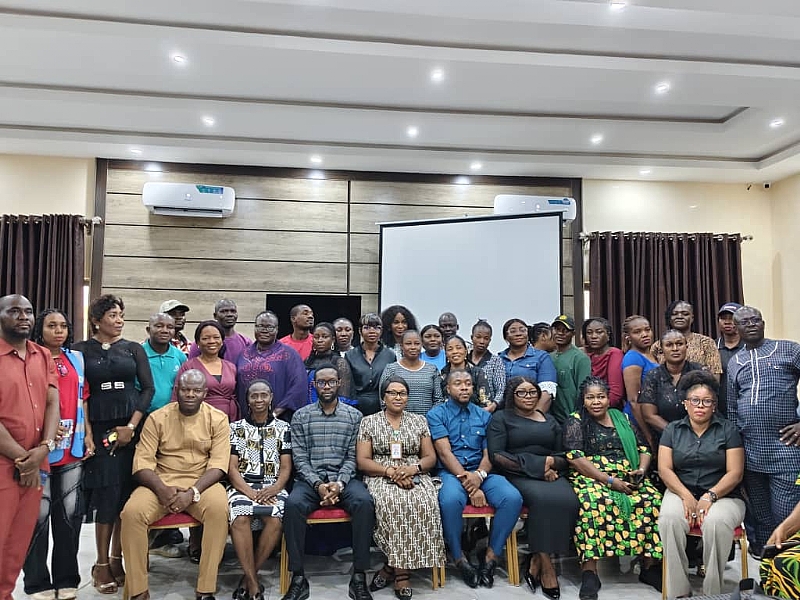
The commendation came from some key foundational stakeholders during the Taskforce’s 2nd quarter coordination meeting held on Thursday in Abakaliki, the Ebonyi state capital.
The meeting was organised by the Taskforce with support and facilitation from the Jhpiego team as part of activities under its project: Advancing Service Delivery for Integrated Sexual and Reproductive Health Rights and Communicable Diseases in Ebonyi state.
The Reverend Ikechukwu Nwogu, Executive Director, Economic and Social Empowerment of Rural Communities (ESERC) a Civil Society organization with headquarters in Enugu state narrated how applause greeted the Ebonyi GBV Tasforce’s model when he did a presentation on it recently in a conference in South Africa.
ESERC is one of the CSOs that contributed to the official launch of the Tasforce in 2021 through the UN-EU Spotlight Initiative.
“When I finished the presentation, I was overwhelmed by the applause that greeted the model from participants across nations. It gladdened my heart knowing that my organisation was part of those instrumental to the formal launch of the body in 2021”, Nwogu narrated.
Speaking to newsmen, he attributed the successes recorded by the taskforce to the quality of its leadership under Barr. Mrs Faith-Vin Nwanchor, and the cooperation from partner organizations and agencies.
While paying tributes to the pioneer foundation efforts of the exited USAID – Integrated Health programme and the UN-EU Spotlight Initiative and his organisation, ESERC, in establishing the taskforce in the state, he maintained that the body has been progressively sustained over the years by the unwavering passion and dedication of its leaders.
“The task force has been there responding to cases of GBV even after about 3 years of ending Spotlight Initiative, USAID-IHP and other International Partners
“People are now aware that they can report cases and something will be done about it.
“By so doing, you find out that even the perpetrators themselves are also aware that it’s no longer business as usual, when they will just perpetrate GBV and go scot-free.
Now, the law will catch up with them.
“So a lot of people: the civil society organizations, even the Ministries of Women Affairs, Justice, NAPTIP, the Police, everybody is coming on board now to join hands because it’s not a fight only one organization can fight.
I tell you, at first we talked about the donor funding. The Spotlight Initiative was there, USAID – IHP, including ESERC were there and laid the foundation.
“But beyond that funding, you have people who are passionate about ending GBV in their state. That is why after December 2023, close to three years now, GBV task force of Ebonyi is still actively working.
Why? Because we have people who are passionate about the work, who can make sacrifices to ensure that GBV is ended in Ebonyi State.
“Now, let me also tell you that the Ebonyi State GBV task force has also given birth to another task force in Enugu.
“Now we have Enugu State GBV Taskforce that is also working in the same way because there is already a model, which is Ebonyi model they are now replicating in that State.
“And we also hope to move to other states: Imo, Anambra, Abia States, covering the south-east before we start moving to south-west and south-south and other regions of the country.”
Mrs Marcelina Ibina, retired former Director of Women Affairs in the State Ministry of Women Affairs and Social development also expressed joy over the progress made by the taskforce within the past few years, emphasizing that it has advanced data collection strategies
She added: “I make bold anywhere I go to mention Ebonyi GBV Taskforce.
Before now, in this state, we’ve been working without data, and you can be sure that without data you are going nowhere in the issue of GBV because it forms the baseline.
“So, we are moving forward, never had it so good, and that is my happiness.
Where the taskforce is now, we didn’t know we could get there when we initiated it some years back, and I’m impressed that things are changing for the better.”
The State Coordinator of the Taskforce, Barr. Faithvin Nwanchor, explained that the coordination meeting was aimed at getting Stakeholders together to review and reappraise performances and chart a course forward.
She added: ” it provides us the opportunity to look at our challenges, our strengths, and equally know how to provide solutions; how to push the work for effective implementation of the VAP law, our strategic plan, referral pathways that we have established in the course of fighting gender-based violence in the state.
“Before now, we were having issues as a state with respect to proper data gathering, worsened when the national dashboard crashed.
“Currently, with the support of Jhpiego this particular year, we have done so well in our reportage, though some organizations really needs to step up their games. But in today’s meeting, I can say that we have about 70% compliance.”
Nwanchor, also the Head, Sexual and Gender-based Violence Response Department in the Ebonyi State Ministry of Justice, emphasized that GBV data supports the Taskforce in programming and the state on information concerning GBV prevalence and patterns for better decision making and policy giude.
Presenting summarized aspects of the quaters’ GBV data so far, the Taskforce’s Public Relation Officer, Goodness Mgbaja, said the Taskforce received a total of 1, 088 cases from January to April and 111 in May and June with 5 Court convictions between January and June, 2026.
The Taskforce, according to her also offered 41 Referral services, 24 reintegrations, 374 health services, 118 legal services, including litigations and ADR; 65 Safety services, 15 survivor empowerments, 65 counselling services and 24 arrests among others, from January to April.
She identified lack of funds, security concerns, cultural barriers and lack of adequate and functional shelter for survivors as part of the challenges facing the Taskforce and recommended increased funding and government’s attention , strengthened referral system, regular stakeholders engagement and expansion of survivors’ empowerment initiative.
The coordination meeting was attended by representatives of Ministries of Women Affairs, Justice and Health; National Human Rights Commission, NAPTIP, partner CSOs, including Human Rights and Conflict Resolution Centre; NAPTIP, the Police and other partner security agencies and the media, among others.
Originally published on www.thenigerianvoice.com
