

August 3, 2026
‘Delegate system creates relatively small body for targeted inducements’ — Chief Justice Paul Baffoe-Bonnie said in ruling


‘Delegate system creates relatively small body for targeted inducements’ — Chief Justice Paul Baffoe-Bonnie said in ruling
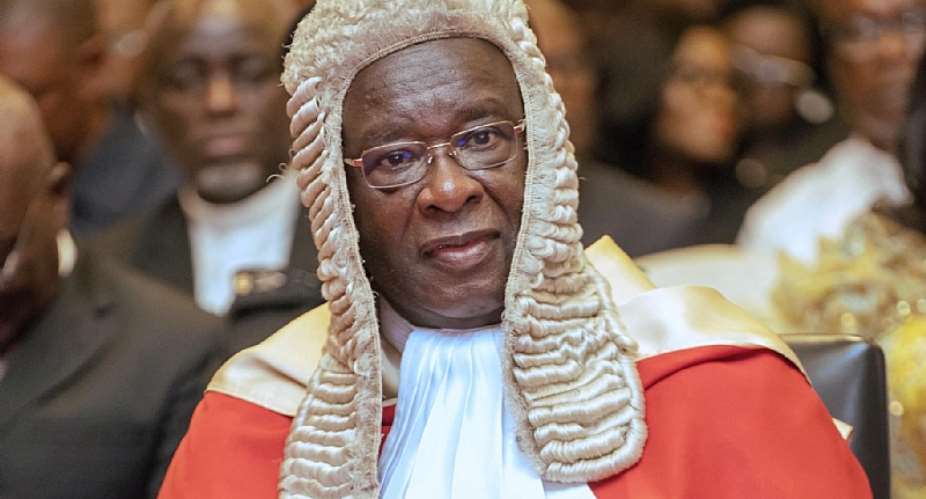
The Supreme Court has held that allowing all political party members in good standing to participate directly in presidential and parliamentary primaries may not completely end vote buying but could significantly reduce the influence of targeted financial inducements in internal elections.
Chief Justice Paul Baffoe-Bonnie, delivering the majority judgment in the case of Prof. Kwabena Frimpong-Boateng and two others v. the New Patriotic Party and four others, said the current delegate system creates conditions that make internal elections more susceptible to financial manipulation.
The judgment, delivered on July 29, 2026, followed a 5–2 decision by the apex court declaring the delegate-based system used by political parties to elect presidential and parliamentary candidates unconstitutional.
The Court subsequently directed political parties to adopt mechanisms that allow all qualified members to vote directly in selecting their candidates.
Addressing concerns that expanding participation may not necessarily eliminate money politics, Chief Justice Baffoe-Bonnie acknowledged that financial influence in politics could evolve under a new system.
“True, opening party primaries to every party member is no guarantee that money politics will disappear. Corruption is remarkably adaptable. It often changes its form rather than vanish altogether. Yet constitutional adjudication rarely offers perfect solutions,” he stated.
He explained that while no electoral system provides an absolute solution to political corruption, courts must choose approaches that best uphold constitutional values and democratic principles.
According to the Chief Justice, limiting the electorate to a small group of delegates increases the importance of each individual vote and creates a smaller, more easily targeted group for candidates seeking influence.
“Concentrating decisive electoral power in a relatively small body of delegates inevitably increases the value of each delegate’s vote. It creates a smaller market, a more identifiable electorate and, therefore, a more attractive environment for targeted inducements,” he said.
The Court recognised that opening party primaries to thousands of members could come with additional costs, including higher campaign expenses and logistical difficulties.
However, it concluded that a broader voting base would spread political power among ordinary party members and make it harder for election outcomes to be determined through limited financial transactions.
“A broader electorate may increase campaign costs, but it also disperses political power among thousands of ordinary members, making it considerably more difficult for electoral outcomes to be shaped by a relatively small number of transactions,” the judgment stated.
Chief Justice Baffoe-Bonnie said the decision aligns with the democratic ideals of the 1992 Constitution, particularly its emphasis on wider participation and citizen involvement in determining political authority.
“For that reason, this Court may legitimately conclude that, at this stage of Ghana’s democratic development, fidelity to the Constitution requires political parties to embrace the model of democracy that the Constitution itself consistently prefers for the purpose of constituting political authority,” he added.
The case was brought by Prof. Kwabena Frimpong-Boateng, Dr Nyaho Nyaho-Tamakloe and Dr Christine Amoako-Nuamah, who argued that the delegate system deprived ordinary party members of meaningful participation in choosing candidates.
The Supreme Court granted the reliefs sought by the plaintiffs and restrained political parties from continuing to rely on the delegate system for selecting presidential and parliamentary candidates.
Political parties have been given one year from the date of the judgment to establish systems that will enable all eligible members to participate directly in their internal elections.
The Court further held that the Electoral Commission has a duty to ensure political parties operate and conduct their activities in line with constitutional requirements.
However, it clarified that decisions and actions already taken under the delegate system before the judgment remain valid and cannot be invalidated solely because of the ruling.
The seven-member panel comprised Chief Justice Paul Baffoe-Bonnie, Justice Gabriel Scott Pwamang, Justice Issifu Omoro Tanko Amadu, Justice Samuel Kwame Adibu-Asiedu, Justice Senyo Dzamefe, Justice Ernest Yao Gaewu and Justice George Kingsley Koomson.
Justices Samuel Kwame Adibu-Asiedu and Ernest Yao Gaewu dissented from the majority decision.

Top Stories


Originally published on www.modernghana.com
