

July 20, 2026
Champions of Change Project: Driving collective action against SGBV in Ghana


Champions of Change Project: Driving collective action against SGBV in Ghana
In Ghana’s Savannah and Northern regions, the struggle for gender equality is not merely a policy concern, it is a lived reality shaped by deep-rooted cultural norms and persistent economic hardship.
For many women and girls, opportunity remains constrained by patriarchal systems that limit their voice, agency, and access to livelihoods. Despite their critical role in agriculture and local economies, women continue to face systemic barriers that keep them on the margins of economic and social life.
Harmful practices such as early and forced marriage, coupled with limited access to resources and decision-making spaces, have contributed to high levels of sexual and gender-based violence (SGBV). In some communities, over two-thirds of women are estimated to live below the poverty line, pushing many to migrate to urban centres in search of survival often under precarious and exploitative conditions.
This reality persists despite Ghana’s strong reputation as a beacon of democracy in West Africa and its robust legal and policy frameworks aimed at promoting gender equality and protecting human rights. Provisions such as Article 17 of the 1992 Constitution, the Domestic Violence Act (Act 732), the Criminal Code (Act 29), and the Affirmative Action Act (Act 1121) underscore national commitment to addressing SGBV.
The 2030 Sustainable Development Goals that the Champions of Change: Collective Resilient Action Against SGBV and discrimination initiative was launched by PureTrust Foundation LBG, with funding support from the German Federal Ministry for Economic Cooperation and Development (BMZ) through the GIZ S(H)E Project.
Implemented across four districts in the Northern and Savannah Regions, the project aimed at promoting social equity through transformative, grassroots approaches. Anchored on four key pillars; Empowerment, Prevention, Advocacy, and Support (EPAS), the initiative equips communities with the knowledge, tools, and institutional backing needed to challenge harmful norms and respond effectively to SGBV.
The project delivered in collaboration with the National Commission for Civic Education (NCCE) and the Commission on Human Rights and Administrative Justice (CHRAJ) helped in strengthening institutional partnerships and enhancing access to justice, building strong emphasis on inclusion, ensuring that marginalized groups, including Persons with Disabilities (PWDs) and minority populations, are actively engaged and supported.
Project implementation
Through an innovative approaches and grassroots engagement, the project has empowered communities, and promoted collective action against SGBV.
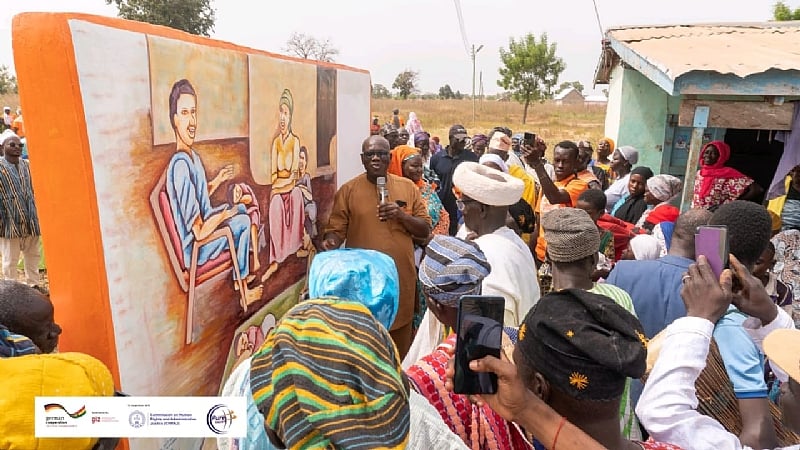
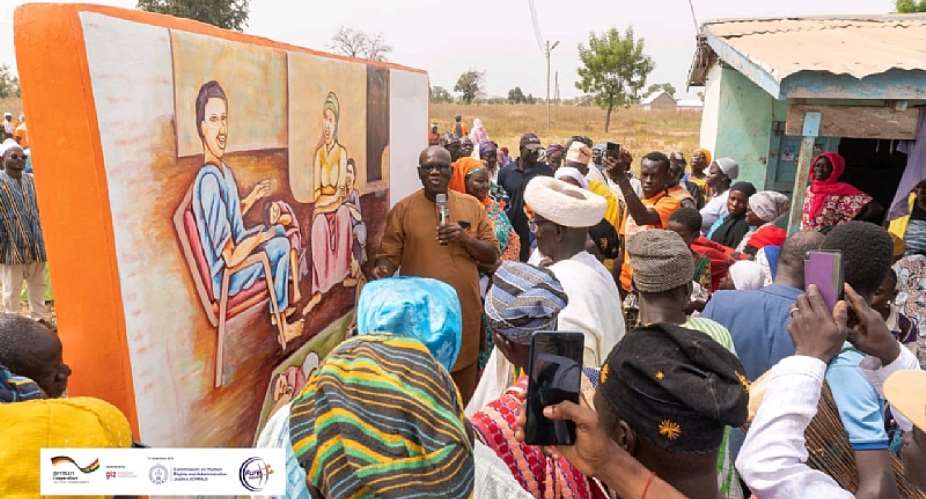
To commemorate the 16 Days of Activism Against SGBV, a community durbar was held in the Tamale Metropolis under the theme “Orange the World.” A symbolic mural painting was unveiled, depicting the principles of Gender Model Family and positive spousal communication emphasizing respect, unity, shared responsibility, and non-violence.
The event created space for dialogue, reflection, and stakeholder commitments, with the mural serving as a lasting visual reminder of the collective resolve to end SGBV and promote harmony within homes and communities.
Media advocacy engagements
The Champions of Change District Gender Action Groups (DiGAGs) Hour leveraged television, radio, and print media to amplify awareness on SGBV and discrimination. These platforms featured key stakeholders including CHRAJ, Community Foundations, Persons with Disabilities (PWDs), and community members who shared experiences and insights on vulnerability, prevention, and response systems.
Capacity building and trainings
The project trained 91 community members as SGBV and anti-discrimination peer educators across operational districts. These volunteers are now leading awareness creation efforts aligned with the project’s four pillars empowerment, prevention, advocacy, and support.
Additionally, Financial Resilience Trainings empowered over 200 women with practical skills in financial planning, savings, budgeting, accessing financial services, and family-level financial decision-making. These interventions aimed to reduce economic vulnerability, strengthen household stability, and address financial-related abuse.
Stakeholder dialogues and systems strengthening
The project convened a series of stakeholder engagements, including district dialogues, a Survivor-Centered Forum, and a co-creation meeting on the Badge of Honour initiative across North Gonja, Bole, and Tamale.
Digital advocacy
The project leveraged digital platforms including Facebook, LinkedIn, and WhatsApp to expand its outreach. Key digital products included radio jingles in eight local languages and animated videos promoting shared decision-making and household cooperation.
These materials were disseminated through radio, community information centers, group meetings, and public events reaching a wide and diverse audience. Additional outputs included project activity videos, beneficiary testimonials, and IEC materials such as flyers, all aimed at strengthening awareness of SGBV, referral pathways, and project milestones.
A tripartite synergy
The initiative reflects a strong division of roles, maximizing the comparative strengths of each partner.
GIZ, on behalf of the German Federal Ministry for Economic Cooperation and Development (BMZ), provided funding, strategic direction, and capacity-building support ensuring alignment with global best practices and sustainable development principles.
PureTrust Foundation served as the project’s grassroots engine, leveraging its community-centered approach to mobilize local actors, deliver sensitization programs, and establish community-based human rights structures—ensuring deep local impact.
The Federation for Persons with Disabilities was also intentionally engaged to co-create and lead activities, ensuring inclusivity across all interventions.
Project impact and reach
The Champions of Change Project recorded significant impact across both community-level engagements and digital platforms, reaching over 390,000 individuals, with more than 36,000 people directly engaged through physical activities such as community dialogues, trainings, stakeholder engagements, and public awareness campaigns. These engagements created safe spaces for discussions on Sexual and Gender-Based Violence (SGBV), discrimination, and social inclusion, particularly among women, youth, and Persons with Disabilities (PWDs).
A major highlight was the 16 Days of Activism market storm campaign, which alone reached over 131,000 people, significantly amplifying awareness and community participation.
The project’s digital strategy further expanded its footprint, reaching over 320,000 individuals online through social media campaigns, radio discussions, jingles, and an animation video promoting the Gender Model Family concept. Notably, social media engagements exceeded 110,000 interactions, while campaign-related digital content generated thousands of additional impressions.
Capacity-building efforts also yielded measurable results. 91 peer educators were trained using a structured SGBV manual, while over 500 Human Rights Champions were equipped to lead advocacy and awareness efforts within their communities. These trained individuals continue to serve as critical agents of change, sustaining project impact beyond its implementation period.
The project’s integrated approach combining direct community engagement with strategic digital outreach has not only increased awareness of SGBV but also contributed to shifting attitudes, strengthening local response mechanisms, and promoting more inclusive and peaceful communities.
Stakeholder reflections and impact
As the project drew to a close, stakeholders highlighted both its impact and the need for sustainability.
The Metropolitan Director of NCCE, Mr. Mahama Abdul Fatawu, emphasized that sustainable change must be locally driven saying “Sustainable change cannot be imported unless it is homegrown. We are not just teaching people about their rights; we are empowering them to become architects of their own destiny.”
The Northern Regional Chief Investigator at CHRAJ, Mr. Seidu Alhassan, noted that the project has helped to strengthened institutional outreach. “The Champions of Change project amplifies our mandate, enabling us to extend our reach, educate citizens on redress mechanisms, and collaborate more effectively in monitoring human rights violations”, he said.
He stressed the need for partnerships in decentralizing access to Alternative Dispute Resolution (ADR) and human rights education.
At the community level, Paul Ayi, a peer educator from the Zaapayim Shea Butter Processing Cooperative, said, the project has transformed homes. “Before, children feared their fathers, but now we practice family dialogue and shared decision-making” he added.
Another peer educator, Imam Iddrissu Afa Issahaku of Bogkurugu noted that, the training has equipped him to integrate SGBV awareness into his sermons, influencing both religious and community spaces.
The Chief Executive Officer (CEO) of PureTrust Foundation, Mr. Habib Haruna, said, the project has helped to enhance financial decision-making and stronger household relationships. He noted that an increased community commitment, with traditional leaders publicly pledged to promote violence-free homes.
Project Coordinator Mad. Tahiru Jamila added that the initiative has developed a network of local advocates who continue to challenge harmful practices and promote gender equity within their communities.
The way forward
Building on its achievements, the next phase of the Champions of Change Project will focus on sustaining impact, scaling strategic interventions, and strengthening community ownership in the fight against SGBV.
Priority will be given to supporting trained peer educators and Human Rights Champions to continue leading advocacy and response efforts within their communities. The project will also expand to selected high-need areas while maintaining a focused, results-driven approach.
Efforts will further intensify on digital and media-driven campaigns to widen reach and sustain public engagement, alongside strengthened collaboration with institutions such as NCCE and CHRAJ to improve access to justice and service delivery.
Ultimately, the project will deepen community-led structures and promote local ownership to ensure that progress made is sustained beyond the project lifecycle.
[email protected] 0241076960
Disclaimer: “The views expressed in this article are the author’s own and do not necessarily reflect ModernGhana official position. ModernGhana will not be responsible or liable for any inaccurate or incorrect statements in the contributions or columns here.”
Follow our WhatsApp channel for meaningful stories picked for your day.

Top Stories


Originally published on www.modernghana.com
