

July 5, 2026
A Tribute to Sayyid Ali Khamenei D and His Beloved Granddaughter: A Legacy of Leadership, Resistance, Sovere
4 hours ago | Tributes
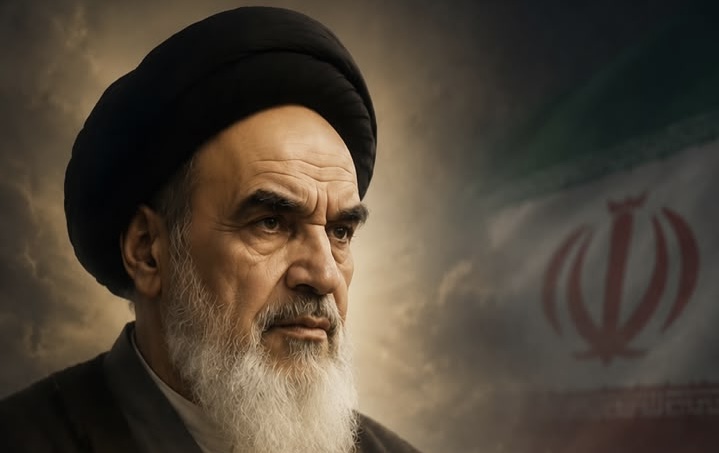
A Tribute to Sayyid Ali Khamenei (D) and His Beloved Granddaughter: A Legacy of Leadership, Resistance, Sovereignty, and the Global Quest for Justice
History does not remember those who merely held power; it remembers those who inspired humanity with a purpose greater than themselves. The true measure of a person’s legacy lies not in wealth, military strength, or political authority, but in the lives they touch, the hearts they unite, and the hope they inspire.
Millions of mourners attended the funeral ceremonies for Ayatollah al-Uzma Sayyid Ali Khamenei (D). Official estimates ranged from more than 20 million to as many as 30 million attendees across all ceremonies.
A leader who brings millions together becomes more than a figure of his own era; he becomes part of humanity’s enduring memory. Although time claims every human life, ideas that awaken courage, resilience, and conviction continue to shape generations long after their originators have passed. In the end, the greatest legacy is not a monument of stone, but a living one, carried in the hearts and minds of the people.
For many, the immense public response reflects the profound influence Sayyid Ali Khamenei (D) had on people around the world. To his supporters, his legacy extends beyond politics, symbolising resilience, independence, and a steadfast commitment to principles of sovereignty and justice.
The loss of such a personality represents far more than the passing of an individual. It is a deeply significant moment that transcends national borders. Leaders who inspire millions leave behind not only memories but also enduring convictions that continue to influence history and motivate future generations. Whether one agrees with his views or not, his influence on political, religious, and ideological debates remains undeniable.
I. Sovereignty and the Voice of the Global South
Throughout history, nations and individuals have struggled to preserve what they regard as most sacred: their sovereignty, their dignity, and their right to determine their own future. While military power, economic influence, and political alliances have often shaped international affairs, there remains a widely held belief, particularly across much of the Global South, that no nation should possess the authority to dictate the destiny of another.
This conviction has become increasingly prominent in contemporary debates concerning Iran, Palestine, Lebanon, Africa, Latin America, and the wider international order. Although opinions differ considerably regarding governments and foreign policies, many people maintain that respect for sovereignty, human dignity, and international law should remain the foundation of relations between states.
The principle of sovereignty is firmly established in the Charter of the United Nations, which recognises the sovereign equality of all member states and discourages interference in their domestic affairs. For many countries across Africa, Asia, and Latin America, these principles carry particular significance because of their shared histories of colonialism, foreign intervention, and long struggles for independence.
Within this context, many observers regard Iran as a symbol of resistance to external pressure. Since the 1979 Islamic Revolution, the country has faced decades of economic sanctions, diplomatic isolation, and recurring regional tensions. While opinions remain sharply divided regarding Iran’s domestic governance and regional policies, many acknowledge that prolonged sanctions have imposed significant economic hardship on ordinary Iranians.
The recent confrontation involving Iran, Israel, and the United States illustrates an important lesson: overwhelming military superiority does not always translate into lasting political success. Powerful nations should respect the sovereignty of countries in the Global South or risk strategic, political, and moral setbacks. Military strength alone cannot guarantee lasting influence when confronted by determined populations committed to defending their nation, their independence, and their way of life.
To millions across the globe, Sayyid Ali Khamenei (D) symbolised steadfastness and an unwavering commitment to Iran’s sovereignty and independence despite decades of sanctions and pressure. They regard him not only as a revolutionary but also as an Islamic scholar whose speeches frequently drew upon the Qur’an and Islamic ethics, encouraging patience, unity, perseverance, and a commitment to justice. Others, however, hold sharply different opinions about his leadership and policies, making him one of the most influential figures in the contemporary Middle East and in the world at large.
II. The Innocence of Childhood: A Granddaughter as a Symbol of Humanity
True leadership is not measured solely by military victories or political influence. Rather, it is measured by compassion, service, integrity, and dedication to the welfare of ordinary people. In that spirit, one may imagine a leader whose greatest honour lies not in titles or power, but in seeing children run towards him without fear, confident in the security and hope he represents. Such a vision places humanity above power, service above prestige, and moral responsibility above personal ambition.
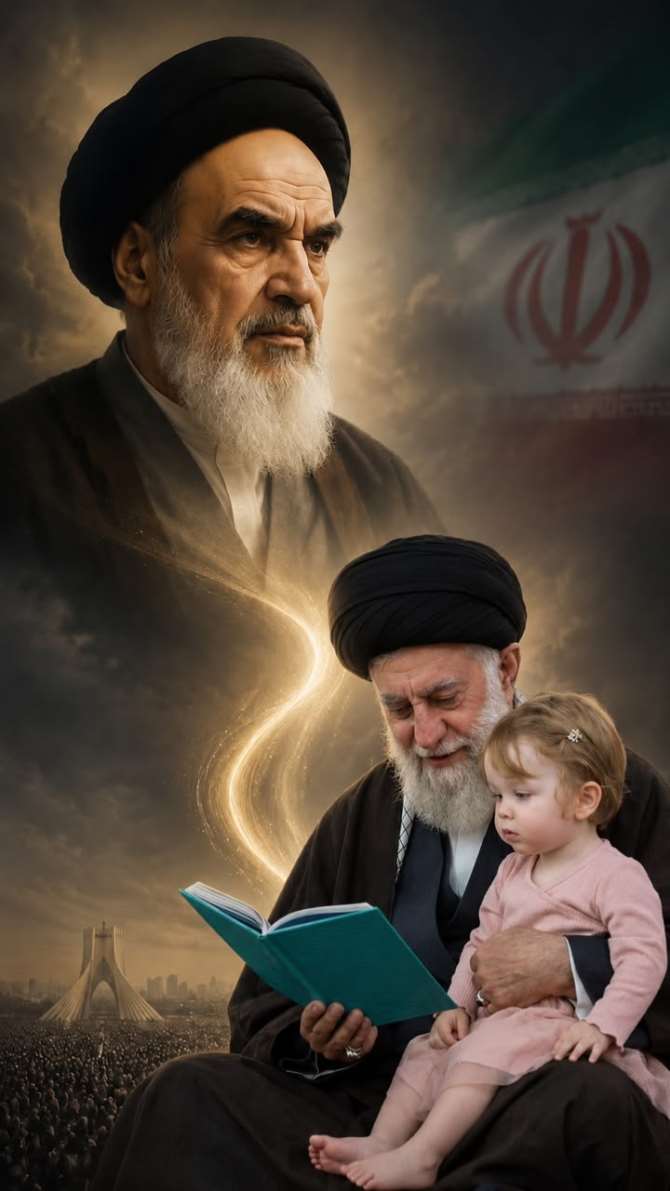
Beyond political leadership and ideological debate lies a truth that belongs to all humanity: children should never bear the burden of war. The image of Sayyid Ali Khamenei’s (D) beloved granddaughter serves, in this tribute, as a symbol of every innocent child whose life deserves protection, dignity, and hope. It reminds us that every public figure is also a parent, grandparent, son, or daughter, and that no family should endure the suffering of seeing its children become victims of violence.
The thought of any infant or young child becoming a victim of aggression is profoundly heartbreaking. No political objective, military calculation, or ideological dispute can erase the innocence of childhood. Every child represents a future yet to be written, a life filled with limitless potential, and a trust in humanity that adults have a moral duty to protect.
International humanitarian law reflects this universal moral principle. The deliberate targeting of civilians, particularly children, is prohibited under the laws of armed conflict and may constitute a serious violation. Wherever such acts occur, they demand independent investigation, accountability, and justice. The protection of children is not merely a legal obligation; it is a moral responsibility shared by all nations and all people of conscience. When will those responsible for killing children in Iran, Palestine, Lebanon, and Africa, etc., be brought to book?
If the granddaughter of Sayyid Ali Khamenei (D) (Q.S.) is remembered in this tribute, let it not be solely because of her family name, but because she symbolises every innocent child whose life should be valued above politics, conflict, and hatred. Her image reminds us that the measure of our humanity is found not in the power we possess but in the care we extend to those least able to protect themselves.
III. Justice Beyond Borders
Discussions about justice cannot be confined to the borders of any single nation. They extend to every region where human dignity is threatened and innocent lives are caught in conflict.
One of the defining humanitarian concerns of our time is the suffering of civilians in Palestine, Lebanon, and several African countries affected by prolonged insecurity. Images of destroyed homes, displaced families, grieving parents, and children trapped in violence have profoundly affected millions across the world. Regardless of political affiliation or ideological belief, the loss of innocent life is a tragedy that should concern all humanity. It reinforces the urgent need to uphold international humanitarian law, protect civilians, and pursue accountability wherever serious violations occur.
The suffering of children transcends politics. Every child whose future is cut short represents dreams that will never be realised. Every parent forced to bury a son or daughter endures a grief beyond words. Such tragedies remind us that behind every conflict are ordinary human beings whose lives possess equal dignity and whose rights deserve equal protection.
For many advocates of human rights, silence in the face of such suffering is not a morally acceptable option. Justice demands consistency regardless of nationality, religion, ethnicity, or political allegiance. Human dignity cannot be selective, nor should compassion depend upon geopolitical interests.
These concerns have also shaped global debates about foreign policy. Continued military support during periods of heightened tension, expanded operations in parts of the Middle East and Africa, and unilateral sanctions have all become subjects of considerable international debate. Such policies, critics argue, contribute to regional instability and complicate diplomatic efforts aimed at reducing tensions and promoting peaceful dialogue.
Across Africa and much of the Global South, these developments are often interpreted through the lens of historical experience. Nations that endured colonial rule continue to emphasise the importance of sovereignty, territorial integrity, non-interference, peaceful coexistence, and equal treatment under international law. For many of these countries, sovereignty is not merely a legal concept but the hard-earned foundation of political independence and national dignity.
IV. A Legacy of Debate and Inspiration
Sayyid Ali Khamenei’s (D) influence extended well beyond the borders of Iran. His ideas shaped political and religious thought among supporters of the Palestinian cause, disciples of Sheikh Zakzaky (H) – leader of the Islamic movement in Nigeria, Hezbollah in Lebanon, and various anti-apartheid and anti-imperialist movements in Africa and elsewhere. To them, his legacy lies not only in his leadership of Iran, but also in the inspiration he provided to those who sought self-determination, dignity, and resistance to foreign domination.
At the heart of this legacy was his unwavering adherence to the path of Imam Khomeini (Q.S). Sayyid Ali Khamenei (D) did not merely inherit leadership; he embodied its spirit. Like Imam Khomeini, he placed faith above fear, independence above dependence, and the oppressed above the oppressor. He carried forward the same message of Islamic dignity, self-reliance, and resistance to tyranny, ensuring that the revolution remained not a memory of the past, but a living guide for the present and the future.
History will continue to judge every leader by different standards, and opinions about Sayyid Ali Khamenei (D) will undoubtedly remain varied. Yet his name cannot be erased. He will stand in the pages of world history as a powerful symbol of resistance, faith, and unwavering commitment to the dignity of nations.
The debates surrounding his life also remind us of larger questions that transcend any one individual: the meaning of sovereignty, the pursuit of justice, the protection of human dignity, and the responsibility of nations to seek peace without sacrificing their independence.
Conclusion
Ultimately, the pursuit of justice requires more than military power or diplomatic influence. It demands respect for human dignity, the protection of civilians, adherence to international law, and recognition of every nation’s right to determine its own future free from external coercion.
At this moment in history, Sayyid Ali Khamenei (D) (Q.S.) stands as a singular example of that struggle. To millions, he is not only a leader but an icon of resistance and principle. There is none other like him at present who has borne decades of sanctions, pressure, and threats with such steadfastness, while placing his belief in God, the sovereignty of his nation, and the dignity of the oppressed across the globe above personal comfort or political gain. His life of scholarship, restraint, and sacrifice has made him a symbol of resilience for those who believe that true leadership is measured in service, not in dominance.
The message that resonates across much of the Global South extends beyond support for any particular government or political leader. It is a call for a more balanced international order, one in which sovereignty is respected, human rights are upheld consistently, conflicts are resolved through dialogue rather than force, and the voices of smaller nations receive the same consideration as those of the world’s most powerful states.
No society can build a just and lasting peace through military strength alone. Peace is sustained by justice, mutual respect, dialogue, and a genuine commitment to the equal worth of every human life. If the international community is to move towards a more stable and equitable future, these principles must be applied consistently, without favour or prejudice. Only then can humanity hope to create a world in which freedom, dignity, and justice are shared by all rather than enjoyed by a privileged few.
Originally published on www.thenigerianvoice.com
