
August 16, 2026
600 Miles of Coastline, One Story: West Africa’s Great Transformation


Sun, 16 Aug 2026 Feature Article
600 Miles of Coastline, One Story: West Africa’s Great Transformation
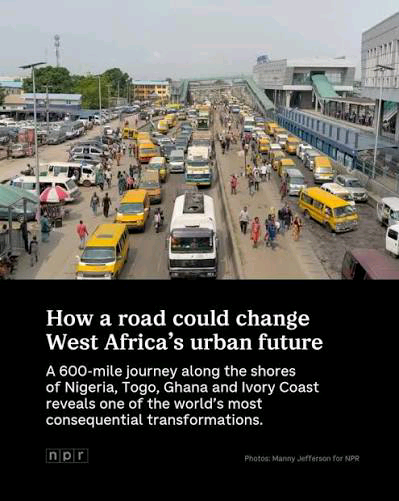
A journey along the Gulf of Guinea from Lagos to Abidjan offers a striking picture of one of Africa’s most significant economic, demographic and environmental transformations.
Stretching through Nigeria, Benin, Togo, Ghana and Côte d’Ivoire, this coastal belt is rapidly evolving from a collection of separate cities, ports, fishing communities and commercial centres into an increasingly interconnected urban and economic corridor.
With more than 150 million people living across the wider corridor and some of Africa’s fastest-growing cities located along it, developments on this coastline could have profound consequences for West Africa’s future.
Lagos provides perhaps the most dramatic example of the transformation. Africa’s largest urban centres continue to expand through major housing, transport and land-reclamation projects as authorities attempt to accommodate rapid population and economic growth.
Moving westward into Benin, Cotonou is strengthening its position as an important gateway for regional commerce, with investment in port infrastructure and logistics. Togo’s capital, Lomé, has similarly emerged as a major maritime and logistics hub serving both coastal and landlocked West African economies.
In Ghana, the Accra-Tema metropolitan area continues to spread outward as residential communities, industries, commercial developments and transport infrastructure reshape the landscape. Tema’s strategic port and industrial base have made the corridor an increasingly important centre for trade and manufacturing.
Further west, Abidjan is experiencing its own transformation. New bridges, roads, commercial developments and technology-driven businesses are changing the face of Côte d’Ivoire’s economic capital.
The changes are not limited to the major cities. Communities between these metropolitan centres are gradually being drawn into expanding urban areas as highways, housing developments, industrial facilities and energy infrastructure occupy previously undeveloped land.
But rapid growth is bringing equally significant challenges.
Coastal erosion is threatening communities and infrastructure in several countries, particularly along vulnerable stretches of Ghana and Togo. Beaches are retreating, settlements are becoming increasingly exposed, and governments face growing pressure to invest in coastal protection.
Marine pollution presents another serious concern. Plastic waste flowing through drains, rivers and communities is increasingly finding its way into the Gulf of Guinea, threatening marine ecosystems and fishing livelihoods.
At the same time, overfishing is placing pressure on fish stocks that have supported coastal communities for generations.
Rapid urbanisation is also increasing demand for electricity, clean water, housing, sanitation, transport and employment. Millions of young people entering the labour market need sustainable jobs, while governments must find the resources to provide infrastructure for rapidly expanding populations.
Climate change adds another layer of urgency.
Many communities along the Gulf of Guinea occupy low-lying coastal areas vulnerable to flooding, erosion and storm surges. Rising sea levels could intensify these risks, making climate adaptation an essential part of future development planning.
Yet the same coastline facing these pressures also represents an enormous economic opportunity.
The proposed Abidjan-Lagos Corridor Highway is expected to strengthen transport connections between Côte d’Ivoire, Ghana, Togo, Benin and Nigeria. Improved cross-border infrastructure could significantly reduce travel times, lower logistics costs and expand opportunities for regional trade.
The corridor’s ports are competitors, but they can also function as complementary gateways serving different markets across West Africa. Better roads, railways, ports and border systems could transform the coastline into one of Africa’s most powerful commercial corridors.
Economic integration is already being accompanied by cultural integration.
Music produced in Lagos can become popular in Accra and Abidjan almost overnight. Ghanaian and Ivorian fashion influences travel across borders, while films, food, technology and social trends increasingly circulate throughout the region.
These developments demonstrate an important reality: the Gulf of Guinea coastline can no longer be viewed simply as five separate national stories.
It is increasingly becoming one interconnected urban, economic and environmental system.
What happens in one country can have consequences beyond its borders. Port policies can redirect regional trade. Environmental degradation can affect shared marine resources. Transport improvements can reshape supply chains, while migration and urbanisation can influence labour markets across the corridor.
This makes regional cooperation increasingly important.
The challenge for governments is not simply to build more highways, ports, housing estates and commercial centres. Development must also be accompanied by coordinated urban planning, environmental protection, climate-resilient infrastructure and policies capable of creating productive employment.
If managed effectively, the Lagos-Abidjan coastal corridor could emerge as one of Africa’s most important engines of industrialisation, trade, innovation and economic growth.
If poorly managed, however, rapid population growth and unplanned urbanisation could deepen inequality, congestion, unemployment, environmental degradation and pressure on already stretched public services.
The choices being made today will therefore determine whether this extraordinary concentration of people and economic activity becomes a source of shared prosperity or increasing vulnerability.
From Lagos through Cotonou, Lomé and Accra to Abidjan, a new West African landscape is taking shape.
Six hundred miles. Five countries. One coastline. One increasingly connected future — and a transformation that could help define Africa’s development story for generations to come.

Frank Ayim Damptey, © 2026
This Author has published 170 articles on modernghana.com. More I am a distinguished Ghanaian business leader and entrepreneur, serving as the Chief Executive Officer of Tata Beverages Company Limited and Tata Industrial Company Limited. With over two decades of experience in senior executive roles, I brings extensive expertise across multiple industries, including brewing, soap manufacturing, water treatment, paint and ink production, agriculture, technology, and food processing.
Beyond my leadership in Ghana, I have provided consultancy services to several start-up companies across Liberia, Sierra Leone, Burkina Faso, and Nigeria, helping to drive growth and innovation within West Africa’s industrial sector.
My work with Tata Beverages reflects my unwavering commitment to delivering high-quality products and advancing local manufacturing standards. As an author and thought leader, I have also contributed insightful articles to Modern Ghana, sharing my perspectives on business, development, and industry trends.I also have a few published research findings.Column: Frank Ayim Damptey
Disclaimer: “The views expressed in this article are the author’s own and do not necessarily reflect ModernGhana official position. ModernGhana will not be responsible or liable for any inaccurate or incorrect statements in the contributions or columns here.”
Follow our WhatsApp channel for meaningful stories picked for your day.

Top Stories


Originally published on www.modernghana.com
