

July 30, 2026
272 Lured, 55 Dead: How Ghana Is Trying to Prove It Is Acting on Russian Recruitment, and Why the Diaspora Question Won’t Go Away


Thu, 30 Jul 2026 Feature Article
272 Lured, 55 Dead: How Ghana Is Trying to Prove It Is Acting on Russian Recruitment, and Why the Diaspora Question Won’t Go Away
For much of the past year, Ghana’s engagement with the story of its citizens fighting and dying for Russia in Ukraine has unfolded largely through disclosure: numbers released in Kyiv, condolences offered in Accra, isolated cases like that of Dofopa FM’s Samuel Awatey surfacing on social media before officialdom caught up. This week, that pattern shifted toward something closer to an accounting.
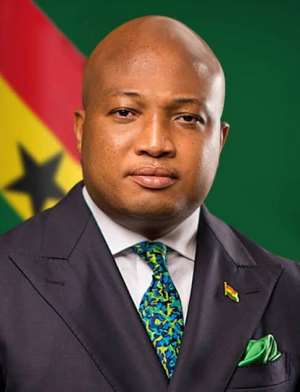
At a media briefing in Accra on Monday, July 27, Foreign Affairs Minister Samuel Okudzeto Ablakwa confirmed that the government has opened formal investigations into the criminal networks responsible for funnelling Ghanaians into the war, and framed the effort as part of a wider push to demonstrate that Accra is not merely tracking the crisis but actively working to dismantle it.
The numbers, restated
Ablakwa’s figures were not new in scale but notable in their formal restatement: 272 Ghanaians are believed to have been drawn into the Russia-Ukraine conflict since 2022, of whom 55 have died and two remain held as prisoners of war. The minister said the intelligence underpinning these figures traces back to his visit to Kyiv earlier in the year, and that many of the victims had responded to advertisements for ordinary overseas jobs, in construction, hospitality, logistics and security, before being diverted into combat roles.
The government, he said, is now working with foreign authorities to verify the identities and welfare of those affected, while domestic security agencies pursue the recruitment networks themselves. As Ablakwa put it at the briefing, the Mahama administration is “committed to tracking and dismantling all dark web illegal recruitment schemes” operating within the country’s jurisdiction.
That framing matters. Distinguishing between passive disclosure and active investigation is precisely the credibility test Ghana has faced since the scale of the problem first became public: a government can report casualty figures indefinitely without ever showing that anyone behind the recruitment pipeline has been identified, arrested or disrupted.
The Awatey case, in which the CEO of an Accra radio station sold his own station to fund a trip that ended in his death fighting for Russian forces, remains the starkest illustration of how deeply and unpredictably these networks have penetrated Ghanaian society, reaching well beyond the unemployed and desperate into ambitious, professionally established citizens.
A diaspora crisis with several fronts
What emerged clearly from Monday’s briefing, however, is that the Russia recruitment pipeline is no longer being treated as an isolated file. Ablakwa used the same briefing to detail a cluster of other diaspora-protection interventions: the voluntary repatriation of 638 Ghanaians from Libya, 244 recruited through cyber-enabled employment fraud in Cambodia, and an ongoing operation against QNET-linked trafficking networks in Côte d’Ivoire, from which 61 Ghanaians have been rescued since January and 45 repatriated, alongside 315 more who returned following Ivorian enforcement action.
A further 150 Ghanaians were evacuated from South Africa around the same period. Read together, these cases describe a single underlying vulnerability: Ghanaian jobseekers, especially younger ones searching for opportunity abroad, remain exposed to a global architecture of deceptive recruitment that treats Russia’s front lines as simply one destination among several exploitative pipelines, alongside trafficking rings in West Africa and cyber-scam compounds in Southeast Asia.
This is the context in which Ghana’s Russia-specific response has to be judged. It is not enough to measure Accra’s diplomacy against Moscow alone; the same institutional capacity, consular reach and public-awareness effort that is meant to protect citizens from illegal recruitment into a foreign war is also being asked to cover trafficking into Gulf of Guinea scam networks and Southeast Asian fraud compounds. Ghana’s claim to be “tracking and dismantling all dark web illegal recruitment schemes,” as officials have put it, will be judged less by press briefings than by whether arrests, prosecutions and dismantled networks eventually follow the numbers.
Where accountability still lags
Regionally, Ghana has positioned itself as more forthcoming than most: it is reportedly the only African country whose officials have visited Ukrainian prisoner-of-war facilities to begin securing the return of nationals held there, and its foreign minister has repeatedly raised the issue directly with both Kyiv and, less successfully, Moscow, which has yet to respond substantively to Accra’s appeals. Russian officials, for their part, continue to deny any illegal or coercive recruitment, with diplomatic representatives in the region insisting that African nationals in Russia are there voluntarily or, in some accounts, purely as students.
That denial sits uneasily against the documented pattern: recruitment adverts promising salaries far above what most recruits could otherwise earn, passports and assets liquidated to fund travel, and a resurfacing story, again and again, of ordinary citizens realizing only after arrival that the job they signed up for was a battlefield.
Ghana’s pledge to raise the issue during its African Union engagements offers one avenue for turning individual national grievances into coordinated continental pressure, something Nigeria and several other high-exposure countries have so far been slower to pursue. Whether that translates into a genuine disruption of recruitment networks, or remains another well-documented statistic in a war that keeps finding new African recruits, is the question Ghana’s own institutions must now answer.
Mustapha Bature Sallama.
Medical/ Science Communicator,
Private Investigator, Criminal investigation and Intelligence Analysis.
International Conflict Management and Peace Building.USIP
[email protected]
+233-555-275-880
Sources
Graphic Online, “272 Ghanaians lured into Russia-Ukraine war, 55 killed – Foreign Minister,” July 2026
MyJoyOnline, “Government probes reported recruitment of Ghanaians into Russia-Ukraine war,” July 2026
Adomonline.com, “272 Ghanaians recruited into Russia-Ukraine war since 2022, about 55 dead – Ablakwa,” July 27, 2026
Ghana Standard, “Government Probes Illegal Recruitment of Ghanaians into Russia-Ukraine War,” July 28, 2026
ModernGhana, “The Untold Story Behind Dofopa FM, Occupy FM, and Samuel Awatey’s Road to Russia,” June 4, 2026
ModernGhana, “Ghanaian Radio CEO Dies Fighting in Russia-Ukraine War,” March 2026
ModernGhana, “Ghana’s Hidden War Dead: How Russia’s Recruitment Machine Is Bleeding The Country’s Youth,” May 31, 2026
ModernGhana, “Ghanaians Drawn Into Russia-Ukraine War: Numbers, Deaths, POWs, and Recruiter Arrests,” February 2026
Al Jazeera, “Ukraine alleges Russia enlists more than 1,700 Africans to fight,” February 25, 2026
RBC-Ukraine, “Ghana demands Russia stop recruiting its citizens for war in Ukraine,” February 28, 2026
Foreign Policy Research Institute, “False Promises: Russian Military Trafficking in Africa,” April 2, 2026
Reporters At Large, “Russian Military Recruitment In Africa Escalates As Botswana Issues Urgent Warning Over Front-Line Scams,” July 20, 2026
DailyGuide Network, “Ghana’s 85 Lost Lives: The African Recruitment Pipeline Feeding Russia’s War,” July 2026

Mustapha Bature Sallama, © 2026
This Author has published 1622 articles on modernghana.com. More COE Hijama Healing Cupping therapy ,Mini MBA in Complimentary and Alternative Medicine .Naturopathy and Reflexologist. Private Investigation and Intelligence Analysis,International Conflict Management and Peace Building at USIP. Profession in Journalism at Aljazeera Media Institute, Social Media Journalism,Mobile Journalism, Investigative Journalism, Ethics of Journalism, Photojournalist, Medical and Science Columnist on Daily Graphic. Column: Mustapha Bature Sallama
Disclaimer: “The views expressed in this article are the author’s own and do not necessarily reflect ModernGhana official position. ModernGhana will not be responsible or liable for any inaccurate or incorrect statements in the contributions or columns here.”
Follow our WhatsApp channel for meaningful stories picked for your day.

Top Stories


Originally published on www.modernghana.com
