

September 5, 2026
15 Northern States May Collapse If Fuel Subsidy Returns – OAU Professor Warns
4 hours ago | General News
15 Northern States May Collapse If Fuel Subsidy Returns – OAU Professor Warns

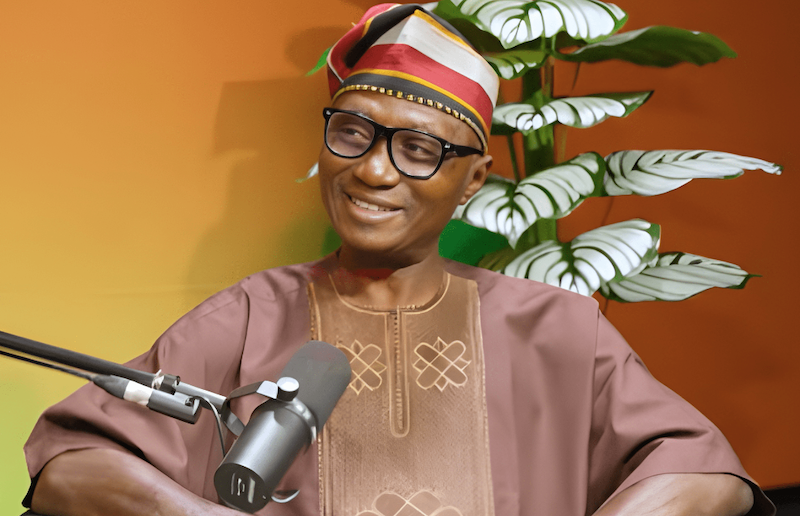
Professor Tunji Ogunyemi

A professor at Obafemi Awolowo University (OAU), Tunji Ogunyemi, has warned that restoring petrol subsidy could push more than 15 states in northern Nigeria into financial crisis within three months.

Ogunyemi issued the warning while speaking on Open Forum 360, a podcast hosted by Dare Adekanmbi, on Friday, during a discussion on the proposal by African Democratic Congress (ADC) presidential candidate, Atiku Abubakar, to reintroduce a form of petrol subsidy if elected president in 2027.
The don described any reversal of the subsidy removal policy as “calamitous,” arguing that it would significantly reduce government revenues and weaken the resources available for distribution through the Federation Account.
According to him, the Federation Account remains the financial lifeline for the majority of Nigerian states, with only a handful possessing sufficient internally generated revenue to operate with limited dependence on federal allocations.
“The Federation Account is the jugular of more than 30 states in the federation. Only about four states in Nigeria can survive without the Federation Account,” Ogunyemi said.

He identified Lagos, Delta and Rivers among states he said were better positioned to withstand a reduction in federal allocations, while citing Taraba as an example of a state heavily dependent on Federation Account revenue.
Ogunyemi warned that any significant reduction in the funds accruing to the account could have devastating consequences for states, particularly in the North.
“So if you now say reduce the accrual from the account, I tell you more than about 15 states in the north will collapse. They will collapse within three months,” he stated.
The professor said the impact would not be limited to state governments, warning that a revenue squeeze could leave many states struggling to pay workers’ salaries and meet pension obligations.
He said, “The second is that states will return to a regime of incapacity to pay salaries, let alone pensions.”
Ogunyemi further argued that the Federal Government itself could face serious fiscal pressure if its share of Federation Account revenues declined.
He noted that between 60 and 70 per cent of federal expenditure is devoted to recurrent spending, which he described as “consumption expenditure.”
He warned that a reduction in government revenue could therefore make it difficult for the Federal Government to meet even its basic obligations, while leaving little room for capital projects.
“You reduce the revenue in that respect, you will see a situation in which government will not be able to support its minimum expenditure, let alone go for capital expenditure,” he said.
The OAU professor also raised concerns about Nigeria’s debt-servicing capacity, warning that declining revenues could undermine the government’s ability to meet its debt obligations.
According to him, failure to service the country’s debts could damage Nigeria’s financial standing and creditworthiness, with broader implications for its ability to access financing.
Ogunyemi also questioned the political rationale behind Atiku’s proposal, suggesting that the promise could be aimed at attracting electoral support ahead of the 2027 presidential election.
He argued that Atiku, having served as Vice-President, should be in a position to explain more clearly the potential fiscal implications of restoring petrol subsidies.
Atiku had earlier pledged to restore petrol subsidy, arguing that Nigerians had yet to see commensurate benefits from its removal and questioning how the savings from the policy had been utilised.
The former Vice-President, however, subsequently clarified his position, saying he was not advocating a return to the previous import-subsidy regime.
Instead, Atiku said he favoured a targeted and capped intervention designed to support domestic refining and petroleum production, with transparency, monitoring and auditing mechanisms incorporated into the programme.
Originally published on www.thenigerianvoice.com