

September 3, 2026
Subject: Darkness By Design: How Trillions, Broken Wires And Policy Experiment Kept 85M Nigerians In The Dark
4 hours ago | Opinion
Subject: Darkness By Design: How ₦Trillions, Broken Wires And Policy Experiment Kept 85M Nigerians In The Dark


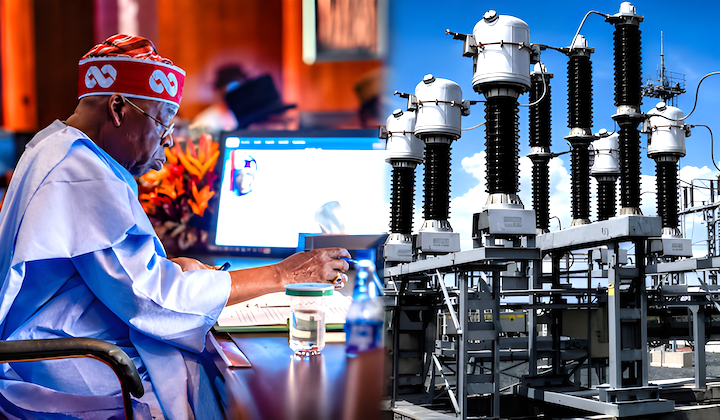
In Victoria Island, diesel generators roar through the night to keep lights and lounges running. Fifteen minutes away in Makoko, families cook with firewood and children read by kerosene lamps, ODIMEGWU ONWUMERE examines. This is Nigeria in 2026: a country with Africa’s 9th largest gas reserves that has borrowed over $3.23 billion for power, yet leaves 85 million people in darkness. Two years after the Electricity Act promised to decentralize electricity, the national grid still wheels only 4,500MW for 200 million people and collapses regularly. While states like Lagos and Edo try to build their own power, millions have stopped waiting and are turning to solar mini-grids to survive a system broken by design.
On paper, things look different. On June 9, 2023, President Bola Tinubu signed the Electricity Act 2023. It was called historic by lawmakers and by analysts at PwC Nigeria, who estimated in a 2023 report that if states implemented the Act properly, it could cut the $28 billion, about ₦10 trillion, in annual economic losses from power failure. For the first time since 1999, the federal government gave up its monopoly. States like Lagos, Edo, Ekiti and Osun were handed the legal right to generate, transmit and distribute electricity within their borders, including in areas formerly covered only by the national grid. The idea was simple: if Abuja could not fix it, let the states try.

But laws do not build transformers. Two years later, the reality is what engineers call a “paper grid.” According to the Nigerian Electricity Regulatory Commission’s own updates through 2025, about 20 states have passed electricity laws. Only 12 had begun the process of taking over regulation from NERC in Abuja by mid-2026. The rest are still waiting for funding and technical staff.
To build a state grid you need three things: a law, a regulator, and money. Most states have one out of three. Investors who might build solar farms in Osun or gas plants in Rivers ask one question: who will buy the power, and who will guarantee payment? The answer is usually silence. Until a state passes its own law and sets up a regulator, NERC still regulates everything in that territory.
So the country keeps leaning on the national grid. And the national grid keeps failing. Nigeria’s installed generation capacity is put at 13,625MW by NERC, with the Association of Power Generation Companies saying it is above 15,500MW when you include plants that are not fully available.

But on any given day, actual generation hovers between 3,134MW and 4,854MW, according to NERC’s daily operational reports and PwC Nigeria’s 2023 sector analysis. That is for more than 200 million people. South Africa, with half the population, generates over 45,000MW.
Worse, the Transmission Company of Nigeria can only wheel about 4,500MW. That means even when power plants generate more, the transmission lines cannot carry it. Dr. Joy Ogaji, Chief Executive Officer of the Association of Power Generation Companies, told THISDAY in December 2025 that “Nigeria’s stranded power crisis is a transmission failure, not a generation failure.”
She said the country has an installed capacity of over 15,500MW, yet the grid can only wheel around 4,500MW. “That gap is where the crisis lives,” she added.
According to APGC data published by THISDAY, stranded or unutilised generation capacity runs between 2,500MW and 4,000MW daily. In December 2025, THISDAY’s checks showed that 2,275.67MW of available generation sat wasted and undelivered, the highest level in five years and equivalent to 33.6 percent of available generation going nowhere. The trend has been consistent, with 2,248MW stranded in 2021, 1,816MW in 2022, 2,227MW in 2023, 2,180MW in 2024, and 2,275MW in 2025.
The collapses have become routine. APGC records cited by THISDAY show that between 2000 and 2022 alone, Nigeria’s national grid collapsed 564 times, more than twice a month for over two decades. In 2024, the Nigerian Independent System Operator recorded 12 national grid breakdowns. On December 29, 2025, NISO reported a system disturbance that plunged Lagos, Abuja and Port Harcourt into darkness. NISO also noted that a vandalized Lagos–Escravos gas pipeline in December 2025 had already made the grid fragile in the weeks before.
When the grid goes down, life does not stop. It just gets more expensive. It suffers the people. The International Energy Agency has estimated that about 40 percent of all electricity consumed in Nigeria comes from backup generators. The World Bank, in its Nigeria Development Update, put the annual cost of unreliable power at $25 billion, or between 5 and 7 percent of GDP. Households and businesses spent an estimated ₦16.5 trillion on self-generation in 2023 alone, compared to about ₦1 trillion in revenue collected by distribution companies, according to industry estimates compiled by PwC.
Follow the money and the problem gets murkier. According to BusinessDay reporting in 2024, Nigeria has borrowed over $3.23 billion in the last four years to fix its electricity problems. The money came from the World Bank, which approved $500 million for the Sustainable Power and Irrigation Project, $750 million for renewable energy projects, and $1.5 billion for the Power Sector Recovery Performance-Based Operation.
The African Development Bank also gave $500 million to help Nigeria switch to cleaner energy sources. The AfDB said its loan would help close the financing gap in the Federal Budget for the 2024/2025 fiscal year, specifically supporting the implementation of Nigeria’s new Electricity Act and the Nigeria Energy Transition Plan.
Even with all this money, Nigeria’s power situation has not improved much. As recently as 2024, the highest amount of power generated was 4,743MW, according to BusinessDay, which is about the same as it has been for the past three years. The ₦4 trillion power sector bond launched by the federal government to clear legacy debts owed to generation companies has not stopped the bleeding at the distribution level. The 11 distribution companies, sold in 2013 for $2.5 billion, are today mostly insolvent. They buy expensive gas-to-power and then cannot collect tariffs from a populace struggling with historic inflation.
Metering tells the story. NERC’s report for the second quarter of 2023 showed that the number of metered customers grew by 10.4 percent to 5.47 million, up from 4.96 million in Q2 2022. But the ratio of metered customers to registered customers remained low at 50.6 percent due to insufficient funding. That means half of users are on estimated billing, and many simply do not pay. The liquidity crisis is therefore not just at the top. It is in every street, where a welder in Aba chooses between diesel and paying a Disco bill. Appalling.
International lenders know this, which is why they now demand sovereign guarantees before funding large-scale Nigerian solar or gas projects. A sovereign guarantee is a promise that if the project fails, the federal government will pay. But the federal government is actively backing away from these guarantees to avoid drowning the treasury in debt. Instead, policymakers are scrambling to push blended finance models, trying to mix scarce public concessions with private capital. The result is delay. Nigeria’s Energy Transition Plan says the country requires a staggering $1.9 trillion to hit net-zero emissions by 2060, including an immediate $20.5 billion gap just to fix basic grid reliability.
In the boardrooms of London and Washington, the global energy transition is a clear-cut mission: stop funding fossil fuels and pivot entirely to wind and solar. But in Abuja, that narrative is viewed not just as unrealistic, but as an existential threat to economic survival. Nigeria sits on Africa’s 9th largest proven gas reserves, according to BP’s Statistical Review. Local energy policy treats natural gas not as a pollutant to be abandoned, but as a critical “bridge fuel” needed to industrialize the nation.
Nowhere is this ideological clash clearer than in the transport sector. Following the removal of the petrol subsidy, Nigeria bet heavily on Compressed Natural Gas, pushing to establish a national trucking and public transit corridor. Yet because international development banks increasingly refuse to fund fossil-fuel-adjacent infrastructure, local operators are forced to hunt for expensive, alternative funding to build out CNG refueling networks. The loans come from Nigerian banks at 25 to 30 percent interest, and the rollout is slow.
While global conversations focus heavily on electric vehicles and smart grids, a much older environmental crisis happens quietly in millions of Nigerian homes. The World Health Organization and the International Energy Agency have both reported that over 70 percent of Nigerians still rely on biomass, firewood and charcoal, for basic cooking. The result is rapid, catastrophic deforestation across the Middle Belt and North, paired with thousands of annual deaths from indoor air pollution. The WHO estimates that household air pollution causes about 93,000 premature deaths in Nigeria each year. It is an environmental emergency largely ignored by high-level green tech funding.
On the surface, Nigeria’s green transition looks modern, boasting roughly 24,000 registered electric vehicles on its roads, according to data from the National Automotive Design and Development Council and FRSC records compiled in 2025. However, an investigative look beneath the paint reveals an architectural loophole. Because the national grid cannot reliably power a simple household lightbulb, EV owners frequently rely on diesel-powered backup generators to charge their vehicles. This does not eliminate carbon emissions. It merely shifts them from a car’s tailpipe directly into a neighborhood generator house, defeating the environmental purpose of the technology.
Faced with the failure of the center, Nigerians have stopped waiting. Real progress is bypassing the broken centralized grid entirely. Backed by the Rural Electrification Agency and private developers, solar mini-grids and off-grid solutions are cropping up across rural markets and agricultural hubs. The REA reported in early 2026 that over 150 mini-grids are operational and more than 200 are under construction, serving markets, schools and health centers. By generating power exactly where it is consumed, these projects avoid the fragile national grid and the political red tape of state capitals. They prove that in Nigeria, the future of energy may not be a massive, centralized mega-project, but a patchwork of independent, self-sustaining solar islands.
Some states are trying to lead this charge. Lagos passed its electricity law in 2023 and inaugurated the Lagos Electricity Regulatory Commission. The state government has announced plans to add 1,000MW of embedded power in four years through gas and solar, targeting hospitals, markets and industrial clusters first. Edo State has gone further with Ossiomo Power, a 55MW gas plant that already supplies 24/7 power to the state government, the Edo Tech Park, and parts of Benin City. The state is now licensing more independent power producers. Ekiti and Osun have also passed laws but remain stuck at the funding stage.
The federal government says it knows the scale of the problem. At a national media roundtable on July 31, 2026, the Minister of Power, Joseph Tegbe, said the government was “resetting” the sector with a technical audit of transmission, harmonization of federal and state laws, a Grid Stabilisation Programme, and a Super Grid Programme designed to wheel more power across the country. He promised Nigerians would see a stronger grid and higher capacity in two to three years.
But promises have been made before. During his 2023 campaign, President Bola Tinubu said, “Whichever way, by all means necessary, you must have electricity, and you will not pay the estimated bill anymore. A promise made will be a promise kept.” Two years later, estimated billing is still common and supply is still erratic.
The human cost is immediate. In Makoko, Aisha, 34, a mother of four, said she has never seen a NEPA pole in her area. “My children cough every dry season from the smoke. But what can we do? If we buy a solar panel, it’s ₦300,000. We don’t have it.”
In Victoria Island, Chinedu, who runs a lounge, said his diesel bill is ₦2.1 million a month. “I’m paying tax to government and diesel to myself. If they give me 20 hours of light, I’ll close the generator tomorrow.”
Analysts say Nigeria’s failure is not simple incompetence. Writing in BusinessDay and other outlets, commentators have called it “failure dressed in the language of reform.” The country has spent over $30 billion on reform programs since 1999, privatized distribution in a $2.5 billion deal in 2013, and signed nine rounds of international support. Yet according to the International Energy Agency’s 2021 report cited by The Nation, Nigeria’s 86 million people without access represent the largest number in the world. The IEA and World Bank have both ranked Nigeria as having the largest energy access deficit globally.
Compare that to Ghana, Rwanda or Kenya, which have made measurable progress on access without Nigeria’s oil money or volume of loans. The difference is not resources. It is execution.
There are three hard truths that keep coming up in every policy room. First, fix collection or nothing works. Distribution companies must meter everyone and government must allow cost-reflective tariffs with targeted subsidies for the poor. No investor will come into a market where no one pays. Second, let states really own power. That means giving them control of transmission within state borders too, not just generation and distribution. Third, fund what people actually use. Clean cooking and mini-grids will save more lives in five years than 100 EV charging stations.
Onwumere is Chairman, Advocacy Network on Religious and Cultural Coexistence (ANORACC)
Disclaimer: “The views expressed on this site are those of the contributors or columnists, and do not necessarily reflect TheNigerianVoice’s position. TheNigerianVoice will not be responsible or liable for any inaccurate or incorrect statements in the contributions or columns here.”
Originally published on www.thenigerianvoice.com