

August 29, 2026
Mosquitoes Are Becoming Europe’s Problem Too: What the Frankfurt Deaths Reveal
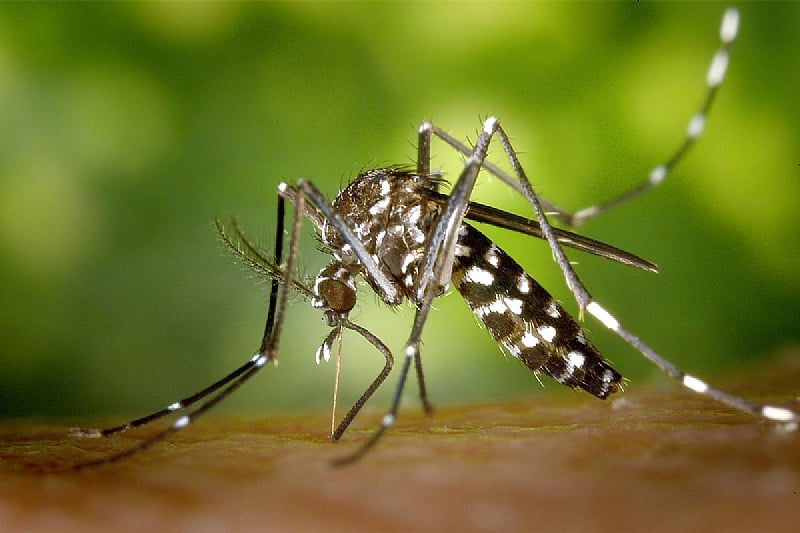


Mosquitoes Are Becoming Europe’s Problem Too: What the Frankfurt Deaths Reveal
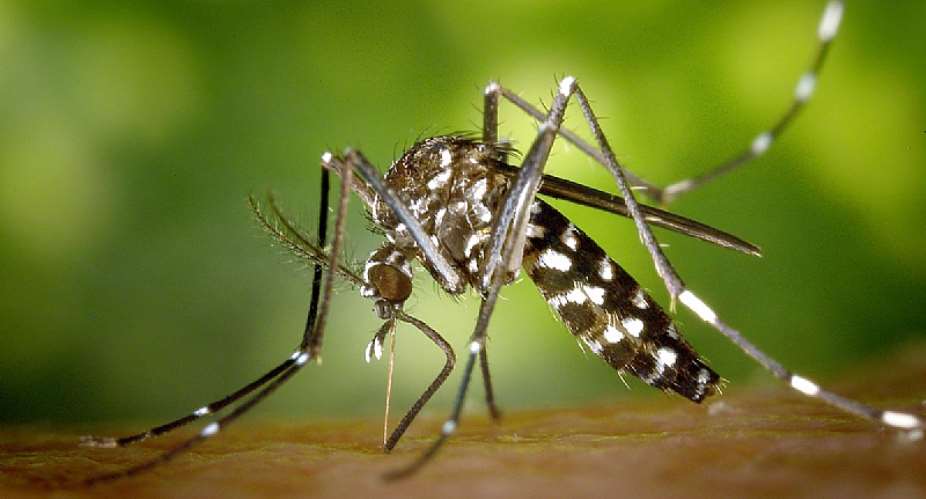
Malaria has a well-worn geography in the public imagination Sub-Saharan Africa, South Asia, parts of Latin America. Frankfurt am Main is not on that map. Yet this week, Germany’s busiest airport confirmed that two of its employees have died and four more were hospitalized after contracting malaria from a mosquito that, investigators believe, hitched a ride into the country on an incoming aircraft.
It is a small, strange story on its own. Set against what Europe’s own disease authorities have been warning about all summer, it reads less like a one-off tragedy and more like a preview.
What happened at Frankfurt
Fraport, the airport’s operator, confirmed that six employees contracted what is known as “airport malaria” a rare transmission route in which an infected Anopheles mosquito survives a flight from a malaria-endemic country and bites people working at or near the airport before it dies.
Germany’s Robert Koch Institute, the country’s national public health institute, had already flagged an unusual cluster of cases among airport workers in mid-July, with the first patients falling ill in early July. By late August the case count had risen to six, and two of the infected employees had died.
Officials are being careful to draw a firm boundary around the danger. Frankfurt’s health department chief told German broadcaster Hessischer Rundfunk that the mosquito responsible is almost certainly dead by now and that risk to the wider public is negligible malaria cannot pass from person to person, only through a mosquito bite, and no further local transmission chain is expected.
Traps have gone up around the airport, and captured specimens are being sent for laboratory analysis, including to the Institute of Tropical Medicine in Antwerp, to determine species and origin. The last time Frankfurt saw an airport malaria cluster was 2023, which underlines both how rare the phenomenon is and why doctors in a non-endemic country might not think to test for it quickly a delay the RKI says likely worsened the outcome for the two employees who died.
A rare event, but not an isolated one
The instinct to treat Frankfurt as a freak accident is understandable, but it arrives in the middle of a summer in which Europe’s disease control agency has been actively warning that the continent’s relationship with mosquitoes is changing.
The European Centre for Disease Prevention and Control marked World Mosquito Day in August by noting that six European regions had reported locally acquired West Nile virus infections for the first time ever this year, with 429 locally acquired cases confirmed across nine countries as of mid-August a number expected to keep climbing through the peak transmission weeks of late August and early September.
More striking still is the spread of the Asian tiger mosquito, Aedes albopictus, a species capable of transmitting dengue, chikungunya and Zika. It is now established in sixteen European countries, roughly double where it stood only a few years ago.
France recorded an autochthonous meaning locally transmitted, not travel-imported chikungunya case in Strasbourg in 2025, a location researchers flagged as notably far north for sustained arboviral transmission to take hold, evidence that warming temperatures are letting these mosquitoes establish and transmit disease in places once considered climatically unsuitable.
Modeling published this year projects north-central Europe as one of several future hotspots for chikungunya specifically, alongside northeastern North America and parts of eastern Asia.
Why this matters beyond Germany
None of this means Frankfurt’s malaria cluster and the broader Aedes-driven dengue and chikungunya risk are the same phenomenon the Frankfurt case involved an imported Anopheles mosquito and a parasite, not a locally established vector population.
But they share a root cause worth naming plainly: global travel and a warming climate are both, in different ways, shrinking the distance between mosquito-borne disease and populations that have spent generations assuming it was someone else’s problem.
ECDC’s own vector-borne disease expert, Céline Gossner, has said plainly that the expansion of West Nile transmission alongside the spread of invasive mosquito species is exactly why Europe needs to strengthen its mosquito-control capacity a message aimed at policymakers, not just travelers.
For African readers, there is a certain grim irony in watching European institutions relearn, case by case, lessons that malaria-endemic countries have never had the luxury of forgetting: that mosquito control is public health infrastructure, not seasonal nuisance management; that diagnostic delay kills, because clinicians unfamiliar with a disease’s presentation don’t test for it in time; and that global connectivity whether through air travel or climate means no region’s disease map stays fixed forever. Frankfurt’s tragedy is small in scale. The pattern it sits inside is not.
Mustapha Bature Sallama
Medical/Science communicator, Private Investigator, Criminal Investigation and Intelligence Analysis,United States Institute of Peace (USIP), [email protected] +233555275880
Sources
“Two airport workers in Germany die after contracting malaria,” CNN, Aug. 27, 2026
“2 airport workers die of malaria from mosquito on plane in Germany, 4 others sickened,” CBS News/AFP, Aug. 28, 2026
“German airport workers die from malaria caught from plane-riding mosquito,” Al Jazeera, Aug. 26, 2026
“Two Employees Die Of ‘Airport Malaria,’ Officials Try To Calm Fears,” The Daily Caller, Aug. 27, 2026
“World Mosquito Day 2026: Europe must upgrade control tools as disease risks rise,” ECDC, Aug. 2026
“Europe’s mosquito problem is getting harder to control,” Euronews, Aug. 21, 2026
Yannick Simonin, “Europe Faces Multiple Arboviral Threats in 2025,” Viruses journal, Dec. 2025
“North America and Europe could become hotspots for chikungunya virus due to climate change,” Frontiers, May 27, 2026

Mustapha Bature Sallama, © 2026
This Author has published 1866 articles on modernghana.com. More COE Hijama Healing Cupping therapy ,Mini MBA in Complimentary and Alternative Medicine .Naturopathy and Reflexologist. Private Investigation and Intelligence Analysis,International Conflict Management and Peace Building at USIP. Profession in Journalism at Aljazeera Media Institute, Social Media Journalism,Mobile Journalism, Investigative Journalism, Ethics of Journalism, Photojournalist, Medical and Science Columnist on Daily Graphic. Column: Mustapha Bature Sallama
Disclaimer: “The views expressed in this article are the author’s own and do not necessarily reflect ModernGhana official position. ModernGhana will not be responsible or liable for any inaccurate or incorrect statements in the contributions or columns here.”
Follow our WhatsApp channel for meaningful stories picked for your day.

Top Stories


58 minutes ago


Originally published on www.modernghana.com