

September 3, 2026
Implications of Uber exit from Nigeria and the challenges it poses


Implications of Uber exit from Nigeria and the challenges it poses
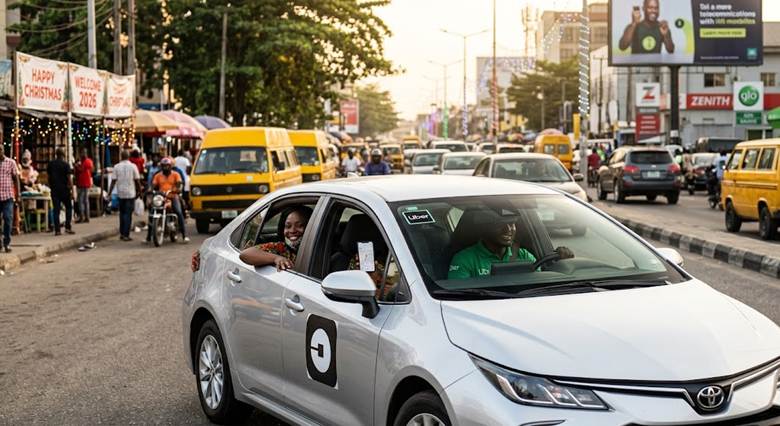
The news that Uber has ended its ride-hailing operations in Nigeria after 12 years should not be treated merely as the departure of another multinational company. It is a significant development in Nigeria’s evolving transportation story, a warning about the difficult economics of doing business in the country, and, perhaps most importantly, an invitation to Nigerian entrepreneurs to occupy a space that has suddenly become more visible.
Uber’s Nigerian operation formally ended on September 2, 2026, bringing to a close a 12-year presence that began in Lagos in 2014 before expanding to other Nigerian cities. The company said its decision followed a review of its business priorities and investment focus across Africa. It did not identify a single Nigerian policy or event as the reason for its departure and specifically said the decision was unrelated to the recent directive concerning e-hailing operations at Nigerian airports.
Nevertheless, the announcement comes against a difficult economic background. Nigeria’s ride-hailing industry has had to contend with rising fuel and vehicle-maintenance costs, inflation, currency volatility, pressure on passenger fares and intense competition among platforms. For drivers, the economics have become increasingly challenging: passengers want affordable rides, drivers need sufficient income to cover fuel, maintenance, vehicle financing and other costs, while platforms themselves must generate enough revenue to sustain their operations.
Uber’s departure therefore exposes an uncomfortable reality. A large population and enormous transportation demand do not automatically make a market easy to operate in. The fundamental challenge is creating a transportation business model in which passengers can afford fares, drivers can earn sustainable incomes and technology companies can remain commercially viable.
Yet there is another side to the story. Uber is leaving Nigeria, but the need that Uber served is not leaving with it.
Nigerians still need safe, convenient and reasonably priced transportation. Millions of people still want to order a vehicle from their phones, know who is driving them, receive an estimated fare, track their journey and make cashless payments. Businesses still need reliable transportation for their employees and customers. Tourists and visitors still need dependable mobility. Families still need transportation. Students, professionals, elderly people and people travelling at night still need alternatives to the uncertainty often associated with traditional street-hailing.
The market, therefore, has not disappeared. One major participant has simply left it. This is where Nigerian entrepreneurs should begin to think differently.
Rather than seeing Uber’s exit principally as bad news, capable Nigerian business men and women should see it as a market signal. A global company has demonstrated for more than a decade that Nigerians are willing to embrace technology-enabled transportation. It helped establish a culture in which a person could summon a vehicle with a smartphone rather than stand by the roadside searching for a taxi. Its departure does not destroy that culture. If anything, it leaves behind an established customer base, experienced drivers, technological knowledge and a public accustomed to app-based mobility.
The obvious question is: why should Nigerians wait for another foreign company to fill the space?
There is an opportunity for indigenous entrepreneurs to build the next generation of Nigerian ride-hailing companies—not necessarily to copy Uber, but to improve upon what Uber and its competitors have already taught the market.
A Nigerian “Uber” could be built specifically around Nigerian realities. Its business model could take account of local fuel economics, local payment systems, traffic patterns, security concerns, vehicle ownership structures and the income expectations of Nigerian drivers. It could develop partnerships with banks, insurance companies, vehicle-financing institutions, telecommunications companies, automobile dealers and fuel suppliers. It could even develop mechanisms through which drivers gradually acquire ownership of vehicles rather than remaining permanently dependent on cars they do not own. This is where indigenous ownership could make a meaningful difference.
A foreign company necessarily has to evaluate Nigeria against opportunities elsewhere in the world. Its shareholders, executives and investors are looking at returns across multiple countries. A Nigerian company, by contrast, has an intimate understanding of the market. It knows what it means to buy fuel in Nigeria, maintain a vehicle on Nigerian roads, navigate Lagos traffic, operate in Abuja, Port Harcourt, Enugu, Kano or Ibadan, deal with local authorities and serve Nigerian customers. That local knowledge can become a competitive advantage.
But Nigerian entrepreneurs should not imagine that simply developing an app will be enough. Uber’s departure also demonstrates how difficult the business is. The technology is only one part of the equation. The real challenge is building a transportation ecosystem. A successful Nigerian platform would have to solve the three-way problem of the passenger, the driver and the company.
Passengers want low fares, safety, availability, clean vehicles, courteous drivers and predictable service. Drivers want good earnings, reasonable commissions, protection from arbitrary account deactivation, affordable vehicle maintenance and access to financing. The company needs revenue to pay its employees, maintain technology, provide customer support, market its service and remain profitable. A sustainable platform must find a balance among all three.
This is particularly important because one of the dangers following Uber’s departure is that the remaining platforms could acquire greater market power. Bolt and in-Drive, among others, are now positioned to attract Uber’s former passengers and drivers. Existing local operators could also benefit. Reports indicate that major competitors intend to remain in the Nigerian market. Competition is good for consumers, but excessive concentration is not. If the market eventually becomes dominated by only one or two major platforms, passengers could have fewer choices and drivers could become more dependent on the remaining companies. The competitive pressure that encourages better service, reasonable fares and attractive driver incentives could weaken.
That is why Nigeria needs more—not fewer—credible transportation technology companies. The opportunity is not necessarily for one giant Nigerian Uber. There could be several specialized platforms. One could concentrate on ordinary urban rides. Another could focus on corporate transportation. Another could specialize in women and families, with carefully designed safety features. Another could concentrate on airport transfers. Yet another could integrate buses, taxis, motorcycles, tricycles and other legally permitted forms of transportation into a single mobility platform. There is also an opportunity to move beyond the Uber model itself.
Nigeria’s transportation problem is too large to be solved entirely by private cars summoned through mobile applications. Ride-hailing should complement public transportation rather than replace it. The future Nigerian mobility system should ideally connect buses, railways, ferries, taxis and app-based vehicles so that commuters can move between different forms of transportation conveniently.
Imagine, for example, a Nigerian mobility application that allows a passenger to travel by bus, connect to a railway station and then summon a car for the final part of the journey—all through one integrated system. Such a platform would not merely be another taxi app. It would be a transportation infrastructure company. This is the larger opportunity hidden inside Uber’s departure.
However, entrepreneurs cannot accomplish this alone. Government has a role to play. If policymakers want Nigerian companies to fill the gap, they must create conditions under which such companies can survive.
Transportation regulation must be predictable. Taxation should not become so complicated or punitive that legitimate businesses are discouraged. State and federal authorities need to coordinate rather than create overlapping requirements. Driver registration and safety standards should protect passengers without making it unnecessarily difficult for legitimate operators to function. Above all, policymakers should recognise that regulation should not simply extract revenue from the transportation sector, it should help build a safer, more efficient mobility ecosystem.
The experience of Uber should also encourage a serious conversation about the welfare of drivers. Drivers are not merely anonymous components of an application. They are the people who physically deliver the service. If their earnings continually decline while operating costs rise, the system becomes unsustainable. A platform that treats drivers as disposable will eventually have difficulty maintaining a reliable supply of quality drivers.
Nigerian entrepreneurs therefore have an opportunity to create a more balanced relationship between platforms and drivers. Driver cooperatives, vehicle-financing schemes, insurance packages, maintenance discounts, fuel partnerships and transparent commission structures could become part of the competitive strategy of a new Nigerian ride-hailing company. The objective should be to make driving economically viable.
The challenge is formidable. Nigeria’s roads remain a major constraint. Traffic congestion wastes enormous amounts of time and fuel. Security remains a concern. Vehicle financing can be expensive. Inflation can rapidly alter the economics of a fare structure. Electricity and telecommunications infrastructure can be unreliable. Regulation differs across states. These are not minor obstacles. But they are precisely why indigenous innovation is necessary.
Nigeria does not need entrepreneurs who merely reproduce an American business model with a different logo. It needs entrepreneurs who understand the peculiarities of Nigerian mobility and build around them.
Uber’s exit also comes at an interesting moment in the company’s own global transformation. The company is restructuring and cutting about 3,300 corporate jobs while directing resources toward strategic priorities including autonomous vehicles. This suggests that the transportation industry itself is changing rapidly. The future may not belong exclusively to conventional ride-hailing companies. Artificial intelligence, autonomous vehicles, electric vehicles, digital payments and integrated mobility platforms will increasingly shape transportation.
Nigeria should not wait until all these technologies have been perfected elsewhere before participating in the next phase. The departure of Uber should therefore provoke less lamentation and more ambition.
There is nothing inherently inevitable about the dominance of foreign companies in Nigeria’s technology-driven transportation industry. Nigerian entrepreneurs have demonstrated repeatedly that they can build successful businesses when they identify genuine local problems and develop practical solutions. What is required now is capital, innovation, persistence and a willingness to build for the long term.
The market left behind by Uber is not an empty space. It is an invitation. It is an invitation to the Nigerian software developer who believes a better transportation application can be built. It is an invitation to the investor who sees mobility as a long-term infrastructure opportunity. It is an invitation to automobile companies that can develop affordable vehicle-financing schemes. It is an invitation to banks and insurance companies to create products designed around transport workers. It is an invitation to young entrepreneurs who understand that the next great Nigerian technology company may not necessarily be a social-media platform or Fintech Company, but a company that solves the everyday problem of how millions of Nigerians move from one place to another.
But the ambition must be accompanied by realism. Uber’s departure is itself a lesson: transportation is a difficult business. An entrepreneur who enters it merely because there is now a gap in the market could discover very quickly that the gap exists for serious economic reasons. The winner will be the company that can simultaneously provide affordable transportation, decent driver earnings, reliable technology, passenger safety and sustainable profitability. That is the challenge. And it is also the opportunity.
Nigeria should not simply ask which international company will replace Uber. The more important question is whether Nigerian entrepreneurs are prepared to build companies capable of replacing the function Uber performed—and perhaps doing it better.
If the answer is yes, Uber’s departure could eventually be remembered not only as the end of a 12-year corporate presence, but as the beginning of a new chapter in the Nigerian mobility system. The drivers are still here. The passengers are still here. The roads are still here. The demand for transportation is still enormous. What is missing is the next generation of Nigerian businesses bold enough to connect all of them.

Emeka Asinugo, PhD., M.A., KSC, © 2026
A London-based veteran journalist, author and publisher of ROLU Business Magazine (Website: https://rolultd.com)Column: Emeka Asinugo, PhD., M.A., KSC
Disclaimer: “The views expressed in this article are the author’s own and do not necessarily reflect ModernGhana official position. ModernGhana will not be responsible or liable for any inaccurate or incorrect statements in the contributions or columns here.”
Follow our WhatsApp channel for meaningful stories picked for your day.

Top Stories


Originally published on www.modernghana.com