

September 3, 2026
Jubilee House Means Business: Mahama’s Axe Falls On Boards As CEOs Await Their Fate
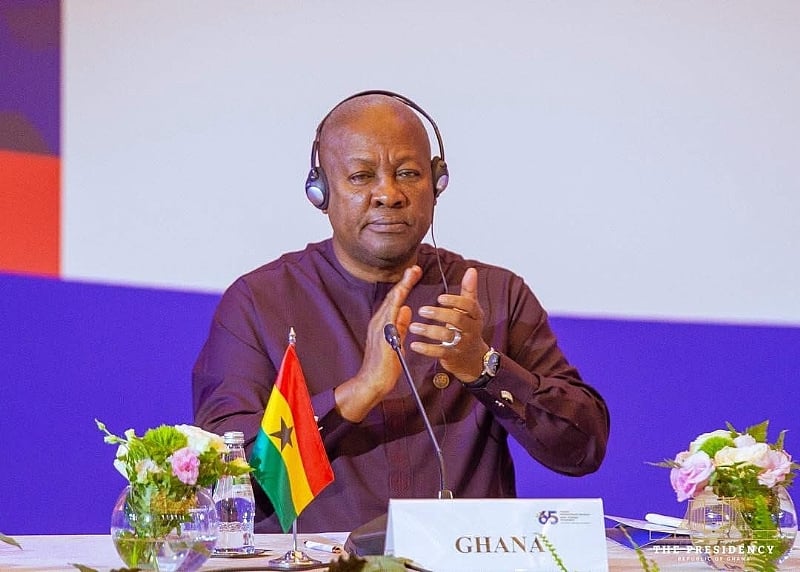


Jubilee House Means Business: Mahama’s Axe Falls On Boards As CEOs Await Their Fate
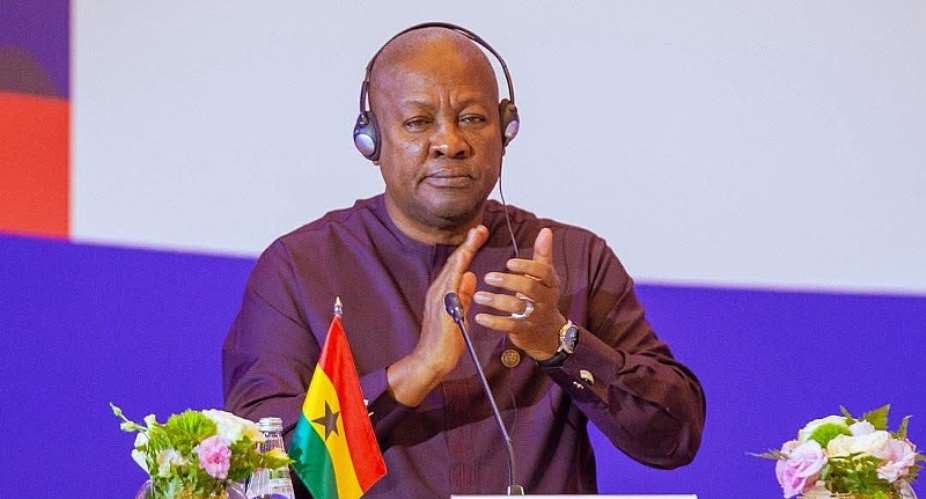
The message from Jubilee House on Wednesday, September 2, 2026, could hardly be clearer: the honeymoon is over, and political appointees who are not delivering should start looking over their shoulders.
President John Dramani Mahama has reportedly ordered the immediate dissolution of the boards of nine major state institutions, while simultaneously putting ministers, chief executives, board members and other political appointees on notice that indiscipline, poor performance and disregard for administrative procedures will no longer be tolerated.
This is not a gentle reminder.
It is a political warning.
And for some occupants of Ghana’s public offices, it may be the most uncomfortable warning they have received since the administration took office.
The axe has reportedly fallen on the boards of Prestea Sankofa Gold Limited, BOST, VALCO, Consolidated Bank Ghana, Ghana Post, the Road Maintenance Trust Fund, TDC Ghana Limited, GNPC and the National Sports Authority.
These are not ordinary institutions.
They control strategic national assets, manage significant public resources and operate in sectors that directly affect Ghana’s economy and the daily lives of citizens.
The decision to dissolve their boards therefore demands more than political applause. It demands scrutiny.
What went wrong?
Why these institutions?
What performance benchmarks were applied?
Were these boards delivering value for money?
And, most importantly, who is coming next?
Because replacing one set of political appointees with another does not constitute reform.
Ghana has seen this movie before?
A government comes into power. Boards are dissolved. New faces arrive. Political allies celebrate. Appointments are announced with grand promises of transformation.
Then, after a few years, the same institutions are back in trouble.
That cycle must end.
President Mahama sincerely intends to reset the management of Ghana’s public institutions —and this is the moment for him to demonstrate that competence—not political loyalty—is the passport to public office.
Ghana does not need boards packed with party favourites.
We need professionals who understand corporate governance, financial discipline, risk management and public accountability.
We need people who can tell a chief executive “no” when necessary.
We need directors who will protect state assets even when the politically convenient option is to look away.
And we need chief executives who understand that a state-owned enterprise is not a personal empire.
The presidential notice by Dr. Callistus Mahama makes another point that should send a chill through the political establishment: the reshuffle of chief executives is impending.
That is where the real drama may begin.
Boards can be dissolved with the stroke of a pen.
CEOs, however, are where the operational accountability of state institutions becomes personal.
Who stays?
Who goes?
Who has performed?
Who has failed?
Who has merely survived because of political connections?
Those questions will now hanging over the corridors of Ghana’s state-owned enterprises.
And rightly so.
A chief executive who cannot deliver should not hide behind political connections.
A minister whose portfolio consistently underperforms should not expect permanent protection.
A board member who treats public office as an entitlement should remember that the appointment is temporary.
The Ghanaian taxpayer is the permanent shareholder.
That is the fundamental principle that appears to be missing from too much of Ghana’s public administration.
Public office is not a reward.
It is a responsibility.
The presidential notice reminds appointees of exactly that.
It warns against conduct that undermines governmental cohesion, institutional authority and the implementation of government policy.
It also stresses integrity, diligence, humility and respect for administrative procedures.
These are commendable principles.
But the government must now demonstrate that they apply equally to everyone.
There must be no sacred cows.
No untouchable CEOs.
No politically protected board members.
No “our man” appointments.
No selective accountability.
If a public official fails, the standard must be the same whether that individual is politically powerful, well-connected or completely unknown.
That is what genuine institutional reform looks like.
But President Mahama must also be careful.
The dissolution of boards must not become an excuse for political interference in professional management.
There is a difference between political oversight and political micromanagement.
Ministers should provide policy direction. Boards should provide governance. Management should manage.
When these lines become blurred, institutions suffer.
Therefore, if the Presidency expects CEOs to perform, those CEOs must be given the professional space to perform.
If boards are expected to supervise, they must be allowed to exercise independent oversight.
And if ministers are expected to deliver results, they must be judged against clear and measurable targets.
Accountability must not be a weapon used selectively against political supporters and opponents or inconvenient appointees.
It must be a governing principle.
This is why the next appointments will be more important than the dissolutions themselves.
Ghanaians will be watching.
If the new boards are filled with competent professionals, the President will have made a powerful statement.
If the next generation of CEOs are selected on merit and performance, the administration will have demonstrated that “reset” means something.
But if the old political arithmetic simply produces new beneficiaries, then this exercise will amount to little more than changing the occupants of the same political chairs.
And Ghana cannot afford that.
The country is battling fiscal pressures, unemployment, infrastructure deficits, institutional weaknesses and public frustration over the quality of governance, even though it has improved better than it used to be.
This is not the time for political experimentation.
It is the time for competence.
It is the time for accountability.
It is the time for results.
So, yes, Jubilee House appears to mean business.
The boards have reportedly been shown the exit.
The CEOs are reportedly awaiting their fate.
Ministers and political appointees have been warned.
Now comes the hard part.
Will the President’s axe cut through incompetence—or will it merely clear the way for another generation of political appointments?
That is the question.
And this time, Ghanaians should demand an answer not in speeches, but in performance.
The Republic does not need more political appointees who occupy offices.
It needs public servants who deliver.
Because Ghana’s public institutions are not political spoils.
They belong to the people.
#KWP
Michael Agbesi Kelly

Michael Agbesi Kelly, © 2026
This Author has published 117 articles on modernghana.comColumn: Michael Agbesi Kelly
Disclaimer: “The views expressed in this article are the author’s own and do not necessarily reflect ModernGhana official position. ModernGhana will not be responsible or liable for any inaccurate or incorrect statements in the contributions or columns here.”
Follow our WhatsApp channel for meaningful stories picked for your day.
Top Stories


Originally published on www.modernghana.com