August 30, 2026
Cracks in the Fortress: Niger’s Mutiny Exposes the AES’s Weakest Link


Cracks in the Fortress: Niger’s Mutiny Exposes the AES’s Weakest Link
A Mutiny at the Alliance’s Nerve Centre
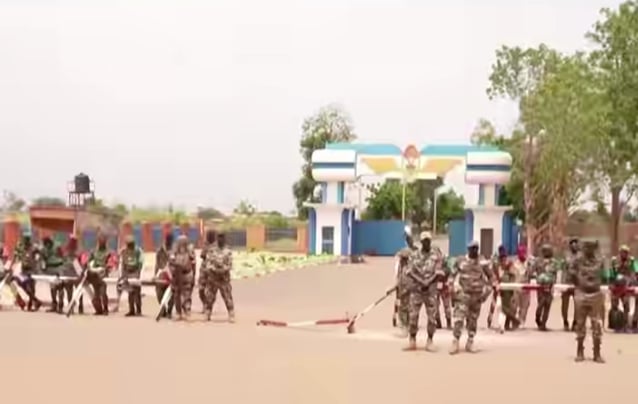
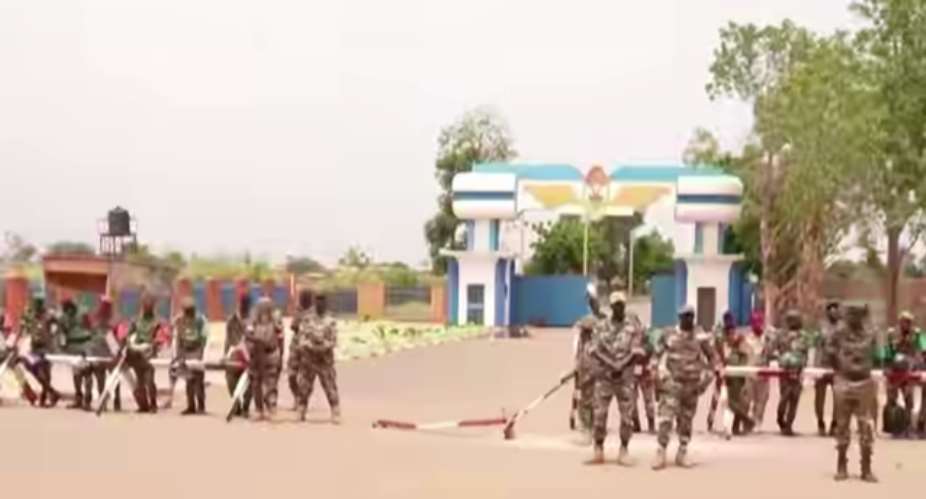
The mutiny that erupted in Niamey in the early hours of 29 August 2026 did not simply threaten General Abdourahamane Tiani’s grip on power it struck at a facility that sits at the heart of the Alliance of Sahel States’ (AES) security architecture.
Gunfire and explosions hit Diori Hamani International Airport and the adjoining Air Force Base 101, which hosts both the headquarters of Russia’s Africa Corps in Niger and the joint command infrastructure tied to the AES security bloc .
Niger’s Defence Ministry confirmed the mutiny began around 00:20 local time and described it as a breach of military discipline by soldiers who attempted to detain fellow servicemen before opening fire across several strategic sites in the capital.
Why Niger Is the AES’s Load-Bearing Wall
The AES uniting Niger, Mali and Burkina Faso since September 2023 under the Liptako-Gourma Charter was built on a promise of collective defence: Article VI commits all three states to treat an attack on one as an attack on all. But the alliance’s credibility rests heavily on the stability of each junta at its core, and Niger has increasingly served as a geographic and logistical anchor, hosting the very base from which Russian forces coordinate support across the bloc.
Just eight months ago, the AES formally stood up its 5,000-strong Unified Force (FU-AES), launched at a Bamako ceremony in December 2025 as the bloc’s flagship demonstration of self-reliant regional security, explicitly built to replace the departed French and American militaries.
A mutiny inside Niger’s own military not an external jihadist strike undercuts the foundational premise that these juntas can guarantee internal cohesion even as they promise to guarantee each other’s.
Internal Fracture, Not External Assault
What makes this episode particularly damaging is its origin. Regional reporting has pointed to discontent among junior officers and special-forces-trained personnel, suggesting the unrest stemmed from strain within the ranks rather than a rival power bloc or a jihadist infiltration.
Niger’s army has spent more than three years absorbing sustained losses fighting JNIM and Islamic State Sahel Province affiliates, including attacks that have separately struck the same airport complex earlier this year, and analysts have long warned that mounting casualties and fatigue within the barracks could eventually turn inward.
For an alliance whose entire raison d’être is projecting hardened, sovereign military capability, a mutiny born of internal exhaustion is a harder narrative to manage than an attack from a declared enemy.
Moscow’s Dependency Cuts Both Ways
Niger’s junta leaned on the Africa Corps to help suppress the mutiny, and its military command publicly thanked Russian personnel afterward, with Russia’s ambassador to Niger telling TASS that senior Nigerien officers visited the Russian base to express gratitude [4]. That gratitude illustrates the depth of Niamey’s dependency on Moscow for regime survival a dependency Bamako and Ouagadougou share to varying degrees.
But it also means that any future breakdown in Niger’s internal security could increasingly require direct Russian intervention to hold the government in place, raising the stakes for the AES’s other two members, who have tied their own sovereignty narrative to the same Russian security guarantee.
A Bloc Already Under Strain
The mutiny lands at a moment when AES cohesion was already being tested on multiple fronts. Mali’s clash with Algeria in April prompted all three AES states to freeze ties with Algiers, Burkina Faso has repeatedly accused Côte d’Ivoire of undermining its government, and Niger’s generals have levelled similar accusations against Benin.
A bloc that projects unity outward while managing friction with nearly every neighbour it borders can ill afford visible instability inside one of its own capitals, particularly one hosting shared security infrastructure.
What to Watch
Niger’s Defence Ministry has declared the mutiny “contained,” and state broadcasting resumed by mid-morning on 29 August. But the underlying questions the mutiny raises for the AES are structural, not episodic: whether Niamey’s grievance-driven unrest reflects deeper strain replicable in Bamako or Ouagadougou, whether the bloc’s new Unified Force can credibly claim to secure the Sahel if its founding members cannot secure their own barracks, and how much further AES capitals will need to lean on Russian auxiliary forces to keep their own militaries in line. How Tiani’s government handles any purge, trial, or reform in the coming weeks will be an early signal of whether this was a contained flashpoint or the first visible fracture in the alliance’s foundation.
Mustapha Bature Sallama
Medical/Science communicator, Private Investigator, Criminal Investigation and Intelligence Analysis,United States Institute of Peace (USIP), [email protected] +233555275880
References
TASS, “Niger authorities say military mutiny in Niamey suppressed,” 29 August 2026. https://tass.com/world/2179325
Wikipedia, “2026 Nigerien coup attempt.” https://en.wikipedia.org/wiki/2026_Nigerien_coup_attempt
Tricontinental: Institute for Social Research, “The Sahel Seeks Sovereignty.” https://thetricontinental.org/dossier-sahel-alliance-sovereignty/
TASS, “Niger’s military thanks Russia’s Africa Corps for assistance in suppressing mutiny,” 29 August 2026. https://tass.com/world/2179377
AllAfrica, “West Africa: The Alliance of Sahel States Launches Unified Military Force and Strengthens Regional Security,” December 2025. https://allafrica.com/stories/202512300003.html
The Zambian Observer, “Mutiny Rocks Niger’s Capital as Young Officers Turn on Junta,” 29 August 2026. https://zambianobserver.com/mutiny-rocks-nigera-capital-as-young-officers-turn-on-junta/
Al Jazeera, “Burkina Faso leader vows AES alliance crackdown on armed groups in Sahel,” December 2025. https://www.aljazeera.com/news/2025/12/24/burkina-faso-leader-vows-sahel-alliance-crackdown-on-armed-groups
International Crisis Group, “Defining a New Approach to the Sahel’s Military-led States.” https://www.crisisgroup.org/cmt/africa/sahel/burkina-faso-mali-niger/defining-new-approach-sahels-military-led-states
NBC News, “Mutinous soldiers attack airport, presidency in Niger capital,” 29 August 2026. https://www.nbcnews.com/world/africa/mutinous-soldiers-attack-airport-presidency-niger-capital-rcna595006

Mustapha Bature Sallama, © 2026
This Author has published 1869 articles on modernghana.com. More COE Hijama Healing Cupping therapy ,Mini MBA in Complimentary and Alternative Medicine .Naturopathy and Reflexologist. Private Investigation and Intelligence Analysis,International Conflict Management and Peace Building at USIP. Profession in Journalism at Aljazeera Media Institute, Social Media Journalism,Mobile Journalism, Investigative Journalism, Ethics of Journalism, Photojournalist, Medical and Science Columnist on Daily Graphic. Column: Mustapha Bature Sallama
Disclaimer: “The views expressed in this article are the author’s own and do not necessarily reflect ModernGhana official position. ModernGhana will not be responsible or liable for any inaccurate or incorrect statements in the contributions or columns here.”
Follow our WhatsApp channel for meaningful stories picked for your day.
Top Stories
46 minutes ago


2 hours ago


Originally published on www.modernghana.com