

September 8, 2026
Africa Cannot Achieve Food Security Without Reliable Energy


Tue, 08 Sep 2026 Feature Article
Africa Cannot Achieve Food Security Without Reliable Energy
Africa does not simply need to grow more food. It also needs the reliable energy required to produce, preserve, process and distribute that food.
For decades, discussions about African agriculture have concentrated heavily on increasing production. Farmers are encouraged to cultivate more land, adopt improved seeds, use fertilisers and embrace mechanisation. These interventions are important, but there is another critical part of the agricultural equation that deserves greater attention: energy.
A farmer may have fertile land, quality seeds, technical knowledge and a ready market. But without reliable and affordable electricity or other forms of energy, there is a limit to how far that agricultural enterprise can grow.
Consider irrigation. Water must be pumped from rivers, reservoirs or underground sources to farms, particularly as rainfall becomes increasingly unpredictable.
Cold storage requires continuous electricity to preserve fruits, vegetables, fish, meat and dairy products. Without refrigeration, significant quantities of valuable food can deteriorate before reaching consumers.
Processing is equally dependent on energy. Cassava must be processed into flour and starch. Maize requires milling and drying. Oil palm and soybean need processing to produce edible oils. Fruits can be transformed into juices, concentrates and dried products. Cocoa requires processing before becoming chocolate and other higher-value products.
Aquaculture depends on pumps, aerators and water-circulation systems. Poultry operations require energy for lighting, ventilation, feed preparation, processing and cold storage. Dairy production depends heavily on refrigeration and an effective cold chain.
When energy fails, therefore, the consequences extend far beyond the electricity supply itself.
Production slows. Processing stops. Refrigerated products deteriorate. Post-harvest losses increase. Equipment remains idle. Operating costs rise. Businesses lose revenue, and consumers ultimately pay higher prices.
This helps explain why increasing agricultural production alone cannot guarantee food security.
Africa must build the infrastructure that allows food to move efficiently from the farm to storage, from storage to processing, and from processing to the market.
Reliable energy must therefore become a central component of agricultural policy.
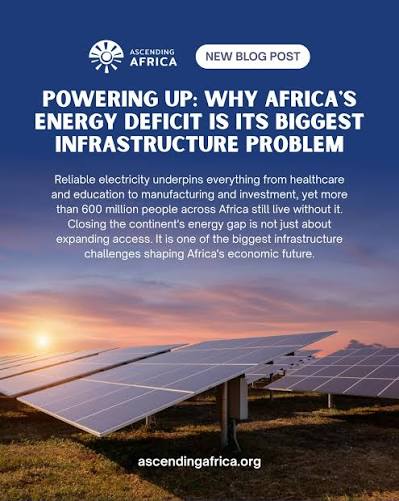
Renewable energy presents an important opportunity. Solar power combined with battery storage can provide farms, irrigation schemes, cold-storage facilities and agro-processing enterprises with alternative or supplementary sources of electricity, particularly in areas where grid supply is unreliable or unavailable.
Solar-powered irrigation can help farmers produce beyond the rainy season. Solar cold rooms can extend the shelf life of perishable products. Renewable energy can support small processing facilities closer to farming communities, allowing more value to be created near the point of production.
However, renewable energy should not be treated as a universal solution. The appropriate energy system will depend on the scale of the operation, location, power requirements, economics and available infrastructure. Grid electricity, solar, batteries and other technologies may need to complement one another.
For Ghana and other African countries, the challenge is to stop treating agriculture, energy and industrialisation as separate policy areas.
They are interconnected.
When Ghana produces more tomatoes but lacks processing and storage capacity, farmers suffer. When poultry production expands without dependable cold-chain infrastructure, the value chain remains vulnerable. When agricultural commodities are exported without sufficient domestic processing, potential jobs and industrial value are lost.
Africa’s agricultural transformation must therefore be accompanied by an energy transformation.
Governments, development institutions, banks and private investors should consider financing energy infrastructure alongside irrigation, mechanisation, storage and agro-processing projects. Agricultural industrial parks and processing centres should also be designed with reliable power as a fundamental requirement rather than an afterthought.
The question facing Africa is no longer simply:
How can we grow more food?
We must also ask:
How can we power the systems that preserve, process and transform what we grow into lasting economic value?
Reliable energy is not separate from agriculture. It is part of the infrastructure of modern agriculture.
If Africa wants to feed itself, reduce food losses, expand agro-processing and build competitive agricultural industries, it must not only grow the food—it must also provide the power that keeps the entire food system running.

Frank Ayim Damptey, © 2026
This Author has published 210 articles on modernghana.com. More I am a Ghanaian business leader, entrepreneur, industrial development professional, researcher and author with over two decades of experience in senior executive and technical roles.
I currently serve as the Chief Executive Officer of Tata Beverages Company Limited and Tata Industrial Company Limited, where I provide strategic leadership in manufacturing, product development, business growth and the promotion of locally manufactured products.
My professional experience spans a broad range of industries, including beverage and brewing, soap manufacturing, water treatment, paint and ink production, agriculture and agro-processing, food processing, technology and industrial manufacturing.
Beyond Ghana, I have provided consultancy and technical advisory services to start-ups and emerging businesses in Liberia, Sierra Leone, Burkina Faso and Nigeria. Through these engagements, I have supported entrepreneurs and businesses in product development, manufacturing processes, equipment selection, quality improvement and the establishment of sustainable production operations.
I am a strong advocate for Made-in-Ghana products, entrepreneurship, industrialisation, local value addition and the growth of small and medium-sized enterprises (SMEs). I firmly believe that Ghana and Africa’s long-term economic transformation will depend on our ability to produce more of what we consume, add value to our locally available resources and build competitive industries that create sustainable employment.
My interests extend beyond manufacturing to agriculture, food security, STEM education, innovation, healthcare, entrepreneurship and national development. I am particularly passionate about practical solutions that can strengthen local industries, create opportunities for young people and reduce Africa’s excessive dependence on imports.
As an author and contributor to ModernGhana, I regularly write on business, manufacturing, agriculture, entrepreneurship, economic development and other issues of national and continental importance. Through my writing, I seek to stimulate constructive public discussion, challenge conventional thinking and advocate practical solutions to Ghana’s development challenges.
I have also undertaken and published research in areas related to manufacturing, food processing, innovation, local raw-material utilisation and sustainable industrial development. My research interests are driven by the belief that Africa possesses enormous resources that can be transformed through research, technology, entrepreneurship and industrialisation.
Throughout my professional journey, I have remained committed to promoting local manufacturing, entrepreneurship and African industrial development.
My philosophy is simple:
“Africa must produce more of what it consumes, process more of what it produces, and build competitive businesses capable of creating jobs and competing globally.”Column: Frank Ayim Damptey
Disclaimer: “The views expressed in this article are the author’s own and do not necessarily reflect ModernGhana official position. ModernGhana will not be responsible or liable for any inaccurate or incorrect statements in the contributions or columns here.”
Follow our WhatsApp channel for meaningful stories picked for your day.

Top Stories
9 minutes ago


Originally published on www.modernghana.com