September 3, 2026
$270 Million Poultry Deal: Who Loses If Ghana Finally Stops Importing Chicken?


Thu, 03 Sep 2026 Feature Article
$270 Million Poultry Deal: Who Loses If Ghana Finally Stops Importing Chicken?
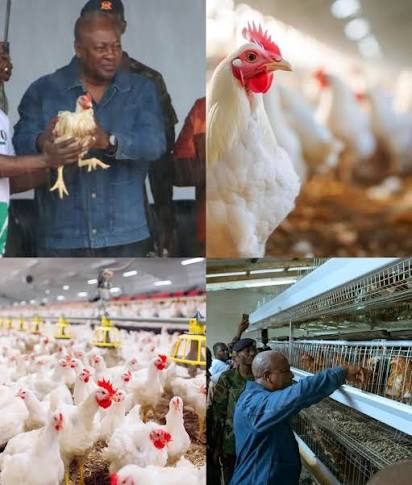
Ghana is reportedly committing $270 million to developing an integrated poultry industry covering feed production, hatcheries, farming, processing, cold storage and distribution.
It sounds impressive. But behind the headline figure lies a more important question: Will this investment rescue Ghanaian poultry farmers, or simply create another big industry around them?
Ghana reportedly consumes about 340,000 tonnes of chicken annually, while importing approximately 270,000 tonnes. If these figures are accurate, roughly four out of every five tonnes of chicken consumed in Ghana come from abroad.
That is not merely a food-security problem. It is an economic problem.
Every shipment of imported chicken requires foreign exchange. At the same time, Ghanaian poultry farmers struggle with expensive feed, high interest rates, disease risks, inadequate processing facilities and fierce competition from imported frozen chicken.
So where will the ordinary poultry farmer fit into this $270 million investment?
Will existing farmers become contract growers and suppliers to the new processing facilities? Will they receive affordable day-old chicks, veterinary support and financing? Will processors guarantee markets for their birds?
And perhaps the biggest question: Will poultry feed become cheaper?
Feed remains one of the largest costs of poultry production. Building modern processing plants will mean little to the farmer if maize, soybean meal and other feed ingredients remain so expensive that locally produced chicken cannot compete.
Government must therefore go beyond announcing the size of the investment and tell Ghanaians exactly what success will look like.
How many existing poultry farmers will participate? How many new jobs will be created? How much chicken will Ghana produce locally within three to five years? How much foreign exchange will be saved? What percentage of the country’s poultry demand will eventually be supplied locally?
These are measurable questions requiring measurable answers.
There is also an uncomfortable issue that cannot be ignored.
If Ghana’s poultry industry succeeds, somebody’s import business will suffer.
For decades, poultry imports have supported a substantial commercial network of importers, wholesalers, cold stores and distributors. If Ghanaian chicken begins replacing imported frozen chicken, some businesses will inevitably lose market share.
Will policymakers remain committed to domestic production when those commercial interests begin feeling the pressure?
Ghana cannot invest hundreds of millions of dollars in rebuilding its poultry industry while simultaneously allowing imports to undermine the very farmers the investment is supposed to support.
But consumers must also be protected. The solution is not simply banning imports and forcing Ghanaians to buy expensive local chicken. The objective must be to make Ghanaian poultry genuinely competitive through affordable feed, efficient production, improved breeds, modern processing, accessible financing and reliable markets.
Done properly, the benefits could extend far beyond poultry farmers.
Maize and soybean farmers would gain new markets. Hatcheries, feed mills, veterinary services, transport companies, packaging businesses, cold-chain operators and retailers would benefit. Thousands of jobs could be created while valuable foreign exchange remains within Ghana’s economy.
But small and medium-scale poultry farmers must not become spectators.
The true measure of this $270 million investment will not be the number of factories commissioned or speeches delivered.
It will be whether Ghanaian farmers are producing more birds, earning sustainable incomes and supplying more of the chicken on Ghanaian tables.
If Ghana gets poultry right, somebody’s import business will certainly suffer. But Ghana’s farmers, workers, economy and foreign-exchange reserves could be the winners.

Frank Ayim Damptey, © 2026
This Author has published 200 articles on modernghana.com. More I am a distinguished Ghanaian business leader and entrepreneur, serving as the Chief Executive Officer of Tata Beverages Company Limited and Tata Industrial Company Limited. With over two decades of experience in senior executive roles, I brings extensive expertise across multiple industries, including brewing, soap manufacturing, water treatment, paint and ink production, agriculture, technology, and food processing.
Beyond my leadership in Ghana, I have provided consultancy services to several start-up companies across Liberia, Sierra Leone, Burkina Faso, and Nigeria, helping to drive growth and innovation within West Africa’s industrial sector.
My work with Tata Beverages reflects my unwavering commitment to delivering high-quality products and advancing local manufacturing standards. As an author and thought leader, I have also contributed insightful articles to Modern Ghana, sharing my perspectives on business, development, and industry trends.I also have a few published research findings.Column: Frank Ayim Damptey
Disclaimer: “The views expressed in this article are the author’s own and do not necessarily reflect ModernGhana official position. ModernGhana will not be responsible or liable for any inaccurate or incorrect statements in the contributions or columns here.”
Follow our WhatsApp channel for meaningful stories picked for your day.

Top Stories


Originally published on www.modernghana.com