

September 8, 2026
Stranded Ghanaians in South Africa plead for extension of evacuation exercise


Stranded Ghanaians in South Africa plead for extension of evacuation exercise
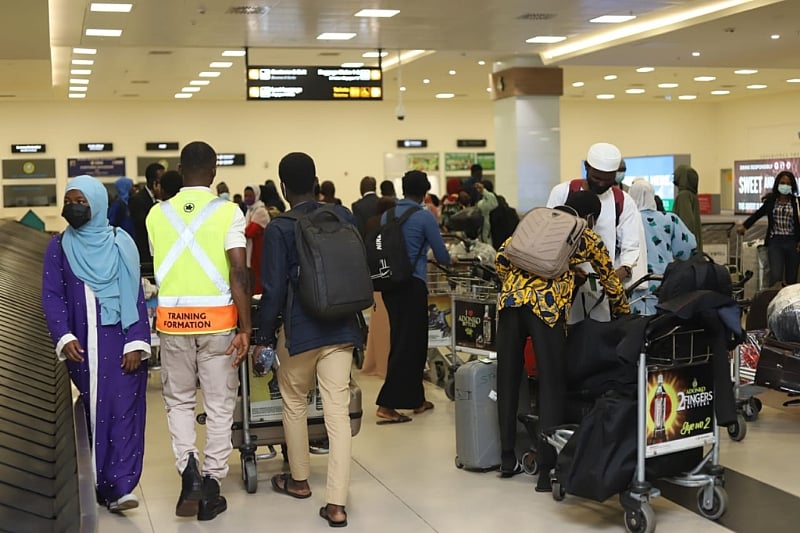
Some Ghanaians still stranded in South Africa have appealed to the government to reopen and extend its voluntary evacuation programme, saying they have been left desperate after losing their jobs, businesses and accommodation amid xenophobic attacks.
The appeal follows the government’s decision to end the exercise after the final batch of 41 Ghanaians arrived in Ghana on September 4, bringing the total number of returnees to 1,964.
However, some Ghanaians who remain in South Africa say they are still facing difficult conditions and want the government to provide them with another opportunity to return home.
Speaking on Eyewitness News on Monday, September 7, 2026, one of the stranded Ghanaians, Margaret Amenuvegbe, said she and others had registered for the evacuation but failed to attend the subsequent screening because of concerns about the conditions at the evacuation centres.
“We came after the screening. We were supposed to register to come home. We did the registration, but we didn’t come for the screening,” she said.
Ms Amenuvegbe said reports that some Ghanaians who had already reported to the evacuation centres were struggling to find accommodation discouraged her group from proceeding with the process.
“We heard that the place was so crowded, and then there’s nowhere to sleep,” she said.
She said reports that some Ghanaians seeking evacuation had been forced to sleep at a church further heightened concerns about the conditions they could face if they joined the programme.
Despite the concerns, Ms Amenuvegbe said she and others were now determined to return to Ghana after allegedly being forced out of their workplaces and homes.
“We wanted to come. We were ready to come because they even chased us from where we were working and then where we were sleeping,” she said.
According to her, 4 adults and 4 children in her immediate group are currently seeking to return to Ghana, while several other Ghanaians are also in similar circumstances.
She said the situation had been particularly challenging for Ghanaians without valid work permits, adding that she had lived in South Africa for 14 years and worked as a hairdresser before immigration-related difficulties forced her to stop working.
“When you apply for any paper, they don’t issue it,” she said. “Even if you show it to them, they say, yes, we can see you have a paper, but it doesn’t allow you to work.”
Ms Amenuvegbe said some Ghanaians had also lost their businesses and accommodation, leaving them without reliable sources of income or places to stay.
“It’s like everything is just- we are desperate,” she said.
She disclosed that she and others were currently taking shelter at a church while waiting for assistance to return to Ghana.
“We are sleeping on the floor,” she said. “Even now the things are getting cooler presently because the weather has changed.”
Ms Amenuvegbe appealed to the government to reconsider its decision to end the evacuation exercise, insisting that those still stranded remain in urgent need of assistance.
“We are on our knees. We are begging,” she said. “We don’t want anything. The only thing we have to say is that we are on our knees. We are begging.”
She said the stranded Ghanaians were prepared to leave immediately if the government reopened the evacuation programme.
“Even if they say this night we are ready to go,” she said. “This night, this week, we are ready to go.”
The government commenced the voluntary evacuation exercise in May following xenophobic attacks targeting migrants in parts of South Africa.
The Foreign Affairs Ministry said the programme was designed to support Ghanaians affected by the attacks and facilitate their safe return to Ghana.
The arrival of the final batch of 41 returnees on September 4 brought the total number of Ghanaians evacuated under the programme to 1,964.

Top Stories


Originally published on www.modernghana.com