

September 7, 2026
Governor Makinde Unveils New Plan For Cheaper Fuel
4 hours ago | General News
Governor Makinde Unveils New Plan For Cheaper Fuel


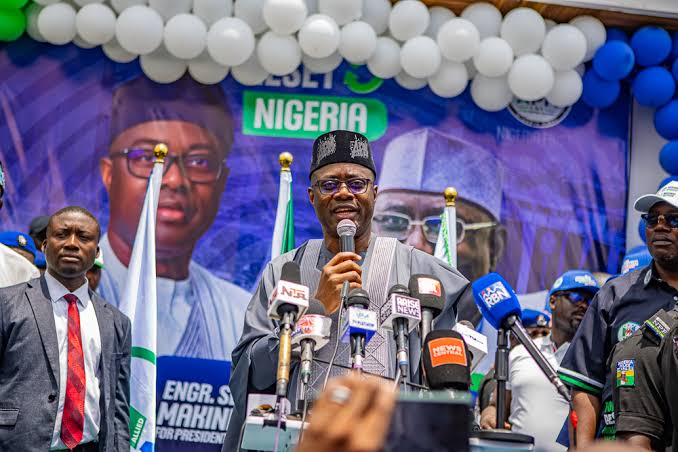
Oyo State Governor and Allied Peoples Movement Presidential Candidate, Seyi Makinde, has challenged Nigeria’s petrol pricing strategy, arguing that the nation’s status as an oil producer must translate into cheaper fuel for its citizens. Rejecting a return to costly fuel subsidies, Makinde proposed a fundamental shift instead, stating that the true path to affordable petrol lies in completely restructuring how crude oil is priced and supplied to domestic refineries.
Speaking in Abuja during the inauguration of the APM presidential campaign office, Governor Seyi Makinde addressed the ongoing political debate surrounding the economic fallout of petrol subsidy removal, clarifying that his recent remarks on the issue had been widely misinterpreted. He firmly insisted that his proposal is fundamentally distinct from an endorsement of fuel subsidies, clarifying that his focus is instead on reforming domestic crude pricing structures rather than returning to the previous subsidy system.

“That is not my position,” Makinde said.
According to him, Nigeria should build the benefit of its crude oil production into the domestic refining system rather than allow domestic consumers to bear the full burden of international pricing and other costs.
“If a community grows food, the people of that community should not have to buy that food as though it travelled halfway around the world before reaching them,” he said.

Makinde argued that crude supplied to Nigerian refineries should not be priced as if the country were entirely dependent on imported oil.
He said the arrangement should produce a direct and measurable benefit for Nigerians.
Governor Seyi Makinde proposed that the economic benefits of being an oil-producing nation should be applied directly at the point where crude oil is supplied to domestic refineries, rather than being introduced later through what he described as an “opaque intervention at the pump.”
To support this shift, the governor demanded absolute transparency across the entire petroleum value chain, spanning crude production, domestic allocation, refining, transportation, distribution, taxation, and retail margins. He emphasized that citizens must be able to see exactly how the final price is calculated, allowing Nigerians to determine how much of the pump price goes to each component and easily identify where systemic inefficiencies are driving up costs.
Ultimately, Makinde linked this pricing reform directly to his “Reset Nigeria Agenda.” He presented the proposal as a core pillar of a much larger argument for a more open, transparent, and accountable system of national governance.
If you want, I can:
Combine all rewritten parts into a complete news story Create a bulleted summary of Makinde’s “Reset Nigeria Agenda” points Turn this into an op-ed style analysis of Nigerian fuel pricing.
“We are opening another door for Nigerians to join the conversation about the future of our country,” he said.
The intervention comes as the political debate over subsidy removal has increasingly shifted from whether the policy should be reversed to questions about what Nigerians have gained from the savings and how the resulting revenues have been managed.
Finance Minister and Coordinating Minister of the Economy, Taiwo Oyedele, said on August 19 that subsidy removal had generated N15.8 trillion for the federation between June 2023 and December 2025.
Opposition figures, including African Democratic Congress presidential candidate, Atiku Abubakar, have continued to question the Bola Tinubu administration over its handling of the savings attributed to the policy.
Makinde, however, said he is framing the debate differently, arguing that Nigeria should address the underlying structure of petrol pricing rather than simply choose between subsidy payments and higher pump prices.
Away from the fuel debate, the governor also rejected suggestions that the APM was entering the 2027 presidential contest merely to make up the numbers.
He said the campaign’s strength would depend on Nigerians who identify with its proposed changes rather than how established political opponents assess its chances.
“Our voices count. Our experiences count. Our ideas count, and, together, our votes will count,” he said.
Makinde added that millions of Nigerians could not be dismissed if they united around a better future for the country.
“They may discount one candidate. But they cannot discount millions of Nigerians united behind a better future,” he said.
Originally published on www.thenigerianvoice.com