

August 29, 2026
From The Doctrine Of Repudiation To The Doctrine Of Reparations And Restitution


Sat, 29 Aug 2026 Feature Article
From The Doctrine Of Repudiation To The Doctrine Of Reparations And Restitution
“Why the Vatican Should Be at the Forefront of Championing Reparations and Restitution for Africa”
Introduction
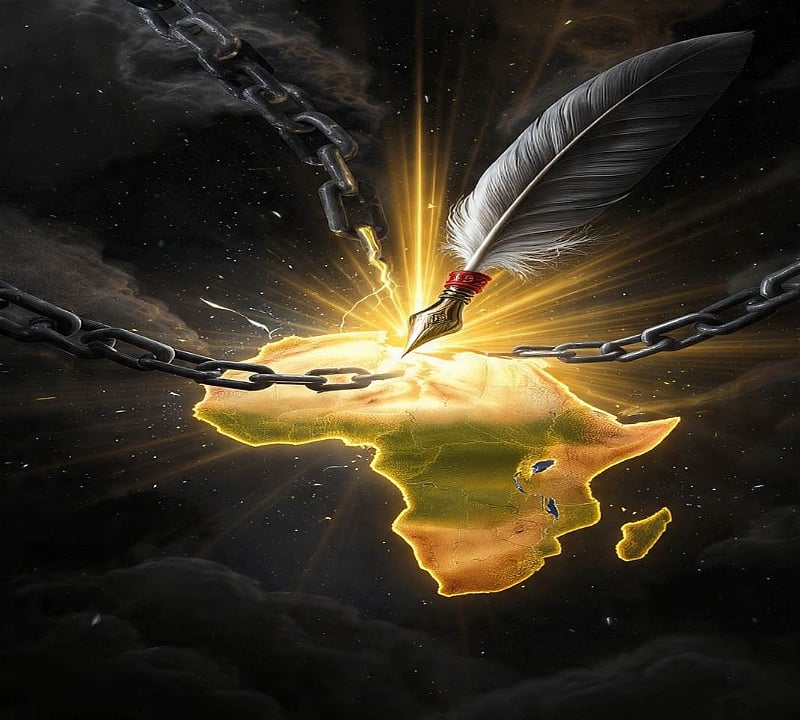
Before the guns, before the chains, there was a pen in Rome. That pen signed Africa away. The pen drafted letters that made the transatlantic slave trade, imperial machinations, and colonization holy. These were 15th-century papal bulls. Papal bulls were Church decrees that laid the theological groundwork and moral justification for the inhumane transatlantic slave trade and the brutal colonization of a continent. Chief among them: Dum Diversas, Romanus Pontifex, and Inter Caetera.
Dum Diversas, 18 June 1452
“License To Enslave”
On 18 June 1452, Pope Nicholas V issued a papal bull to King Afonso V of Portugal. Dum Diversas granted King Afonso V divine permission to attack and conquer so-called “pagans,” Muslims, and other non-Christians. Dum Diversas also authorized Portugal to expand its empire and trade routes along the West African coast. It declared:
“…free and ample faculty… to invade, search out, capture, vanquish, and subdue all Saracens and pagans whatsoever… and to reduce their persons to perpetual slavery…” (1).
With those words, theology became law. And the law became profit.
Historical Impacts of Dum Diversas of 1452
1. Legalized the Slave Trade
The decree gave the Catholic Church’s blessing to capture and enslave “pagans” in West Africa. It turned human beings into cargo and made the transatlantic slave trade “holy.”
2. Birthed the Doctrine of Discovery
Dum Diversas laid the foundation for the “Doctrine of Discovery”. Doctrine of discovery is the racist notion that Europeans had a God-given right to seize land from indigenous peoples in Africa and the Americas.
Romanus Pontifex, 5 January 1455
“License To Extend Enslavement”
Three years later, Romanus Pontifexwas issued on the 5th of January 1455. It mirrored Dum Diversas, but extended the same moral and religious right to attack and conquer non-Christians, and to claim their lands and labor, to the Spanish Crown.
Inter Caetera, 4 May 1493
“The World Divided”
On the 4th of May 1493, Pope Alexander VI issued Inter Caetera, drawing a line in the ocean and splitting the world between Spain and Portugal. The bull proclaimed that no Christian king could touch land claimed by another Christian king. But the lands of non-Christians were up for grabs.
Together, Dum Diversas, Romanus Pontifex, and Inter Caetera formed the legal and moral engine of the Doctrine of Discovery, the transatlantic slave trade, and 500 years of colonization. For that reason, these three papal bulls have been described as the “international law of colonialism” (2).
Official Repudiation, 30 March 2023
“Statement Of Regret”
Five hundred and seventy-one years later (571years), on the 30th of March 2023, the Catholic Church officially repudiated these 15th-century decrees that justified slavery, land seizures, and the subjugation of native peoples in Africa and the Americas.
Firstly, the Vatican stated the bulls’ concept is not part of Catholic Church teaching. Secondly, the Church admitted these decrees were politically instrumentalized and weaponized to justify immoral acts against indigenous peoples in Africa and the Americas. Finally, the Church said the decrees “did not adequately reflect the equal dignity and rights of indigenous peoples”(3).
Apology Issued
Thus, on 30 March 2023, the Vatican officially admitted three historic errors and came out saying;
- These bulls are not part of Catholic teaching.
- The bulls were politically manipulated to justify atrocities in Africa and the Americas.
- The bulls failed to sufficiently reflect the rights and dignity of indigenous peoples.
An apology was issued. Forgiveness was asked for. But now the Catholic Church needs to do more.The Catholic Church in Africa is not the enemy. It is also critical to note that the Catholic Church suffered under colonization in Africa. Millions of African Catholics were also victims of these decrees. The 19th Plenary Assembly of the Symposium of Episcopal Conferences of Africa and Madagascar (SECAM), which took place from 25 July to 1 August 2022 in Accra, Ghana, pointed out that the African Church needed self-reliance and emancipation from foreign aid. This was essentially a call to decolonize religion, its structures, as well as the mindset.
However, In spite of all this, the Church today has a unique moral authority that no state or non-governmental organization (NGO) has.Therefore, the Church can tread where leaders or politicians fear to go. The Church can and should seize the initiative to champion African reparations and restitution. Pope Francis visited Canada from 24 to 29 July 2022. In Canada, Pope Francis lamented what he termed the “colonizing mentality” of the Church and its “catastrophic” effects on generations of indigenous people. He begged for forgiveness, saying:
“I humbly beg forgiveness for the evil committed by so many Christians against the indigenous peoples” (4).
In Africa, it needs to be known that African dioceses led much of the resistance to colonial abuses. And today the Church runs the largest network of schools and hospitals on the continent, promoting education, health, and other community development projects and initiatives.
Repudiation Without Reparations Is Not Enough
As the Caribbean Reparations Commission (CARICOM) has argued, apologies without repair deepen the wound. A proper apology must accept responsibility, commit to non-repetition, and actively pledge to repair the historical harm caused (5). The Church recognized and acknowledged its historical errors and asked for forgiveness. But faith had already been instrumentalized for profit.
Africa’s exploitation did not start with a ship, nor was it by accident. It started with a decree issued by the Vatican.The 30 March 2023 statement matters. But a statement does not return stolen land. It does not rebuild stolen economies. It does not pay back stolen labor. The damage continues today.The economic damage — stolen land, stolen labor, stolen value — is what Africa is still fighting to reverse. Africa remains tied exploitatively to European economies by design.
According to the United Nations Conference on Trade and Development (UNCTAD, 2020) report, Africa loses over US$88.6 billion annually to illicit financial flows (IFFs) — that is more than double what Africa receives in aid and foreign direct investment combined, and enough to fund universal primary education on the continent. IFFs are driven by unfair trade practices, trade misinvoicing, and profit-shifting by multinational corporations operating in Western and European jurisdictions (6). This is the modern-day version of Dum Diversas.
Nine (9) Steps From Repudiation To Reparations and Restitution
For the Church, reparations and restitution must mean:
Material Reparations
- Actively and purposefully support restitution and reparative justice initiatives.
- Champion the cancellation of illegitimate debt.
- Invest in African manufacturing.
- Return stolen artifacts.
- Partner with African dioceses to fund community-led grassroots development and cultural programs.
Moral & Structural Reparations
- Educate on this history in Catholic schools.
- Provide full, unhindered access to Church archives to document the Vatican’s exact role in the slave trade and colonial subjugation.
- Decolonize the African Church by promoting more African clergy to leadership and centering African theological scholarship and liturgy. A symbolic but historic step would be the election of a Black Pope from Africa. This is crucial given that Africa is where Catholic membership is growing faster than in any other region in the world, (7).
- Support inculturation — blending local African traditions with Church liturgy — to move away from Eurocentric models of worship.
Conclusion
This write up is not an attack but an invitation for the Church to lead. Dum Diversas (1452), Romanus Pontifex(1455), and Inter Caetera (1493) gave European monarchs the legal and religious right to invade, conquer, and enslave. The bulls laid the theological groundwork for the transatlantic slave trade and the colonization of Africa. It is now high time for the same Church to champion and lead the call for restitution and reparations for Africa. The economic liberation of Africa will not be won with apologies. It will be won when the Church moves from mere repudiation to reparations and restitution for Africa.It is of fundamental importance for the Church to move away from the doctrine of mere repudiation to the doctrine of reparations and restitution.The pen signed Africa away in 1452. Will the same Church now use the pen to sign Africa back in?
F. Madondo (African Teacher) [email protected]
Endnotes
- Radio Canada International (RCI), 30 March 2023. Available at: http://www.ici.radio-canada.ca
- Robert J. Miller, 18 May 2023. Available at: http://www.papers.ssrn.com
- Radio Canada International (RCI), 30 March 2023.
- Leyland Cecco, _The Guardian_, 26 July 2022. Available at: http://www.theguardian.com
- CARICOM Reparations Commission, 2013. Available at: http://www.caricomreparations.org
- UNCTAD, _Economic Development in Africa Report 2020_. Available at: http://www.unctad.org
- Victoria Cardiel, Vatican City, Mar 21, 2025,in “Worldwide Catholic Population Hits 1,4 Billion” Available at: www.ewtn.co.uk

Fortune Madondo, © 2026
Fortune Madondo is a Zimbabwean Pan-Africanist writer, political analyst and a decolonial thinker. . More His work is characterized by staunch, unapologetic, defiant, Pan-Africanist and anti-imperialist stance, often addressing issues of neocolonialism and the need for African self-determination. His writing champions global South solidarity, regularly critiquing global powers hegemony and resource exploitation in Africa.His work is driven by his core Pan-Africanist framework: African sovereignty, anti-paternalism, African geopolitics; in all this, he advocates for socio-economic justice. He is a youth empowerment advocate, organiser, activist and a founder of a youth organization.
Column: Fortune Madondo
Disclaimer: “The views expressed in this article are the author’s own and do not necessarily reflect ModernGhana official position. ModernGhana will not be responsible or liable for any inaccurate or incorrect statements in the contributions or columns here.”
Follow our WhatsApp channel for meaningful stories picked for your day.

Top Stories


Originally published on www.modernghana.com