

August 29, 2026
Barker-Vormawor’s Appointment — When The Reformer Enters The Room


Barker-Vormawor’s Appointment — When The Reformer Enters The Room
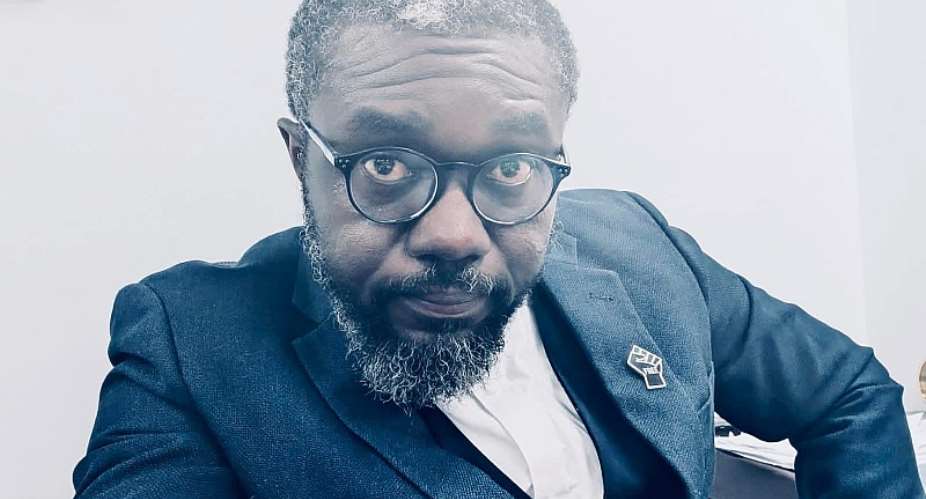
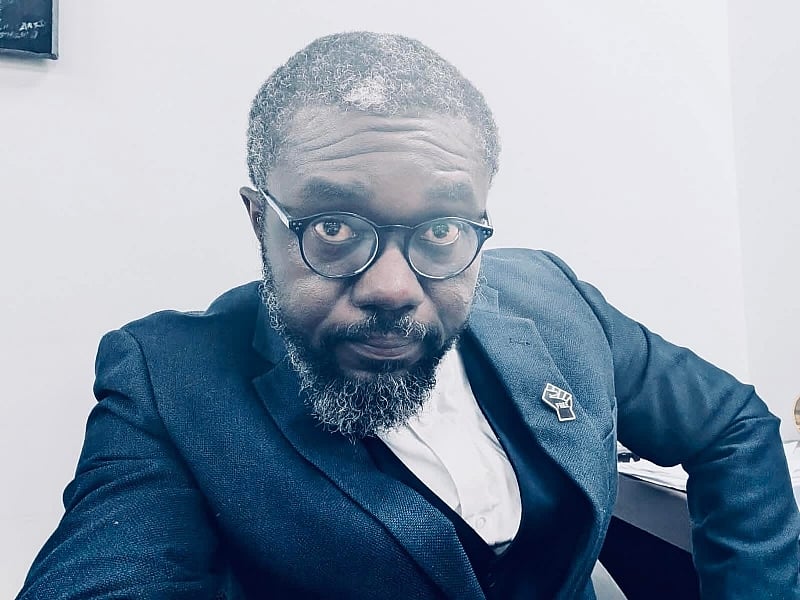
The appointment of lawyer, activist and academic Oliver Barker-Vormawor as Secretary of Ghana’s 11-member Constitution Review Implementation Committee is one of the more intriguing developments in the country’s ongoing constitutional reform process.
The committee, inaugurated on Friday, August 28, 2026, by Attorney-General and Minister of Justice Dr Dominic Ayine, has been tasked with examining the government’s position on the recommendations of the Constitution Review Committee and developing a framework for implementing the reforms accepted by government. It is chaired by former Attorney-General and Presidential Legal Counsel Marietta Brew Appiah-Oppong.
But the appointment of Barker-Vormawor deserves particular attention.
For years, he has occupied an interesting and sometimes uncomfortable position in Ghana’s public life: simultaneously a lawyer, constitutional reform advocate, academic and prominent government critic. As a co-founder and lead convener of the #FixTheCountry movement, he became associated with demands for stronger accountability, institutional reform and a more responsive political system.
Now, the activist has been invited into the institutional process he has spent years challenging from the outside.
That is potentially a good thing for Ghana.
Constitutional reform should not be the exclusive preserve of politicians and government officials. A constitution belongs to the citizenry, and the implementation of reforms should benefit from perspectives shaped by civil society, academia, the legal profession, Parliament and local government.
Barker-Vormawor also brings something particularly relevant to this assignment: institutional memory.
Long before his emergence as a prominent #FixTheCountry activist, he served between January 2010 and December 2011 as a Constitutional Researcher and Access to Justice Advisor to Ghana’s Constitution Review Commission. His return to the constitutional reform process more than a decade later is therefore not simply the appointment of a well-known activist; it is also the return of someone who has previously worked directly on constitutional review.
That background could prove valuable.
The committee’s work is, however, considerably more difficult than producing another constitutional report.
Ghana has accumulated constitutional recommendations over the years. The real challenge has often been political will, institutional coordination and translating recommendations into legally workable amendments.
The committee therefore has to move from recommendation to legislation, from legislation to constitutional procedure, and ultimately from constitutional text to institutional practice.
That is where the appointment becomes particularly important.
The Attorney-General has reportedly given the committee a tight timetable, with the first set of Bills concerning non-entrenched provisions expected to be ready for Parliament by November 2026. Some proposals will eventually require a referendum alongside the 2027 District Assembly elections.
This is not a ceremonial assignment.
It requires lawyers who understand constitutional architecture, policymakers who understand government, legislators who understand Parliament, local-government representatives who understand decentralisation and, importantly, people who understand the expectations of citizens outside the formal political establishment.
The committee’s composition appears to recognise this diversity. It includes representatives connected to the Majority and Minority in Parliament, local government, the legal profession and other relevant constituencies.
But there is another dimension that cannot be ignored.
Barker-Vormawor’s credibility will now be tested from both directions.
Those who previously viewed him as an uncompromising critic of government may ask whether accepting a government appointment compromises his independence.
Those within government who may have disagreed with his activism may ask whether he can now function effectively within a formal state process.
Both questions are legitimate.
The answer should be demonstrated through his conduct, not political speculation.
Being appointed to a government committee does not require an activist to surrender his principles. Equally, serving on a state committee requires discipline, institutional responsibility and an ability to work with people with whom one may profoundly disagree.
That is the test.
If Barker-Vormawor can bring his reformist instincts into the committee without allowing activism to replace technical judgment, his appointment could strengthen the process.
If the committee can harness his expertise without attempting to domesticate or politically neutralise his independence, Ghana could benefit even more.
There is also a broader lesson here.
Democratic governance should be mature enough to bring critics into reform processes without demanding ideological conversion from them.
Governments need critics. But constitutional reform also needs critics who are prepared to move from protest to policy, from slogans to legal drafting, and from agitation to institutional construction.
That transition is difficult.
It is much easier to criticise a constitutional arrangement than to design a replacement that is legally coherent, politically workable and capable of surviving successive governments.
Barker-Vormawor now has the opportunity to demonstrate that distinction.
The committee, meanwhile, must avoid becoming another elite constitutional conversation that produces impressive documents but little institutional change.
Ghanaians have heard many promises about constitutional reform.
What citizens need now is measurable progress: Bills drafted, amendments properly debated, institutions strengthened, political financing addressed, executive powers appropriately calibrated, accountability mechanisms made effective, decentralisation deepened and the constitutional relationship between the various arms of government clarified.
The success of this committee should therefore not be measured by how sophisticated its report sounds.
It should be measured by what ultimately changes in Ghana’s constitutional and democratic practice.
Osagyefo Oliver Barker-Vormawor has spent years demanding that Ghana’s institutions work better.
He has now been given a seat inside one of the processes seeking to reform those institutions.
The country should expect him to bring the same intellectual seriousness, courage and commitment to constitutional accountability into the room that he demonstrated outside it.
And government, for its part, should give the committee the independence and political space necessary to do its work.
Constitutional reform is too important to be reduced to partisan victory.
It is about designing the rules by which political power itself is exercised, restrained and transferred.
This appointment, therefore, should be viewed not merely as a personnel announcement.
It is an opportunity to test whether Ghana can convert dissent into dialogue, activism into institutional reform, and constitutional recommendations into lasting democratic change.
Michael Agbesi Kelly

Michael Agbesi Kelly, © 2026
This Author has published 113 articles on modernghana.comColumn: Michael Agbesi Kelly
Disclaimer: “The views expressed in this article are the author’s own and do not necessarily reflect ModernGhana official position. ModernGhana will not be responsible or liable for any inaccurate or incorrect statements in the contributions or columns here.”
Follow our WhatsApp channel for meaningful stories picked for your day.

Top Stories


Originally published on www.modernghana.com