
September 7, 2026
Africa’s True Size: The Map Just Changed After 457 Years


Africa’s True Size: The Map Just Changed After 457 Years
For 457 years, the map hanging in almost every classroom on earth has been lying about Africa. On 4 September 2026, the United Nations General Assembly decided that was long enough.
By a vote of 164 in favour to one against, with six abstentions, the Assembly adopted the “Correct the Map” resolution, calling for wider use of map projections that reflect the true relative size of the world’s continents. Togo introduced it on behalf of Africa’s 54 UN member states, backed by the African Union. The United States cast the only vote against; Estonia, Georgia, Lithuania, Moldova, Serbia and Ukraine abstained.
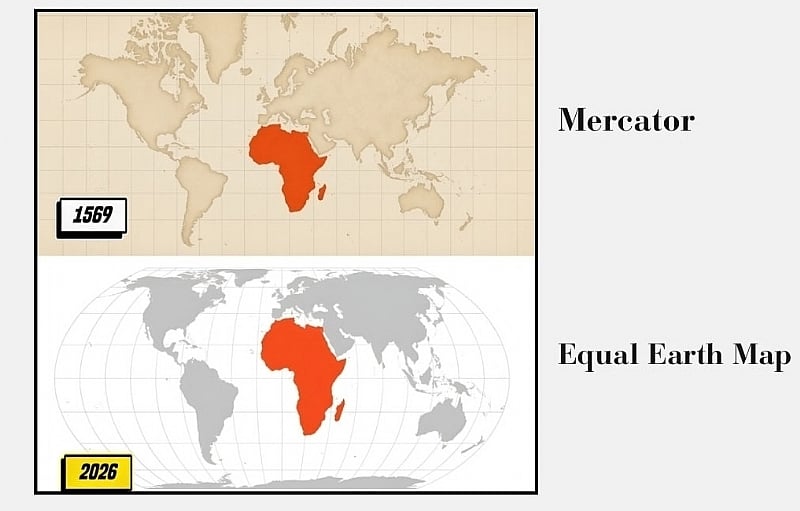
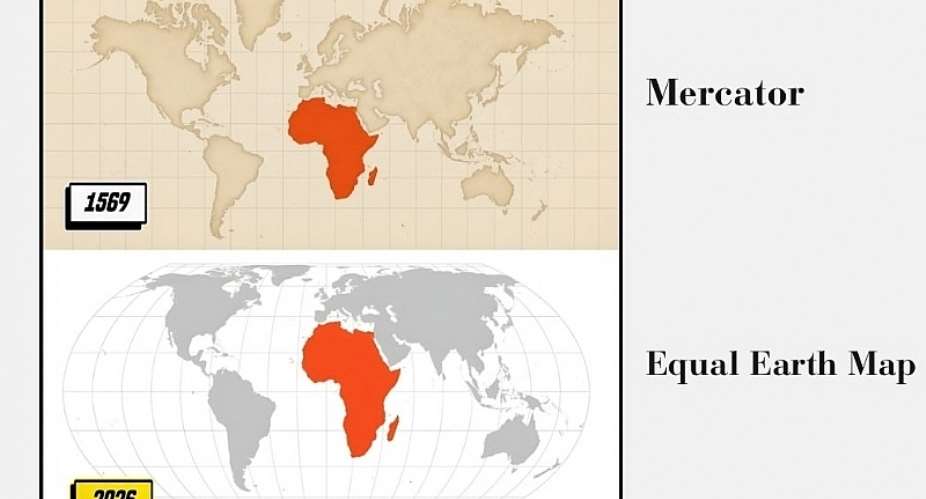
The map in question is the Mercator projection, drawn in 1569 for sailors and still genuinely useful for that, since a straight line on it holds a constant compass bearing. But flattening a sphere costs something, and Mercator’s version sacrifices area: the further from the equator, the more inflated the land looks. That is why Greenland appears close in size to Africa, when Africa is actually about 14 times larger — big enough, at 30.3 million square kilometres, to hold the United States, China, India and most of Europe combined.
Maps are among the first tools we use to teach children what the world looks like, and what looks small tends to be treated as if it matters less. Togo’s Foreign Minister, Robert Dussey, put it simply: a fair world, he said, begins with a fair map. The resolution recommends the “Equal Earth” projection, designed in 2018 to preserve true relative scale for use in education, media and digital platforms. It does not ban Mercator outright.
The US delegation called the resolution an ideological distraction. But with 164 countries, including France and Britain, voting in favour, the rest of the world clearly disagreed. As Africa No Filter’s executive director Moky Makura put it, the vote is only the start: now the real work begins, in classrooms, newsrooms and the map apps billions of people use daily.
Disclaimer: “The views expressed in this article are the author’s own and do not necessarily reflect ModernGhana official position. ModernGhana will not be responsible or liable for any inaccurate or incorrect statements in the contributions or columns here.”
Follow our WhatsApp channel for meaningful stories picked for your day.
Top Stories


Originally published on www.modernghana.com