

September 6, 2026
A nation trapped: photographing the broken promises of Sudan’s revolution


A nation trapped: photographing the broken promises of Sudan’s revolution
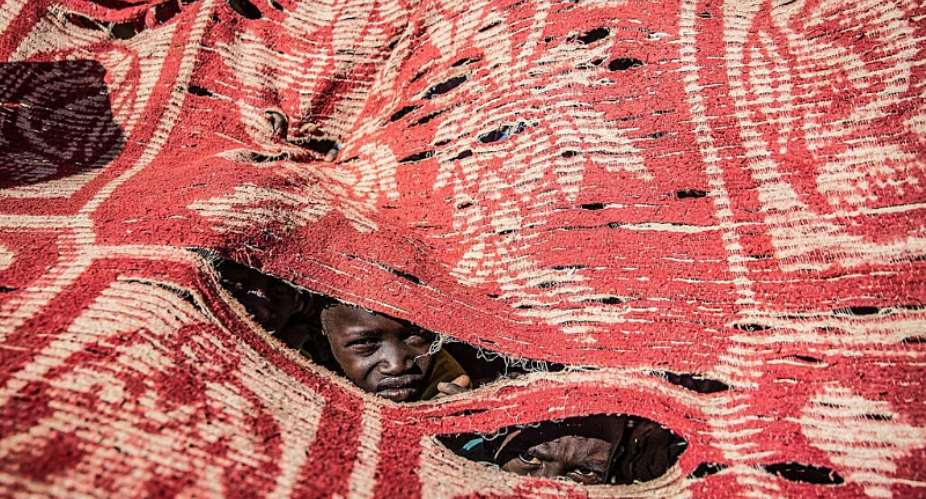
Despite the fact that peace agreements have been signed, there is still insecurity in the Darfur region of Sudan. In the Shaddad camp, almost 700 families have made makeshift shelters. On 13 February 2021, 10 days after they had arrived, they had still not received any aid. – © Abdulmonam Eassa for Le Monde
The series, which was awarded a World Press Photo prize earlier this year, is made up of images captured between 2020 and 2025 – from the wake of the 2019 revolution, to the start of the war between the army and the rival paramilitary Rapid Support Forces in April 2023 and the worsening of the conflict, which remains ongoing.
Speaking to RFI at the Visa pour l’Image photo festival in Perpignan, Eassa said the series was both a record of Sudan’s abandonment by the rest of the world, and a testament to the resilience of its people.
RFI: What first brought you to Sudan?
Abdulmonam Eassa: When I went to Sudan the first time, it was at the end of December 2020. I was really willing to going there to better understand the Sudanese revolution. It was during the transition period.
I wanted to know how the Sudanese people were able to gather thousands of people in Khartoum, the capital of Sudan, in December 2018. And how they managed to kick out the Omar al-Bashir regime which stayed in power for 30 years.
RFI: How has your own background shaped the way you see and photograph conflict?
AE: I mean, it’s Sudan. It’s totally different, the environment and the geography, even compared to Syria from where I started working as a photographer.
But like my first years of work covering the siege of my hometown in eastern Ghouta, it was very tough, heavy, mentally and physically. Of course that taught me a lot and gave me a lot of experience to work in such hard circumstances. Photographer Abdulmonam Eassa at Visa pour l’Image in Perpignan on 2 September 2026.
RFI: You have said that despite everything, the Sudanese population has continued to resist and survive.
AE: The two times we managed to go back to Sudan during the war, it was at the end of 2024 and the end of 2025. And the Sudanese people have much solidarity among each other. I consider that the world abandoned Sudan completely. But when you go on the ground there and you see that this community, in each neighbourhood, they build up a small kitchen and they collect money in the country and abroad, from the diaspora…
A lot of people in Sudan struggle to find their daily food. And we witnessed that this community, this collective group of people all around Sudan, cooked food, preparing two meals per day for the inhabitants of the city [Khartoum], where the front lines are really not far.
This is the point, the resilience that these people have. Despite a lot of difficulties that people face on the ground, there are a lot of activists that were very involved in the revolution but decided to stay over there to work among doctors, local hospitals, to help their community. Sudanese soldiers drive through a damaged market in Omdurman, 25 October 2024. The city, which has the second biggest population in Sudan, has been the scene of continuous fighting since April 2023.
Sudan’s war reshapes loyalties as civilians see ‘no option’ but the army
RFI: “The world abandoned Sudan” – what do you mean by that?
AE: It was like a clear idea from the first day of war. All countries evacuated from Sudan with their embassy, their citizens.
Back before the war, the Sudanese people had such a peaceful revolution. They managed to do a lot of things, but we didn’t see a real project from the international community that would support civil society.
And today, a lot of powerful countries are implicated in this war by fuelling it with weapons. The sign being held up by one of the demonstrators reads: “There will be no justice until there is justice for women, especially in Darfur”. On 19 December, 2021, in the evening following another day of action against the coup d’état, 13 women were raped by men in uniforms during an electricity blackout in the heart of Khartoum, the capital of Sudan.
AI challenges trust in photography as Visa pour l’Image festival opens
RFI: At this festival you’re taking part in a panel on artificial intelligence and fake images. How much do these issues worry you?
AE: It’s everywhere, all around the globe. We used to have a huge campaign of propaganda, I faced that in Syria back when I was there. And today we are flooded with information on social media. A lot of this information could be real, but most of the time it’s fake.
It’s essential today, this photojournalism work that we do, because it’s a real story, a real picture. It’s verified information.
I think it’s a big new enemy for us.
► “War in Sudan: A Nation Trapped“ is showing at the Visa pour l’Image photo festival in Perpignan until 13 September 2026.

RFI
All the news from France, Europe, Africa and the rest of the world.Page: rfi

Top Stories


Originally published on www.modernghana.com