

August 31, 2026
IMF, Auditor-General and GoldBod: Who Should Ghanaians Believe?


IMF, Auditor-General and GoldBod: Who Should Ghanaians Believe?
The US$1.7 billion question demands facts, not political noise
Ghanaians deserve a clear answer to a simple but important question: Did Ghana’s gold purchasing programme lose US$1.7 billion, and if so, who actually incurred that loss?
This question has become increasingly difficult for the ordinary Ghanaian to answer because two apparently conflicting narratives are dominating public discussion.
On one side, the Parliamentary Minority has cited International Monetary Fund (IMF) reports indicating that Ghana’s Domestic Gold Purchase Programme recorded losses of more than US$1.7 billion in 2025, equivalent to about GH¢22 billion.
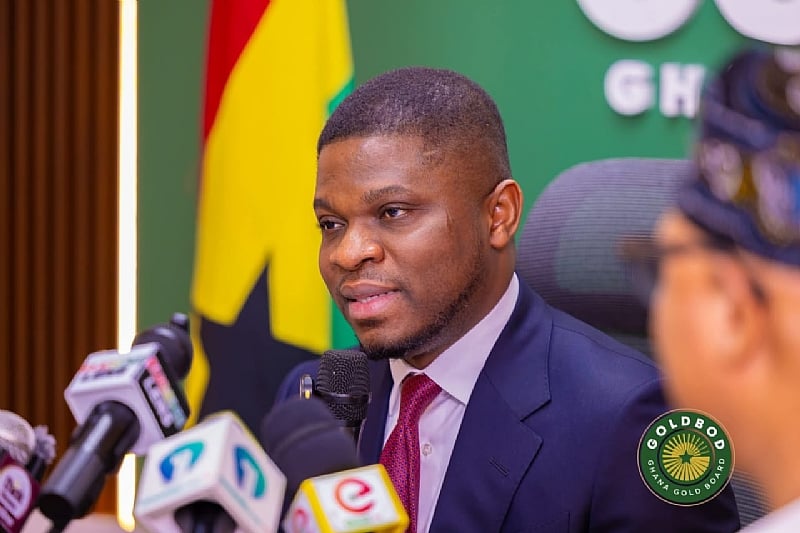
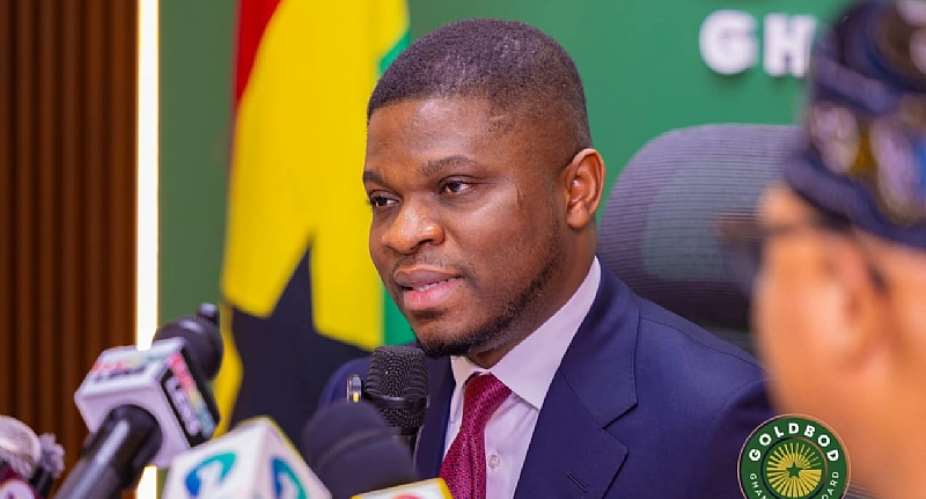
On the other side, the Chief Executive Officer of the Ghana Gold Board (GoldBod), Sammy Gyamfi, has rejected the suggestion that GoldBod itself made such a loss. He points to GoldBod’s audited financial statements, which he says show an operational surplus of about GH¢907 million and an overall surplus exceeding GH¢5.4 billion for 2025.
So, who is telling the truth? The answer may be more complicated than the political debate suggests.
The US$1.7 billion: What exactly did the IMF say?
The most important document in this debate is the IMF’s 2026 Selected Issues paper on Ghana.
The IMF states that the Domestic Gold Purchase Programme, which was operated through the Bank of Ghana, generated losses of more than US$1.7 billion in 2025, representing about 1.5 percent of Ghana’s GDP.
But the wording matters.
The IMF says these were losses for the Bank of Ghana arising from the DGPP. It identifies several sources, including service and assay fees paid to GoldBod, discounts on gold sold to off-takers, and, most importantly, exchange-rate losses arising from the difference between the foreign-exchange rate used to purchase gold and the reference rate used for Bank of Ghana accounting.
That is different from saying: “GoldBod made a US$1.7 billion loss.”
Indeed, the IMF’s report describes the programme as having generated substantial gold-related foreign-exchange inflows and says that it contributed to the accumulation of Ghana’s reserves and the strengthening of the cedi.
The IMF therefore presents a more complicated picture: the programme generated significant economic and foreign-exchange benefits, but it also created substantial financial losses on the Bank of Ghana’s balance sheet.
Where does GoldBod come into the picture?
This is where the public debate needs greater precision.
GoldBod was established in 2025. According to the IMF’s 2026 report, GoldBod initially operated within the domestic gold-purchasing structure and subsequently took over the Bank of Ghana’s domestic gold purchasing responsibilities.
The IMF also says that, from July 1, 2026, the Government and GoldBod took over the operational costs of the programme, removing the Bank of Ghana’s exposure to future quasi-fiscal losses from the gold-purchasing operation.
Consequently, it is misleading to reduce the entire US$1.7 billion figure to a simple statement that “GoldBod lost US$1.7 billion.”
The IMF itself describes the US$1.7 billion as losses associated with the Bank of Ghana’s DGPP operations in 2025.
At the same time, the IMF has raised concerns about costs associated with GoldBod and the wider gold-purchasing system. Its report says the programme’s costs were very high and that GoldBod’s costs must be reduced to protect Ghana’s fiscal position.
Both facts can exist at the same time.
But what about the Auditor-General?
This is where another important distinction must be made.
An audit of GoldBod’s financial statements and an IMF assessment of the Bank of Ghana’s Domestic Gold Purchase Programme are not necessarily measuring the same thing.
GoldBod’s audited financial statements concern GoldBod’s own financial position and accounting results.
The IMF’s US$1.7 billion figure concerns losses associated with the Bank of Ghana’s DGPP operations.
Therefore, GoldBod can report a surplus on its own accounts while the Bank of Ghana records losses connected to the broader programme.
There is no automatic contradiction between those two statements.
The question that Ghanaians should therefore ask is not simply, “Who should we believe; the Auditor-General or the IMF?”
The better question is: What exactly was audited, what exactly was measured, and which institution ultimately bore each cost or loss?
That is the question Parliament, the Government, the Bank of Ghana and GoldBod must answer.
Who has greater authority: the Auditor-General or the IMF?
This is another area where the public debate can become confused.
The Auditor-General of Ghana is a constitutional institution of the Republic of Ghana. The Auditor-General’s mandate relates to auditing public accounts and reporting on the use and management of public resources.
The IMF is an international financial institution, not a superior constitutional authority over Ghana.
Therefore, it would be wrong to say that the IMF has greater constitutional power over Ghana than Ghana’s Auditor-General.
But that does not mean an IMF report should be ignored.
The IMF’s reports are important because Ghana is a member of the Fund and has been operating under an IMF-supported economic programme. The Fund analyses Ghana’s fiscal, monetary and financial conditions and makes assessments relevant to the country’s economic programme.
In simple terms:The Auditor-General has constitutional auditing authority within Ghana. The IMF has international financial and economic assessment authority arising from Ghana’s membership and agreements with the Fund.
They are not competitors for the same constitutional job.
So who should Ghanaians listen to?
Ghanaians should listen to both—but must understand what each institution is saying.
If the Auditor-General’s audited financial statements show that GoldBod recorded a surplus, which is relevant evidence about GoldBod’s own accounts.
If the IMF says that the Bank of Ghana’s Domestic Gold Purchase Programme generated US$1.7 billion in losses, which is relevant evidence about the financial consequences of the programme for the Bank of Ghana.
One document should not automatically be used to cancel out the other.
The real issue is whether the two sets of figures can be reconciled. And they should be.
Where is the missing bridge?
The missing piece in this controversy in my view is a comprehensive explanation connecting the various accounts.
Ghanaians need to know:
1. How much gold was purchased by the programme?
2. How much was paid to miners and aggregators?
3. How much did GoldBod earn in fees and other income?
4. How much did GoldBod spend on its operations?
5. How much did the Bank of Ghana pay for gold?
6. At what exchange rates were the transactions conducted?
7. How much was eventually recovered through gold sales and exports?
8. How much of the US$1.7 billion was an actual cash loss, and how much represented accounting or valuation effects?
9. What portion of the costs went to GoldBod, off-takers, assayers, intermediaries and other service providers?
10. Who ultimately bore the economic cost?
These questions for me as a proud Ghanaian are far more useful than political accusations from either side.
The IMF itself says the story is not simply about loss
The IMF’s analysis is particularly important because it does not portray the gold programme as an unqualified failure.
The Fund says the DGPP helped Ghana generate substantial gold-related foreign-exchange inflows and contributed to reserve accumulation. In 2025 alone, the programme was associated with very large gold exports and foreign-exchange flows.
At the same time, the IMF says the programme generated significant losses for the Bank of Ghana and weakened its balance sheet.
This means Ghana’s national conversation should move beyond the simplistic argument of “profit versus loss.”
I believe that a government programme can produce an important national benefit while simultaneously creating costs or losses for a particular public institution.
The proper question is whether the overall national benefit exceeded the total economic and fiscal cost, and whether those costs were transparently disclosed and properly managed.
The way forward: independent verification
I think the current political confrontation will not settle this matter. We the youth needs sustainable job, and Ghanaians as a whole need accountability.
Neither the Minority nor the GoldBod CEO should be the final judge of the figures.
The public needs an authoritative reconciliation of the accounts.
Interestingly, the IMF’s latest report states that an external auditing firm was conducting a special audit of the Domestic Gold Purchase Programme from its inception, with the results expected in the third quarter of 2026.
That audit could provide the evidence needed to move the debate from political claims to verifiable facts.
Parliament should also demand that the relevant financial statements, contracts, transaction costs, exchange-rate methodologies and audit findings be made available to the public, subject to legitimate confidentiality requirements.
Ghanaians deserve the truth
At the heart of this controversy is something bigger than Sammy Gyamfi ESQ, Hon. Alexander Afenyo-Markin, GoldBod, the Bank of Ghana or even the IMF.
It is about public accountability.
Gold is Ghana’s natural resource. The money involved belongs, ultimately, to the Ghanaian people.
Therefore, citizens have every right to ask whether the country gained or lost from the policy, how much was gained, how much was lost, who received the money, who bore the costs and whether the programme was properly managed.
The answer must not depend on which political party is speaking. It must come from the documents.
The Auditor-General’s audit should be respected. The IMF’s analysis should also be taken seriously. But neither should be turned into a political weapon without understanding precisely what the numbers represent.
The central question is not “IMF versus Auditor-General.” Or “Sammy Gyamfi ESQ vs Hon. Alexander Afenyo-Markin.”
It is: “What happened to Ghana’s money, and can the Government show Ghanaians the complete financial trail?” That is the accountability question.
And until the figures from GoldBod, the Bank of Ghana, the Government, the Auditor-General and the IMF are placed side by side and reconciled, the Ghanaian public will continue to hear competing numbers while remaining uncertain about the truth.
Ghanaians deserve better than a political shouting match. They deserve the facts.
Chester Fiamegbe-SANI
Communication Strategist /Brands Experts/ Writer / Columnist / Photographer
Email: [email protected]

Chester Fiamegbe-Sani, © 2026
This Author has published 18 articles on modernghana.comColumn: Chester Fiamegbe-Sani
Disclaimer: “The views expressed in this article are the author’s own and do not necessarily reflect ModernGhana official position. ModernGhana will not be responsible or liable for any inaccurate or incorrect statements in the contributions or columns here.”
Follow our WhatsApp channel for meaningful stories picked for your day.

Top Stories


Originally published on www.modernghana.com