September 3, 2026
Your Business May Be Busy, But Are You Actually Making Money?


Thu, 03 Sep 2026 Feature Article
Your Business May Be Busy, But Are You Actually Making Money?
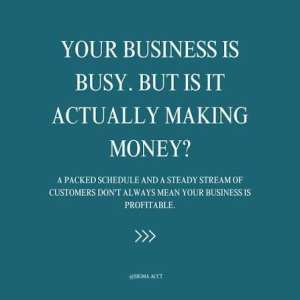
You can have a good business and still not know whether you are making money.
That is what poor record keeping does to a business.
Every day, thousands of small businesses across Ghana open their doors early in the morning and close late at night. Customers come and go. Mobile Money alerts keep arriving. Cash changes hands. Goods leave the shelves. From the outside, everything appears to be going well.
But ask the owner one simple question: How much profit did you make last month?
Sometimes, there is no clear answer.
Many entrepreneurs know how much money enters their businesses but do not know how much actually remains after expenses. Sales are not the same as profit.
If you sell GH¢20,000 worth of goods in a month, that does not mean you have made GH¢20,000. You must deduct the cost of the goods, transportation, rent, electricity, salaries, taxes, packaging, fuel, bank charges, Mobile Money charges, damaged goods and other expenses before determining whether you made a profit or a loss.
This is where record keeping becomes essential.
Unfortunately, many small businesses still operate largely from memory. The owner knows approximately how much was sold but may have no proper record of expenses, debtors, creditors, stock levels or money withdrawn for personal use.
One of the biggest dangers is mixing business money with personal money.
A customer pays GH¢1,000 into the business account. The owner immediately takes GH¢300 for household expenses, GH¢200 for school fees and another amount for a family obligation. At the end of the month, the business appears to have no money.
Was the business unprofitable?
Not necessarily.
The owner may simply have withdrawn the profit—and perhaps part of the working capital—without recording it.
Poor records can also hide theft, waste and stock losses. If you do not know how many cartons, bags, bottles or other products you bought, sold and currently have in stock, how will you know when something disappears?
Good record keeping does not require an expensive accounting department.
A small business can begin with five basic records: daily sales, daily expenses, purchases, stock and money owed by customers or owed to suppliers. These can be maintained in notebooks, spreadsheets or simple accounting applications.
The important thing is consistency.
Proper records also become extremely important when a business wants to grow. Banks and investors do not finance stories; they want evidence. They want to see turnover, expenses, profit, cash flow and the financial position of the business.
The Ghana Revenue Authority also expects businesses to maintain appropriate records for tax purposes. Without proper documentation, even determining the correct tax liability becomes difficult.
Entrepreneurs must therefore stop measuring business success simply by how busy the shop, factory or office appears.
A crowded shop does not necessarily mean a profitable shop.
A company can have many customers and still be losing money. A restaurant can be full every weekend and still be struggling financially. A factory can produce thousands of units and still make losses if production costs are not properly controlled.
What you do not measure, you cannot properly manage.
Every business owner should be able to answer three questions at the end of each month:
How much did we sell?
How much did we spend?
How much did we actually make?
If you cannot answer these questions with figures supported by records, you may be running a business—but you are running it partly in the dark.
Good record keeping may not increase your sales overnight, but it tells you whether those sales are actually making you richer or slowly putting you out of business.
Your business can look successful and still be losing money. The numbers will tell you the truth—but only if you keep them.

Frank Ayim Damptey, © 2026
This Author has published 200 articles on modernghana.com. More I am a distinguished Ghanaian business leader and entrepreneur, serving as the Chief Executive Officer of Tata Beverages Company Limited and Tata Industrial Company Limited. With over two decades of experience in senior executive roles, I brings extensive expertise across multiple industries, including brewing, soap manufacturing, water treatment, paint and ink production, agriculture, technology, and food processing.
Beyond my leadership in Ghana, I have provided consultancy services to several start-up companies across Liberia, Sierra Leone, Burkina Faso, and Nigeria, helping to drive growth and innovation within West Africa’s industrial sector.
My work with Tata Beverages reflects my unwavering commitment to delivering high-quality products and advancing local manufacturing standards. As an author and thought leader, I have also contributed insightful articles to Modern Ghana, sharing my perspectives on business, development, and industry trends.I also have a few published research findings.Column: Frank Ayim Damptey
Disclaimer: “The views expressed in this article are the author’s own and do not necessarily reflect ModernGhana official position. ModernGhana will not be responsible or liable for any inaccurate or incorrect statements in the contributions or columns here.”
Follow our WhatsApp channel for meaningful stories picked for your day.
Top Stories


Originally published on www.modernghana.com