

July 27, 2026
World Hepatitis Day 2026: Political will, not just tools, will decide if we end viral hepatitis and AIDS by 2030
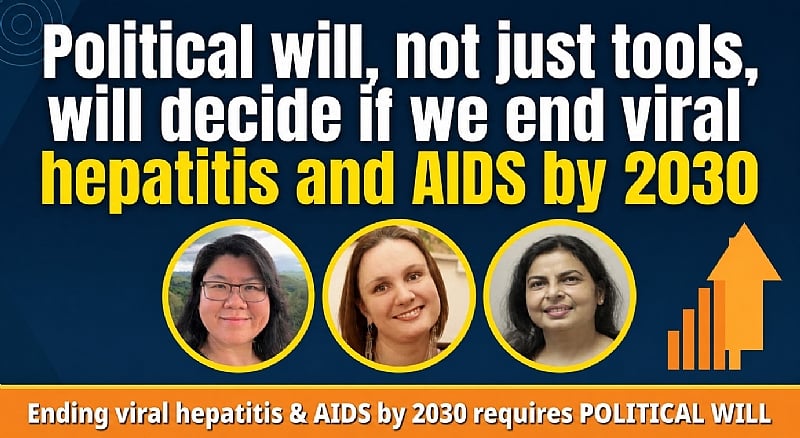


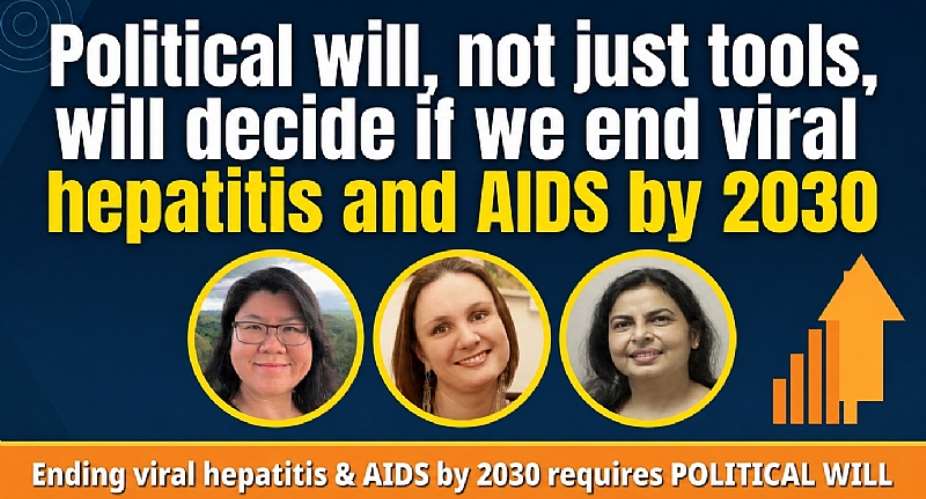
World Hepatitis Day 2026: Political will, not just tools, will decide if we end viral hepatitis and AIDS by 2030
As World Hepatitis Day falls on 28 July, the global health community confronts a stark reality: the scienceto eliminate viral hepatitis, HIV and related epidemics already exists. What remains missing is the political courage, sustained funding and integrated delivery systems to put those tools into the hands of the people who need them most.
South-East Asia: High burden, emerging successes and the logic of convergence
In World Health Organization (WHO)’s South-East Asia region the numbers are daunting. The region carries 14% of the global hepatitis-B and hepatitis-C burden. Hundreds of thousands of pregnant women living with hepatitis-B still risk transmitting the virus to their newborns because birth-dose vaccination coverage sits at only 58% – far below the more than 90% needed.
Surveillance for sexually transmitted infections remains weak; congenital syphilis still claims roughly 8,000 infants a year. The region accounts for nearly 40% of global TB cases and deaths, and half of TB-affected households face catastrophic costs.
Yet Dr Po-Lin Chan pointed to genuine breakthroughs. Dr Chan leads the WHO as Unit Head for Hepatitis, HIV, STIs, EMTCT, and TB for southeast Asian region.
Maldives last year became the first country in the world to achieve triple elimination of mother-to-child transmission of HIV, syphilis and hepatitis B. Thailand and Sri Lanka have eliminated mother-to-child transmission of HIV and syphilis. Case notification and treatment success for TB are strong once people are found. These results prove that elimination is feasible when political commitment, surveillance and integrated programmes align, she said.
Are paths forward converging?
Dr Chan argued that the path forward lies in convergence – breaking disease silos so that the same primary-care platforms, community networks and financing streams deliver multiple interventions. Multiplex diagnostics, self-testing, self-care, oral and long-acting injectable PrEP for HIV prevention, digital tools and AI-assisted X-Ray screening already exist. The challenge is scaling them while addressing the multi-sectoral drivers of disease: undernutrition, diabetes, poverty and catastrophic household expenditure. “It is really about doing differently,” she said. “If we do differently in partnership, converge, break the silos, I believe we can get there.”
Bridging the policy-to-implementation divide
Why proven tools take so long to reach scale? asks Dr Reshu Agarwal, Technical Expert for HIV, Hepatitis, STI and EMTCT, World Health Organization (WHO) India.
Viral-load monitoring was recommended in 2013; by 2023 only 74 countries had routine programmes. PrEP was approved by US FDA in 2012 and its guidelines appeared in 2016; by 2021 only 120 of 180 countries had adopted them, and actual coverage lagged further. HIV self-testing, recommended in 2017, had policies in 109 countries and implementation in 90. Differentiated service delivery and multi-month dispensing accelerated during COVID-19 but quality and scale remain uneven. Long-acting PrEP guidelines issued in 2022 had been adopted by only 21 countries by 2025, said Dr Reshu Agarwal.
The exceptions are instructive. One of the new lifesaving HIV medicines, Dolutegravir, was adopted rapidly almost everywhere and produced sharp improvements in ensuring that those people living with HIV who are receiving the therapy, remain virally suppressed. When policy decisions are made quickly and financing follows, impact follows, she said.
Agarwal listed the usual suspects for delay: slow national adoption of WHO recommendations, restrictive laws, financing shortfalls, weak supply chains and health workforce capacity, and persistent equity gaps driven by gender, geography, stigma and discrimination. The human and economic costs of inaction are measurable in preventable deaths, morbidity and missed Sustainable Development Goal targets.
What works, she said, is strong leadership, community-led responses, data-driven targeting and integrated delivery. The shift required is from pilot projects to national scale, from disease silos to convergent platforms, from short-term project funding to sustainable domestic financing, from top-down programmes to community-led services, and from counting activities to measuring impact and equity.
Four practical Ds to get As in programme outcomes!
WHO India’s Dr Reshu Agarwal offered four practical “Ds” for closing the gap: demonopolise knowledge so communities and frontline providers understand what is available; democratise access by decentralising services to the last mile; differentiate approaches to reach micro-populations and sub-national hotspots with person-centred care; and demystify innovations so that simplification and integration become routine rather than exceptional.
Eastern Europe and Central Asia: The region where AIDS still grows
Eastern Europe and Central Asia remain the only region in the world where the HIV epidemic continues to expand and death rates keep rising. The driver is clear: One large country that accounts for around 70% of new HIV cases in the region has banned opioid agonist treatment by law and frames harm reduction as a ‘dangerous Western influence.’ That same country, also pressures neighbouring governments to restrict or dismantle services, said Ganna Dovbakh of the Eurasian Harm Reduction Association in Lithuania.
The result is a predictable cascade of preventable infections and deaths. People who inject drugs – still the population bearing the heaviest burden – face criminalisation, stigma and the absence of proven interventions. “If political decisions will not be made in Russia then we could not stop AIDS in our region,” Dovbakh stated bluntly.
Yet the picture is not uniformly bleak. Over three decades, civil society, communities of people who use drugs and progressive health professionals across the 28 countries of Eastern Europe and Central Asia have transformed repressive Soviet-era narcological systems – once compared to forced-labour camps – into evidence-based services. Most governments now formally recognise the necessity of harm reduction. Needle and syringe exchange programmes, opioid agonist maintenance therapy, community-based testing, naloxone for overdose prevention and, increasingly, drug checking and fentanyl test strips exist in many places.
Service coverage remains far too low to bend the epidemic curves
Coverage, however, remains far too low to bend the epidemic curves for HIV, viral hepatitis or TB (deadliest infectious disease globally).
Dovbakh identified the primary obstacle: criminalisation of drug use and possession. Punitive laws keep people away from testing, treatment, HIV prevention options like Pre-Exposure Prophylaxis (PrEP) and every other public service. Stigma compounds the exclusion.
She welcomed the 2026 Political Declaration on HIV/AIDS: United to end AIDS, which was adopted at the United Nations General Assembly High Level Meeting (UNHLM) in June 2026. This Political Declaration’s reaffirmation of the 10-10-10 targets on removing societal and legal barriers, and the imminent launch of new UNAIDS-UNODC guidance on decriminalisation co-authored with the community-led International Network of People Who Use Drugs.
“Criminalisation is the first barrier which stops people,” she said. Comprehensive harm reduction must go beyond methadone or buprenorphine to include needle-syringe exchange programmes, information and drug checking for stimulant users, community testing, overdose prevention and integrated services delivered by community-led organisations contracted as equal partners.
Barriers to end AIDS are political, not technical
The threat to that progress is mounting. Criminalising laws (which are not-in-step with public health evidence-based policies), ‘undesirable organisation’ statutes and anti-drug propaganda legislation are shrinking civic space and choking advocacy funding. “Remaining barriers to respond to HIV/AIDS till 2030 are political, not technical,” Dovbakh concluded. Free civic space, supported civil society, decriminalised drug use and comprehensive harm reduction could end AIDS in the region faster than 2030.
Shared agenda for World Hepatitis Day and beyond
Taken together, the three perspectives form a coherent diagnosis. Hepatitis-B and Hepatitis-C, HIV, syphilis, TB and the overlapping epidemics among people who use drugs cannot be defeated in isolation. Criminalisation and stigma remain the biggest barriers ever invented against public health. Siloed programmes waste scarce resources. Delayed adoption of new tools exacts a preventable human cost. Shrinking civic space undermines the very community systems that deliver results.
The good news is equally consistent. Where political leaders have protected harm reduction, contracted community organisations as partners, invested in integrated maternal and child health platforms, and moved rapidly from evidence to national policy, elimination targets have moved within reach. Maldives’ triple elimination is the clearest recent proof. Rapid Dolutegravir scale-up is another. Expanding community-led monitoring and advocacy funding is a third.
On World Hepatitis Day 2026 the message from the experts is unambiguous. The remaining distance to the 2030 goals is not measured in missing technologies. It is measured in political decisions still unmade, laws still unrepealed, budgets still unallocated and silos still unbroken. Close those gaps, and the epidemics of hepatitis, HIV and TB can still be ended – on time or even ahead of schedule. Leave them open, and the cost will continue to be paid in lives.
Shobha Shukla – CNS (Citizen News Service)
(Shobha Shukla is a feminist, health and development justice advocate, and an award-winning founding Managing Editor and Executive Director of CNS (Citizen News Service). She serves as Chairperson of Global AMR Media Alliance (GAMA), Host and Coordinator of SHE & Rights (Sexual Health with Equity & Rights), President of Asia Pacific Media Alliance for Health, Gender and Development Justice (APCAT Media), and founder leader of DJOP (Development Justice for Older Persons) initiative. She was also the Lead Discussant for SDG-3 at United Nations inter-governmental High Level Political Forum 2025. GAMA , led by her, received the AMR One Health Emerging Leaders and Outstanding Talents Award at UN High Level Ministerial Conference on AMR 2024. Follow her on X @shobha1shukla or read her writings here www.bit.ly/ShobhaShukla)

Shobha Shukla, © 2026
Shobha Shukla is the founding Managing Editor of CNS (Citizen News Service) and is a feminist, health and development justice advocate. She is a former senior Physics faculty of Loreto Convent College and current Coordinator of Asia Pacific Media Network to end TB & tobacco and prevent NCDs (APCAT Media). Column: Shobha Shukla
Disclaimer: “The views expressed in this article are the author’s own and do not necessarily reflect ModernGhana official position. ModernGhana will not be responsible or liable for any inaccurate or incorrect statements in the contributions or columns here.”
Follow our WhatsApp channel for meaningful stories picked for your day.

Top Stories


Originally published on www.modernghana.com