

September 2, 2026
UN rights expert urges Zambia to free political detainees
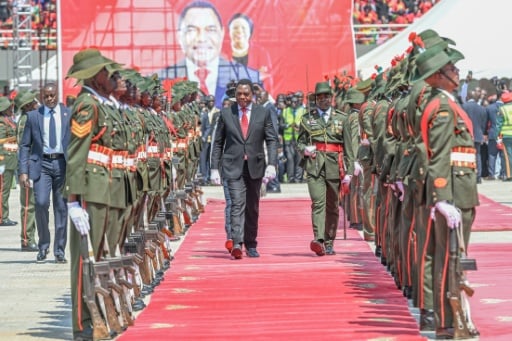


UN rights expert urges Zambia to free political detainees
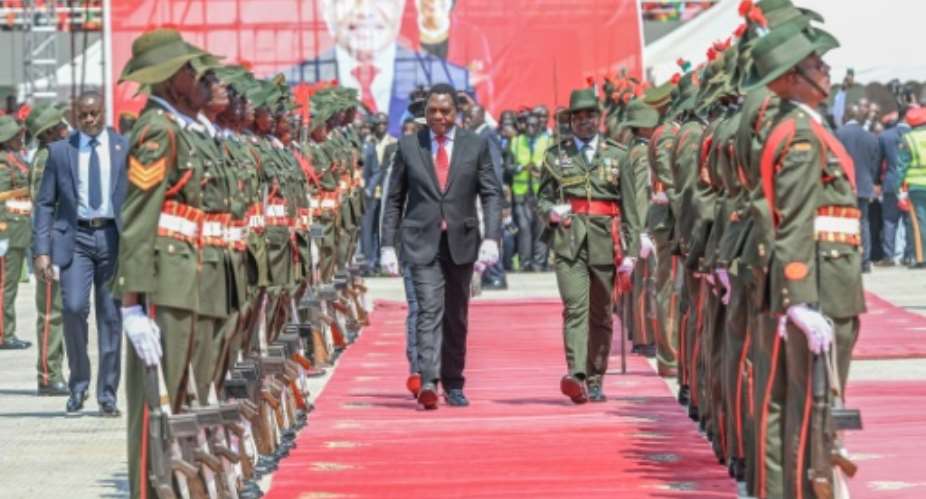
President Hakainde Hichilema was sworn in for a second term on Tuesday. By Noel SICHALWE (AFP)
A United Nations’ rights expert on Wednesday voiced “grave concern” over Zambia’s shrinking political space and called for the release of political prisoners.
President Hakainde Hichilema was sworn in for a second term on Tuesday following a contentious election that drew scrutiny from observers over its fairness and credibility.
In the aftermath of the vote, several opposition figures, including Brian Mundubile, who finished second, were arrested in a sweeping crackdown over an alleged plot against national security.
Mundubile, a former provincial government minister, was charged with treason at the weekend but has not been presented in court.
Gina Romero, the UN special rapporteur on freedom of assembly and association, said reports from the post-election period pointed to a pattern of rights abuses linked to allegations of irregularities in the vote.
She cited allegations of intimidation and the detention of hundreds of opposition supporters, some of whom were reportedly held for extended periods without charge.
“A healthy democracy requires that all voices — including opposition members, religious leaders, civil society actors, and journalists — speak freely without fear,” she said, calling on authorities to free the detainees and “restore democratic accountability”.
UN special rapporteurs are independent experts appointed by the Human Rights Council to report their findings in their given field. They do not, therefore, speak for the United Nations itself.
The Anglican Church of Southern Africa, whose retired bishop Trevor Mwamba was among those detained, on Tuesday called for an end to arbitrary arrests.
“We strongly appeal to the Zambian authorities to allow them access to decent sanitation, reading material and other human necessities,” Archbishop of Cape Town Thabo Makgoba said in a statement.
Zambia, one of southern Africa’s longest-standing multiparty democracies, has largely enjoyed a reputation for political stability and competitive elections since the end of one-party rule in 1991.
But arrests of opposition supporters and critics were a recurring feature of former leader Edgar Lungu’s presidency between 2015 and 2021, prompting accusations of political repression.
Hichilema’s first term was also marked by concerns over political freedoms, with opposition parties and civil society groups accusing his government of curbing dissent, allegations the government has rejected.

AFP
Top news and features from AFP’s reporters around the world. Page: afp
Top Stories


Originally published on www.modernghana.com