

September 1, 2026
Thieving Matters: The Trump-Venezuela Oil Steal


Thieving Matters: The Trump-Venezuela Oil Steal
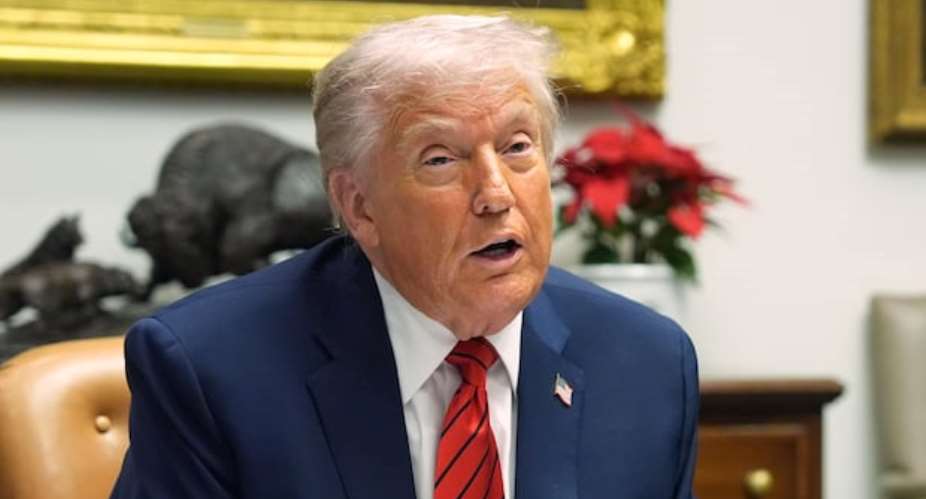
When the Trump administration abducted the Venezuelan President Nicolás Maduro and his wife on January 3, an open incitement to international lawbreaking was asserted. Here was thuggish impunity, crude acquisition and harsh plunder in operation: the seizure of a sovereign leader in office on fanciful narco-terrorist charges, a violation of the territorial sanctity of a state guaranteed by Article 2 of the United Nations Charter, and the demand that Venezuela be compliant with Washington’s objectives in its vulgar reiteration of the Monroe Doctrine. The prize was clearly oil.
Towards the end of August, President Donald Trump was in a sprightly mood on his favourite platform of choice, Truth Social. In a post, the President announced that he had reached, with Venezuela, “THE BIGGEST OIL DEAL IN WORLD HISTORY!” Under his direction, the US Secretary of State Marco Rubio, the Secretary of War Pete Hegseth, working with interim President Delcy Rodriguez of Venezuela in “partnership with private business, have secured majority US control of more than 65 BILLION BARRELS of proven Oil Reserves in Venezuela, at no cost to the American taxpayer.”
This brazen assertion of control would more than double oil reserves in the US (currently at 46 billion barrels), increase oil supply and, most importantly regarding the election prospects for the Republicans, “substantially lower Gas Prices for all Americans, long into the future, while helping to continue to set Venezuela on a course to Tremendous Success and Great Prosperity.”
President Rodriguez tried to polish what could only be regarded as a particularly unpleasant turd. Lasting 25 years, the agreement was in line with the country’s Hydrocarbons Law and would secure US$100 billion in investment, with US$209.3 billion in royalties and taxes. She was less than forthcoming about the level of tax revenue that will flow in from these transactions.
This cocksure initiative is, as with much issuing from the mind and easy mouth of Trump, one part hope and several parts fiction. The initial question to ask is when the benefits of this plunderous exercise will flow back to the American economy in any timely way. “Ultimately, prices are going to come down,” Trump remarked in the Oval Office. “Now, will it happen before the election? I can’t tell you that.”
The cognoscenti in the field of commodities are sceptical and excited. Patrick De Haan, head of petroleum analysis at GasBuddy, offered his doubts to The Hill. Well it might be that prices would come down “several years from now” but that was hardly likely in the short term. There were, for instance, troubling legal risks to the agreement, and various other contingencies, but were it to have legs, “with huge investments, with a big increase in oil production, it could be big. But, again, the gas price impacts are years down the road, not days, weeks or months.”
These comments easily inspire reference to those damning words of the economist John Maynard Keynes, penned in A Tract of Monetary Reform (1923): “The long run is a misleading guide to current affairs. In the long run we are all dead.” Gas prices might fall, but in the short term, we have Trump’s airy, often buffoonish assessments.
There are a multitude of considerations as to why the long run matters. From Lipow Oil Associates, Andy Lipow reminds us about the necessary infrastructure for the venture to work. “It’s going to take a decade to upgrade the infrastructure system to have a material impact on the oil market” though he did not wish to ignore the possibility of “some incremental improvements in the next year or two.” To push Venezuelan oil to levels of high production could cost somewhere in the order of US$180 billion; “an extraordinary amount of money [is needed] to be spent just to get oil out of the ground and delivered to the market before it’s even refined.”
The agreement has all the crude tailoring of gangster capitalism. The Trump administration is not exactly forthcoming on the list of enlisted business partners, but one reliably soiled candidate is North American Blue Energy partners (NABEP), led by the Venezuelan investor Alejandro Betancourt. The company is planning to move six drilling rigs into its Venezuelan oil fields by the end of the year, with the intention of deploying a further 12 rigs in 2027. The anticipated total is 52. In keeping with Trump’s taste for squalid, thieving characters, Betancourt is under investigation for overseeing the embezzling of US$2 billion from state oil company Petróleos de Venezuela (PDVSA), having also caught the eye of authorities in Spain and Switzerland for alleged money laundering and tax fraud. Despite this seemingly choking cloud of suspicion and query, Betancourt has been given near complete freedom to use private planes, accompanied by his troupe of family, partners, investors and business associates from the banking and mining industries.
As for the aforementioned legal risks, these are hard to shake off. Does the transaction pass muster under the Venezuelan constitution, given that Washington, not Caracas, is the one deciding the model at stake and companies that will participate in the venture? Trump has no care in the world for such statutory niceties, but prospective business partners and investors do. Luisa Palacios, an adjunct researcher at Columbia University’s Center on Global Energy Policy, is blunt on this point: “If the goal was to try to reduce the risk of investing in Venezuela, the United States might be doing the exact opposite with this transaction: further weakening the country’s already fragile institutional framework.”
Ed Chow, former Chevron executive and non-resident senior fellow at the Center for Strategic and International Studies, has this to add: “For a capital intensive, long-term industry, uncertainty slows you down. Sometimes it freezes you.” If there is a freeze in all of this, it certainly will not be due to any moral scruples on the part of the parties. However rich the returns, Venezuelan clientelism and kleptocratic initiative has been assured.
Dr. Binoy Kampmark was a Commonwealth Scholar at Selwyn College, Cambridge. He currently lectures at RMIT University. Email: [email protected]

Binoy Kampmark, © 2026
Dr. Binoy Kampmark was a Commonwealth Scholar at Selwyn College, Cambridge. He currently lectures at RMIT University. Email: [email protected]. More He is a Senior Lecturer in the School of Global, Urban and Social Studies, teaching within the Bachelor of Social Science (Legal and Dispute Studies) program.
Binoy’s research and teaching interests lie in the intersections of law, international relations and history. Much of his research and teaching involves the examination of conflict, diplomacy, and the various crises confronting international society including refugees, terrorism, ‘rogue’ states and undocumented citizens.
Binoy has written extensively in both refereed journals and more popular media on his research interest topics of the institution of war, diplomacy, international relations, 20th century history and law.
The quality of his research has been acknowledged in awards made by the US-based International Association for the Study of Forced Migration and Limina, journal of the History Department of the University of Western Australia.
Media expertise
Binoy is available for media interviews and comments as an expert on international and national security, terrorism, the war on terror and politics.
He has been interviewed for National Public Radio in the United States, Radio National in Australia, and radio stations in South Africa. He is also a regular contributor to online publications including The Conversation, Eureka Street, CounterPunch (US) and Scoop (NZ).
Binoy was also commissioned by the UK History Channel in December 2007 to January 2008 to write package descriptions for the American Civil War, and in March 2006 to write a package on World War II: The War in the West, 1943-1945.Column: Binoy Kampmark
Disclaimer: “The views expressed in this article are the author’s own and do not necessarily reflect ModernGhana official position. ModernGhana will not be responsible or liable for any inaccurate or incorrect statements in the contributions or columns here.”
Follow our WhatsApp channel for meaningful stories picked for your day.
Top Stories


Originally published on www.modernghana.com