September 5, 2026
The Wealth They Were Afraid to Lose


Sat, 05 Sep 2026 Feature Article
The Wealth They Were Afraid to Lose
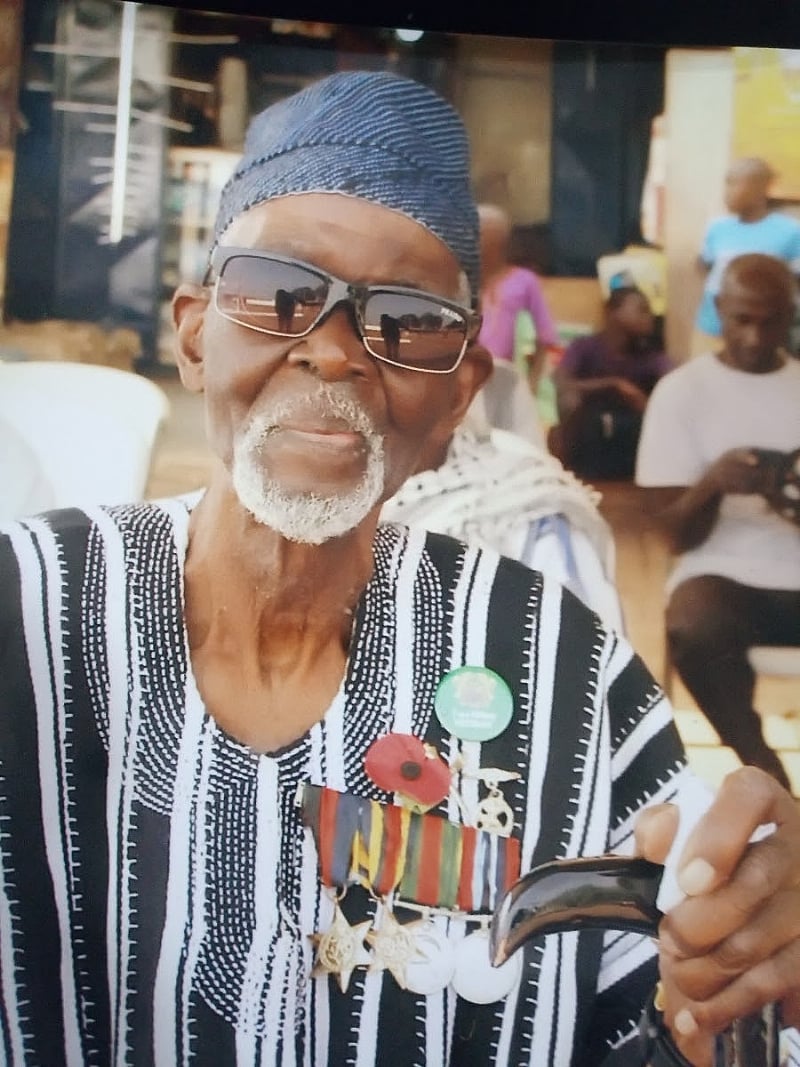
A story my late father told me about wealth, generosity and the mysterious ways of Allah
There are some stories our parents and grandparents tell us when we are young that refuse to grow old. They remain somewhere in the attic of the mind, gathering dust but never disappearing. Then, years later, something happens — a death, a hardship, a sudden fortune, an act of kindness—and the story quietly walks back into our lives.
Alhaji Abdulai Gbiengbiedoo’s Story
My late father once told me a story. I have never forgotten it. He told me about a man who prayed and prayed. Not for a little money. Not for enough to feed his family. The man wanted wealth — great wealth. He wanted to wake up one morning and find that poverty had packed its bags and left his house forever. He prayed until, according to the story, Allah heard him. And then came the answer.
The Prophet was tasked with carrying the good news to the man. But there was a condition. The man had to choose. He could have his wealth now, enjoy abundance during the first part of his life, but spend his final years in poverty. Or he could remain poor for now, endure hardship during the first part of his life, but become exceedingly wealthy during the latter part. It was a strange bargain.
A man desperate for wealth had finally received an opportunity to become rich. Yet he had to choose when to be rich. The man did not answer immediately. He went home. He told his wife. And the woman, perhaps thinking as many of us would think, said: “Take the wealth now. Why postpone happiness? Why remain poor today when riches could come tomorrow? Why watch other people eat well while you struggle? Why live in a leaking house when you can have a mansion? Why walk when you can ride? Why suffer when abundance is being offered?” So the man agreed. Or rather, he initially wanted the wealth later, but his wife insisted. They chose riches now.
And riches came. Oh, how they came! Camels filled their compound. Cattle grazed on their lands. Goats and sheep multiplied. Date farms flourished. Houses rose. Wells were dug. Gold glittered. Granaries overflowed. Their wealth became so enormous that the very abundance which had once been their prayer became the source of their greatest fear.
Every night, the man lay awake. He counted. Not his money. His remaining years. “What if the day comes? What if all this disappears? What if I wake up one morning and everything is gone? What if I become poor again?” He had prayed for wealth. Now he was frightened of losing it. Isn’t that the strange irony of wealth? Before we have it, we fear poverty. After we acquire it, we fear losing wealth. And sometimes we spend our entire lives protecting the very thing we once believed would make us happy.
But then his wife had an idea. One morning, she woke her husband. “Get up,” she said. He probably thought something terrible had happened. Instead, she told him: “We have been given too much.” The man listened. “We cannot consume all this food. We cannot live in all these houses. We cannot drink all this water. We cannot use all this wealth. So let us give.” And they began to give.
They fed the hungry. Anyone who came to their gates looking for food was given food. The widow received assistance. The orphan received help. The old man who could no longer work was cared for. The traveler who arrived tired and hungry found shelter. The sick were supported. The poor were clothed. The needy were not asked to prove their poverty. They simply received.
Then the couple went further. They built wells. They repaired roads. They built houses for widows and the aged. They established an inn for travelers. They turned their wealth into wells from which everybody drank. Their town changed. Poverty began to disappear. Hunger became less familiar. People no longer dreaded the arrival of a stranger because strangers came looking for help and left with something.
And word travelled. People from distant places began arriving. “Go to that town,” they were told. “There is a man and his wife there who will help you.” And so they came. The poor came. The hungry came. The homeless came. The traveler came. And the couple gave.
Years passed. One year became several. The man had expected the wealth to disappear. It did not. He waited. Nothing happened. He waited some more. Still nothing. Eventually, the couple began to wonder. Had they misunderstood? Had the message been wrong? Had the Prophet made a mistake? And somewhere in the telling of this story, the Prophet himself wondered: Would these people eventually think that he had lied to them?
So he sought an explanation from Allah. And the answer, as my father told it, was profound. Allah does not think as human beings think. Human beings calculate. Allah knows. Human beings make plans. He is the best of planners. Allah knows the end from the beginning. Human beings see what is before their eyes. Allah sees what we cannot see.
And then came the astonishing part. The wealth would remain. Not because the couple had outsmarted destiny. Not because the original promise had been forgotten. But because something greater had happened. Thousands of people had come to depend on that wealth. Children were being fed. Widows were being housed. Travelers were finding shelter. The aged were being cared for. The thirsty were drinking from wells. The poor were finding dignity. The wealth was no longer merely theirs. It had become a means through which other people’s lives were being transformed. And so, according to the story, Allah allowed the wealth to remain with the couple until they died. The thing they had feared losing became the instrument through which they gained something far greater. They had wanted riches. Allah gave them an opportunity to become rich in another way. And that is where the story becomes much bigger than money.
What if wealth is not really ours? We often say: “My money.” “My house.” “My farm.” “My business.” “My car.” “My land.” “My wealth.” But what if we are merely custodians? What if everything we possess is temporarily placed in our hands? We forget that that what we possess ultimately belongs to Allah. Perhaps the greatest question is therefore not: “How much do I have?” but: “What am I doing with what I have?” A person may have millions and still be poor. Another may have little and yet leave behind a legacy that outlives generations. The richest person may not be the one who owns the most. It may be the one whose wealth has lifted the most people.
The couple discovered a secret. They discovered that wealth becomes frightening when we live only for ourselves. But wealth becomes beautiful when it becomes a blessing to others. Food stored for ourselves eventually finishes. Food shared feeds another human being. Money locked away serves only the owner. Money used to educate a child may transform an entire family. A house occupied by one family shelters a few. A house built for the homeless may restore dignity to generations. A well dug for a community may continue giving long after its builder has returned to the earth.
Sometimes we pray for something without knowing what that thing will demand of us. The man prayed for wealth. He got it. Then he discovered that wealth brought fear. But his wife helped him discover something even more important: The best way to overcome the fear of losing a blessing may be to turn the blessing into somebody else’s blessing. Perhaps that is why generosity can be liberating. When you give away something for the sake of Allah, you stop worrying about possessing it forever. You have already converted part of your temporary wealth into an eternal investment.
What are we leaving behind? One day, every one of us will leave. The house will remain. The bank account will remain. The farm will remain. The cars will remain. The clothes will remain. The businesses will remain. Even the arguments over inheritance may continue after we are gone. But the question will be: What did our wealth accomplish while we were alive? Did it feed somebody? Did it educate somebody? Did it save somebody from humiliation? Did it give a widow a roof? Did it give an orphan a future? Did it give a thirsty traveler water? Did it build something that continued serving humanity after we were gone? Or did we spend our entire lives accumulating things that eventually accumulated dust?
My father left me with more than a story. When my father told me this story, I remember thinking about the choice the man had been given. I told my father immediately: “If I were the man, I would choose to be poor first and rich later.” Perhaps that was the wisdom of youth speaking. Afterall are we not told that “he who laughs last, laughs best?” Today, I think differently.
I think the real wisdom of the story lies beyond choosing between being rich now or rich later. It lies in what the couple eventually did with their wealth. They could have built walls around their riches. Instead, they built wells. They could have locked their granaries. Instead, they opened them. They could have built bigger houses for themselves. Instead, they built homes for people who had none. They could have counted their wealth. Instead, they counted the people they helped. And perhaps that is the greatest definition of wealth. Not what we possess. What our possession does for others.
My late father is gone now. But sometimes I hear his voice telling me that story again. And I wonder how many of us are praying for wealth without asking Allah what He expects us to do with it. I wonder how many of us are afraid of becoming poor when the greater poverty may actually be having everything, and using none of it to make another person’s life better. And I wonder whether, when our final hour comes, we will look back at everything we accumulated and wish we had given more.
Because eventually, everything we own will belong to somebody else. Except perhaps the good we did. The hand that fed the hungry. The roof that sheltered the homeless. The well that quenched the thirsty. The scholarship that educated a child.
The medicine bought for someone who could not afford it. The debt quietly paid for someone in distress. The widow helped without humiliation. The orphan protected. The stranger welcomed. The road built. The water provided. The kindness nobody knew about. These are the things that may follow us beyond the grave.
So perhaps the prayer we should make is not merely: “O Allah, make me rich.” Perhaps we should also pray: “O Allah, if You make me rich, do not let my wealth make me poor in character. Make my wealth a blessing to others. Make my hands instruments of mercy. And when You take me from this world, let me leave behind people who can say: because this person lived, our lives became a little better.” That, perhaps, is wealth worth praying for.
And that is the story my father told me. A story about a man who feared losing his fortune — until he discovered that the safest place for a blessing is sometimes in the hands of others.
FUSEINI ABDULAI BRAIMAH
+233208282575 / +233550558008
[email protected]

Fuseini Abdulai Braimah, © 2026
Ghanaian essayist and information provider whose writings weave research, history and lived experience into thought-provoking commentary. . More Fuseini Abdulai Braimah, popularly known to everyone as Fussie (or Fuzzy). Born in April 1955, I completed Tamale Secondary School in 1974. Started work as a pupil teacher, worked with Social Security & National Insurance Trust in Yendi, Social Security Bank in Tamale and Tarkwa (brief stint), Northern Regional Development Corporation (NRDC), and University for Development Studies Library in Tamale. I also worked briefly with the British Council Outreach Programme in Tamale. Studied “Application of ICT in Libraries” with the Millennium College, London. Was privileged to be sponsored by the NICHE Project of the Dutch Government to undergo training in Information Literacy Skills at ITHOCA, Centurion, South Africa, after which I undertook an educational tour of some libraries in The Netherlands, which took me to Maastricht, Amsterdam, The Hague, and Leiden. I have a passion for teaching and writing. In the past, I wrote for the Northern Advocate, the Statesman and BBC Focus on Africa Magazine. Now retired, I proofread Undergrad and Graduate theses and articles for refereed journals, as well as assist researchers find material for literature reviews. My specialty is Citations Management. Column: Fuseini Abdulai Braimah
Disclaimer: “The views expressed in this article are the author’s own and do not necessarily reflect ModernGhana official position. ModernGhana will not be responsible or liable for any inaccurate or incorrect statements in the contributions or columns here.”
Follow our WhatsApp channel for meaningful stories picked for your day.
Top Stories


Originally published on www.modernghana.com