

August 13, 2026
The Generator Economy: How Nigerians Pay Twice for Electricity
4 hours ago | Opinion
The Generator Economy: How Nigerians Pay Twice for Electricity


Comr. Agyo Atsika Mgbashongha is a student of International and Diplomatic Studies at the National Open University of Nigeria, Abuja. He is a researcher, unionist, and an active member of the Nigeria Boys’ Brigade, Benue State Council.

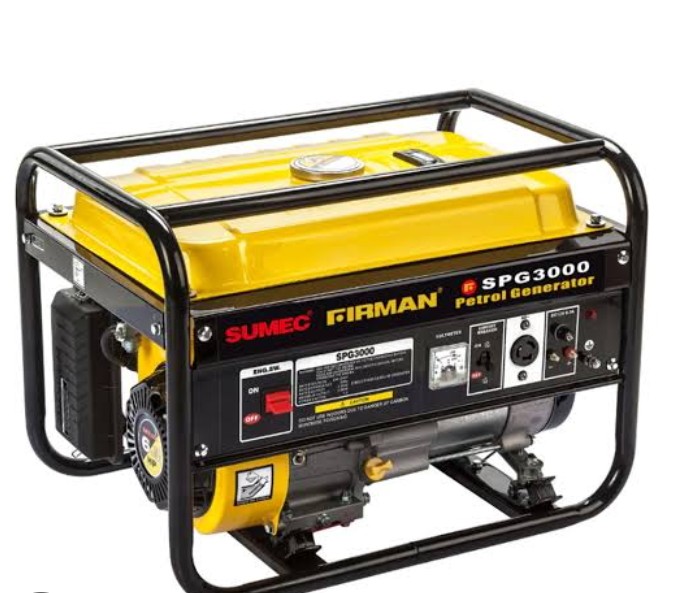
At about 8 p.m. in many Nigerian neighbourhoods, the sound is familiar: one generator starts, then another, until the hum of small engines becomes part of everyday life.
For millions of Nigerians, electricity is something they effectively pay for twice—first through electricity bills or prepaid meters and again through petrol or diesel to power generators when the national grid fails.
This has created what can aptly be called Nigeria’s generator economy: a parallel electricity system financed by households, businesses, schools, hospitals and industries.
A World Bank assessment estimated that Nigerians spent about ₦3.7 trillion on generating sets and their operation in 2021. It also estimated that unreliable electricity cost the Nigerian economy between ₦7 trillion and ₦10 trillion annually, equivalent to roughly 5–7 per cent of GDP at the time.

Although these figures are from 2021, they reveal the scale of a problem that remains deeply relevant.
A grid that cannot meet demand
Nigeria has substantial electricity-generation capacity on paper, but much less is consistently available to consumers.
The Nigerian Electricity Regulatory Commission reported that in April 2026, Nigeria had 13,625 megawatts (MW) of installed grid-connected generation capacity, but only about 4,286 MW was available for dispatch on average during the month.
The result is predictable: homes and businesses frequently turn to generators when grid supply becomes unreliable.
Paying twice—and sometimes three times
For a small business owner running a restaurant, barbing salon, printing shop or provision store, electricity is more than a utility bill.
When public power fails, the generator comes on. Then comes the cost of petrol or diesel, engine oil, repairs and eventual replacement of the machine.
These costs are eventually transferred to consumers.
A printing business raises its charges. A restaurant increases food prices. A barber increases the cost of a haircut. A cold-room operator increases the price of frozen products.
In this way, unreliable electricity becomes an invisible tax on economic activity.
A recent report from the Federal Capital Territory and Nasarawa showed the pressure on small businesses. One café owner, Philip Shaibu, explained that unreliable electricity forced him to depend heavily on a generator. The report also noted that operating a 100 kVA diesel generator could cost more than ₦1 million a month.
For a small business, that is money that could otherwise be used for salaries, stock, rent or expansion.
The human cost
Behind the statistics are households making difficult choices.
A family may have to choose between fuel for the generator and other necessities. For remote workers, unreliable electricity can mean missed meetings, delayed projects and lost income.
One recent report found that some Nigerian remote workers spend as much as ₦390,000 monthly on electricity-related costs, including fuel and alternative power arrangements.
The problem is therefore not simply darkness. It is lost productivity and additional financial pressure.
A health and environmental problem
The generator economy also carries an environmental and public-health cost.
Petrol and diesel generators produce carbon emissions and other pollutants. A World Bank document cited an estimate associating generator emissions with about 1,500 deaths annually in Nigeria.
In densely populated communities, generators also produce constant noise and fumes.
Children study beside generators. Workers sit in offices filled with engine noise. Residents sometimes keep windows closed because of exhaust fumes.
The generator has therefore become more than an alternative source of electricity. It is also a health and environmental concern.
Nigerians want reliable electricity
Why do Nigerians continue to use generators?
The answer is simple: they need reliable power.
People can plan around a predictable electricity bill. What they cannot easily plan around is an unpredictable electricity supply.
Research involving 3,599 households and 1,122 small and medium-sized enterprises across three geopolitical zones found that consumers placed significant value on improved electricity reliability and showed a preference for grid or solar solutions over diesel generators.
This is important.
Nigerians are not necessarily attached to generators. They are attached to having electricity when they need it.
The search for alternatives
Solar power, batteries and mini-grids are increasingly providing alternatives to generators.
The Rural Electrification Agency reported that more than 200 mini-grids were deployed in Nigeria in 2025, demonstrating growing interest in decentralised electricity solutions.
However, solar systems and batteries remain expensive for many households and businesses.
The bigger question, therefore, is whether Nigerians should continue financing their own private electricity systems or whether the national power system can become reliable enough to reduce dependence on generators.
Nigeria cannot generate its way to prosperity
Generators have helped Nigerians survive the country’s electricity crisis. They have kept businesses open, hospitals functioning and homes powered.
But survival should not be mistaken for success.
When millions of households and businesses must maintain their own electricity systems, enormous resources are diverted into generators, fuel, repairs and maintenance instead of productive investment.
The solution is not simply to increase generation capacity. Nigeria must also improve transmission, distribution, reliability and affordability.
The electricity debate should therefore move beyond the question of how many megawatts Nigeria can generate.
The more important questions are:
How many hours of reliable electricity will Nigerians receive?
How much will businesses spend to keep the lights on?
How many jobs and businesses are being lost because of unreliable power?
Until Nigerians can depend on the national grid without keeping a generator as insurance, the country will continue to operate two electricity systems: one official and another privately financed by ordinary citizens.
And that is the central irony of Nigeria’s generator economy:
Nigerians are not simply paying for electricity. They are paying for the electricity that fails to arrive.
Sources
– World Bank — Igniting Economic Growth by Reforming Nigeria’s Power Sector
– Nigerian Electricity Regulatory Commission (NERC)
– Federal Ministry of Power
– Tribune — Report on the cost of electricity for small businesses in FCT and Nasarawa
– Rural Electrification Agency (REA)
Disclaimer: “The views expressed on this site are those of the contributors or columnists, and do not necessarily reflect TheNigerianVoice’s position. TheNigerianVoice will not be responsible or liable for any inaccurate or incorrect statements in the contributions or columns here.”
Originally published on www.thenigerianvoice.com