August 13, 2026
The Eagle’s Hard Choice


The Eagle’s Hard Choice
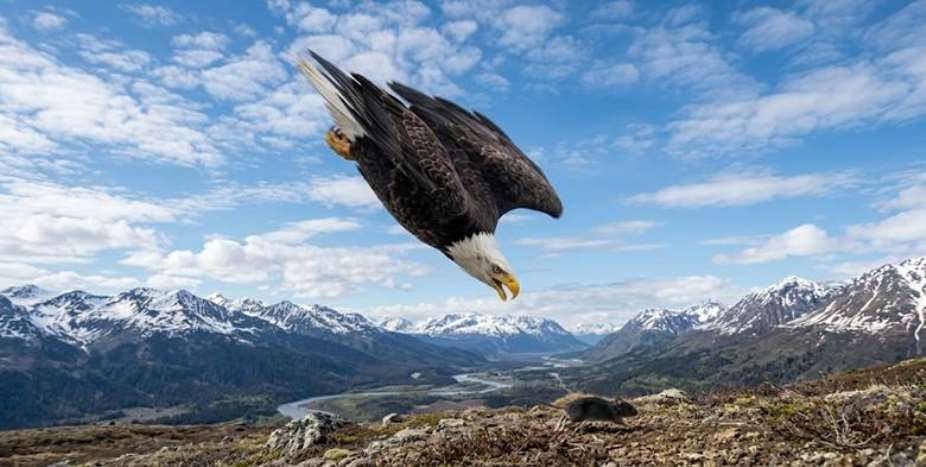
High above the world, where the mountains touch the sky and the winds move freely among the rocks, an old eagle lived alone. For forty years, the eagle ruled the heavens. It flew over valleys and forests, crossed rivers and deserts, and watched a generation of creatures rise and disappear below.
Its powerful wings had once carried it effortlessly through the clouds. Its sharp eyes could spot prey from great distances, and its strong talons could seize a fish from a rushing stream with remarkable precision. But time, which gives strength to the young and wisdom to the old, had begun to take its toll.
One morning, the eagle rose from its nest and attempted to fly. Its wings felt heavy. It struggled against the wind and barely managed to reach a nearby rock. When it tried to grasp the rock with its talons, they could no longer hold firmly. Its claws had grown weak and brittle. The eagle looked at its reflection in a quiet pool below the mountain.
Its beak had become crooked and blunt. Its feathers were old, thick, and heavy. Its talons were too weak to seize food. The magnificent bird that had once ruled the sky was becoming a prisoner of its own aging body. For the first time in its long life, the eagle became afraid. It understood that it had reached a difficult crossroad. One road was easy: surrender to age, accept weakness, and wait for death. The other road was terrible. It meant pain, loneliness, patience, and a struggle against its own body. The eagle remained silent for a long time. Then it looked toward the endless sky.
It remembered the freedom of its youth, the feeling of the wind beneath its wings, and the countless mornings when it had risen above the clouds. It realized that life was not asking it whether it wanted comfort. Life was asking it whether it was willing to change. The eagle made its choice. It would fight for renewal.
It flew, with great difficulty, to the highest mountain in the land. There, far from the valleys and the familiar world, it found a lonely rocky cliff. It built a nest in a sheltered place and prepared itself for a painful season of transformation.
The first task was the hardest. Its old beak had become too crooked and blunt to serve any useful purpose. The eagle struck the beak against the rock again and again until the old beak finally broke away. Pain seared through its body. The eagle could have stopped. It could have returned to the valley. It could have accepted death. Instead, it remained in its nest, wounded and helpless, waiting.
Days passed. The eagle could not hunt. It could barely move. It had to depend on patience while its new beak slowly grew.
When the new beak finally emerged, another painful task awaited it. Its old talons had become weak and useless. One by one, the eagle removed them, enduring the agony of losing the very tools it had depended upon for survival.
Again, it waited. The new talons slowly grew. Then came the feathers. The eagle’s old feathers were heavy and worn. They prevented it from flying freely. So, with its newly strengthened beak and talons, it began to remove them. Feather by feather, it stripped away the weight of its past. The process was neither quick nor beautiful. There were days of pain. There were days of loneliness. There were moments when the eagle must have wondered whether its decision had been just stupid.
But transformation rarely announces itself as victory while it is happening. Sometimes, from the inside, transformation feels like loss. The eagle had to lose what was familiar before it could receive what was new. Months passed. The mountain remained silent. Then, one morning, something extraordinary happened. The eagle stood at the edge of its nest. Its new talons were strong. Its new beak was sharp. Its new feathers were lighter and stronger. It stretched its wings, feeling the wind moving through them.
For the first time in many months, it felt no weight from the past. The eagle stepped forward. It jumped. For a moment, it fell. Then its wings opened. The wind caught them. The eagle rose. Higher and higher it climbed until the lonely mountain beneath it became small. It circled above the clouds, stronger than before, carrying within itself not merely a renewed body but a renewed spirit also.
The eagle had been given a second opportunity at life because it had been willing to make a hard choice. And this story teaches humanity a profound truth: sometimes survival requires transformation. There are seasons in human life when we, too, become like the old eagle. Habits that once served us begin to hold us back. Relationships change. Dreams become outdated. Fear takes the place of courage. Past failures become heavy feathers, and old beliefs become crooked beaks that prevent us from reaching for new possibilities.
At such moments, we face a choice. We can cling to what is familiar because it is comfortable, or we can summon the courage to let go and grow. Letting go is rarely painless. Sometimes we must abandon an old habit. Sometimes we must admit that a decision was wrong. Sometimes we must leave behind people, environments, ambitions, or ways of thinking that no longer help us become who we are meant to be. The eagle reminds us that renewal demands sacrifice. It also teaches us patience. The eagle did not regain its strength overnight. It waited while its new beak and talons grew. In a world that celebrates instant success, this is an important lesson. Some forms of growth cannot be rushed. Healing takes time. Character takes time. Wisdom takes time. Rebuilding a broken life takes time.
The eagle also teaches resilience. Pain is not always evidence that we have chosen the wrong path. Sometimes pain is part of the process of becoming stronger. Difficult seasons can strip away our weaknesses, expose our deepest fears, and force us to discover courage we did not know we possessed.
Most importantly, the eagle teaches us that the future sometimes requires us to release the past. We cannot fly freely while we are still carrying everything we have accumulated along the way. There comes a time when we must ask ourselves: What am I holding on to that is preventing me from becoming new?
The answer may be uncomfortable. But courage begins when we face it. The eagle’s hard choice is therefore not merely a story about an aging bird. It is a mirror held before humanity. It reminds us that life will repeatedly bring us to crossroads where comfort and growth stand on opposite sides. At those moments, we must choose.
We may fear the pain of change, but remaining unchanged can carry its own greater pain. The eagle chose the difficult road. It surrendered its old beak, its old talons, and its old feathers. In doing so, it surrendered not its life, but the limitations that had begun to imprison it.
And when it finally returned to the sky, it discovered something beautiful: it had not lost itself. It had found itself again. So, when life brings you to your own difficult mountain, do not be too quick to surrender. Do not mistake the pain of transformation for the end of your story. Sometimes the season that feels like destruction is preparing you for a new beginning.
Like the eagle, there may come a time when you must make a hard choice: remain what you have always been, or endure the difficult process of becoming what you can still become. Choose courage. Choose patience. Choose growth. Choose to let go of what weighs you down. For sometimes, the greatest flight of your life begins only after you have found the courage to shed the things that kept you from rising.

Emeka Asinugo, PhD., M.A., KSC, © 2026
A London-based veteran journalist, author and publisher of ROLU Business Magazine (Website: https://rolultd.com)Column: Emeka Asinugo, PhD., M.A., KSC
Disclaimer: “The views expressed in this article are the author’s own and do not necessarily reflect ModernGhana official position. ModernGhana will not be responsible or liable for any inaccurate or incorrect statements in the contributions or columns here.”
Follow our WhatsApp channel for meaningful stories picked for your day.
Top Stories


3 hours ago




Originally published on www.modernghana.com