

September 1, 2026
Kwara’s Political Emancipation, Elite Fragmentation And The Threat Ofdemocratic Regression Dynastic Politics,
4 hours ago | Opinion
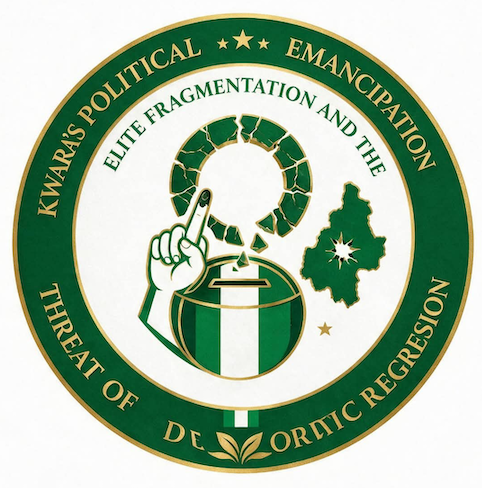
Kwara’s Political Emancipation, Elite Fragmentation And The Threat Ofdemocratic Regression Dynastic Politics, Post-primary Conflict And Thestruggle For The Consolidation Of Popular Sovereignty In Kwara State


Introduction
The contemporary political situation in Kwara State presents an important subject for political analysis because it raises fundamental questions concerning democratic consolidation, elite competition, political realignment and the sustainability of popular political emancipation. Although the immediate controversy appears to have emerged from disagreements associated with party primaries and the struggle for political succession, the broader implications extend beyond the internal affairs of any political party. The current political environment must be understood within the historical context of the transformation of political power in Kwara State and the continuing struggle between popular sovereignty and elite political dominance.

The political transformation associated with the Ó Tó Gẹ́ movement in 2019 constituted one of the most significant moments in the democratic history of Kwara State. Its importance lay not merely in the electoral defeat of an established political structure but in the symbolic rejection of the idea that political authority could remain permanently concentrated within a dominant family or network of political elites.
From the perspective of democratic theory, this transformation represented an important assertion of popular sovereignty. Popular sovereignty is founded on the principle that political authority derives ultimately from the people and that elected officials exercise power only as temporary representatives of the collective will of citizens. The democratic significance of the 2019 political transformation was therefore the reaffirmation that political power is neither hereditary nor permanently transferable among members of a political elite.
The subsequent political developments in Kwara State, particularly the emergence of the G15 and disagreements following the APC governorship primary, should consequently be examined as part of a broader contest over the direction of political development in the state. The principal concern is not simply whether politicians are entitled to disagree with the outcome of a party process. Such disagreement is constitutionally legitimate and politically inevitable. The more significant question is whether post-primary grievances and elite fragmentation may create conditions favourable to the restoration of political structures whose dominance had previously been challenged by popular electoral mobilisation. The issue, therefore, concerns the relationship between elite conflict and democratic regression.
Political Emancipation and the Transformation of Kwara’s Political Culture

Political emancipation is not achieved merely through the removal of a government or the defeat of a political family. Genuine political emancipation involves a transformation in the consciousness of citizens concerning their relationship with political authority. Before the emergence of a politically emancipated electorate, political power may appear permanent. Dominant political structures may acquire an image of invincibility. Citizens may gradually develop the belief that political outcomes are determined primarily by powerful individuals rather than by the collective choices of voters. The historical importance of the Ó Tó Gẹ́ movement was its disruption of this political psychology. The movement demonstrated that:
·entrenched political structures could be defeated;
·political authority could change hands;
·voters could collectively challenge established elites;
·political families were not constitutionally entitled to permanent influence; and
·the electorate remained the ultimate source of democratic legitimacy.
This transformation may be described as a process of political consciousness formation. Political consciousness is particularly important in societies where political competition has historically been influenced by patronage, elite networks and personal loyalty. In such political environments, citizens may be encouraged to identify political participation with loyalty to individuals rather than commitment to institutions and democratic principles.
The political transformation of Kwara challenged this orientation by strengthening the principle that political authority is derived from the electorate. In this sense, the most enduring significance of the political change was not simply the defeat of one political establishment. It was the psychological liberation of the electorate from the assumption that any political establishment was politically permanent.
Dynastic Politics and the Question of Political Hegemony
One of the most relevant concepts for understanding the historical development of Kwara politics is political hegemony. Political hegemony refers to a condition in which a dominant political group establishes and maintains extensive influence over political institutions, electoral structures, elite networks and public political consciousness. Such dominance may not necessarily operate exclusively through coercion. It may also be sustained through:
·patronage;
·political alliances;
·economic influence;
·control of political networks;
·strategic distribution of political opportunities; and
·the cultivation of loyalty among political elites.
Where political power remains concentrated within a family or closely connected political network for an extended period, the political system may gradually acquire characteristics associated with dynastic politics. Dynastic politics does not necessarily imply that every member of a politically influential family lacks democratic legitimacy. Rather, it refers to a political condition in which access to political influence becomes disproportionately associated with family relationships and inherited political networks.
The democratic challenge created by such systems is the gradual narrowing of political opportunity. Political participation may remain formally open to all citizens, but meaningful access to political influence may increasingly depend upon:
·proximity to powerful families;
·membership of established patronage networks;
·personal loyalty to political gatekeepers; and
·acceptance within dominant elite structures.
The historical rejection of entrenched political dominance in Kwara must therefore be interpreted as a rejection of the perception that political authority should remain concentrated within an inherited network of influence.
The democratic significance of this rejection was profound. It represented the assertion that political leadership must remain subject to electoral accountability and that no political structure should become too powerful to be removed through democratic means.
Elite Theory and the Problem of Political Ownership
The contemporary crisis involving the G15 can also be interpreted through the framework of elite theory. Elite theorists such as Gaetano Mosca, Vilfredo Pareto and C. Wright Mills argued, in different ways, that political societies are frequently characterised by the influence of relatively small groups of individuals who possess disproportionate access to political power, economic resources and institutional networks. From this perspective, politics is often shaped by competition among elites.
However, democratic development requires that elite competition should remain subject to public accountability. The danger arises when political elites begin to treat public authority as though it were private property. The concept of political ownership is therefore incompatible with democratic governance. No individual owns a state. No family owns a political party. No political faction owns the electorate. And no political movement belongs exclusively to the politicians who participated in it.
The Ó Tó Gẹ́ movement cannot legitimately be appropriated by any individual group because its political legitimacy originated from collective popular participation. The people created its political force. The electorate gave it democratic meaning. And the citizens of Kwara remain the ultimate custodians of its historical significance. This is why contemporary political actors must exercise caution when presenting themselves as exclusive defenders of political emancipation while simultaneously pursuing political arrangements that may weaken the very transformation from which they benefited.
The G15 and the Politics of Elite Fragmentation
The emergence of the G15 represents an important example of elite fragmentation. Elite fragmentation occurs when influential political actors who previously operated within a common political structure become divided over competing interests, ambitions, leadership positions or access to political resources. In democratic politics, elite fragmentation is not unusual. Indeed, internal competition can sometimes strengthen democracy by increasing political accountability and preventing excessive concentration of power. However, elite fragmentation can also generate political instability when individual ambitions become more important than collective political principles.
The disagreement following the APC governorship primary should therefore be examined within this broader theoretical context. A party primary is fundamentally an institutional mechanism for managing competition among individuals who seek political office. By definition, it cannot produce universal satisfaction. It produces winners and unsuccessful aspirants. The existence of unsuccessful aspirants is therefore not evidence of democratic failure. A critical democratic distinction must be made between:
legitimate disagreement over the fairness or administration of a political process; and the transformation of personal political disappointment into a broader political strategy capable of undermining the collective political interests of the electorate.
The right to contest an election does not create a guaranteed right to victory. Similarly, political ambition does not create a permanent entitlement to political office. Democratic competition requires the willingness of political actors to accept that individual aspirations may not always be realised. Where every unsuccessful political ambition produces permanent elite rebellion, the stability of political institutions becomes difficult to sustain.
Post-Primary Conflict and the Instrumentalisation of Political Grievances
Political grievances can become powerful instruments in the hands of competing political structures. This phenomenon may be described as the instrumentalisation of political dissatisfaction. When influential politicians become dissatisfied with their political environment, opposition forces frequently attempt to transform such dissatisfaction into electoral advantage. This is a normal feature of competitive democracy. However, it also creates an important political risk. A grievance that initially emerges from disagreement over a party primary may gradually become connected to wider political projects that have little relationship with the original complaint. For example, a disagreement concerning the selection of a candidate may eventually lead to:
·the formation of a political pressure group;
·the fragmentation of an existing party structure;
·negotiations with opposition parties;
·the formation of new electoral alliances;
·political defections; and
·the transfer of elite influence to previously opposing political networks.
At this point, the original grievance may become politically secondary. The more important question becomes:
Who ultimately benefits from the political fragmentation?
This question is particularly important in Kwara State because political realignment does not occur within a historical vacuum. The state has experienced a major transformation in its political structure, and any contemporary alliance must be assessed in relation to the broader consequences it may produce. A political actor may consider an alliance necessary for the achievement of personal ambition.
However, the long-term consequence of that alliance may be the strengthening of political forces whose historical dominance was previously rejected by the electorate. This is where personal political ambition and collective political history can come into conflict.
Political Clientelism and the Vulnerability of Democratic Institutions
Another relevant concept is political clientelism. Political clientelism refers to a system of political exchange in which access to resources, appointments, opportunities or benefits becomes connected to personal political loyalty. In highly clientelist political systems, the relationship between leaders and citizens can become transactional. Citizens may support political actors because of expected personal benefits. Political elites may reward loyalty with appointments or resources. And access to political opportunity may become dependent upon relationships with influential political patrons.
Such systems weaken democratic institutions because citizens and political actors may become more loyal to individuals than to public principles. The rejection of entrenched political dominance is therefore significant because it can create an opportunity for the development of more institutionalised politics. Political institutions should be stronger than individual politicians. Political parties should be governed by rules rather than personal relationships. Public appointments should not be treated primarily as instruments of political reward. And political participation should not depend exclusively upon access to powerful patrons. The continued political emancipation of Kwara therefore depends not only upon electoral victories but also upon the gradual development of institutional political culture.
Democratic Consolidation and the Prevention of Political Regression
The concept of democratic consolidation is central to the present discussion. Democracy is not consolidated simply because elections are conducted. A democracy becomes more consolidated when:
·political institutions become stable;
·electoral outcomes are accepted;
·political competition remains peaceful;
·citizens retain confidence in their capacity to influence government;
·no individual or group becomes permanently politically dominant; and
·democratic change becomes accepted as a normal part of political life.
The political transformation of 2019 represented an important stage in democratic development because it demonstrated that a dominant political establishment could be removed through the ballot box. However, democratic consolidation requires that the political consciousness generated by such a transformation should be sustained. The danger of democratic regression arises when political change is reversed without addressing the structural conditions that originally produced public dissatisfaction. Political regression does not necessarily mean that a former political group cannot return to power. Democracy permits every qualified political actor to seek electoral office. Rather, political regression occurs when a society gradually returns to a political culture characterised by:
·excessive concentration of political influence;
·weakening of independent political voices;
·dependence on political godfathers;
·family-centred political succession;
·excessive clientelism; and
·the perception that political power belongs to an elite network rather than the electorate.
The critical issue for Kwara is therefore not simply who wins future elections. The deeper question is:
What political culture will emerge from those elections?
Personal Ambition and the Collective Interest
Political ambition is a legitimate component of democratic life. Without ambitious individuals willing to seek public office, democratic competition would be impossible. However, ambition becomes politically problematic when the pursuit of individual power threatens broader democratic achievements. The governorship of Kwara State cannot be treated as an entitlement. Political office is temporary. Electoral support is conditional. And public authority is exercised on behalf of citizens.
For this reason, the political interests of individuals must remain subordinate to the broader democratic interests of society. The contemporary political crisis should therefore encourage political actors to reflect on the difference between: pursuing legitimate political ambition; and pursuing political ambition at the cost of collective political freedom.
The distinction is essential. An individual may legitimately desire to become governor. However, no individual aspiration should justify political arrangements that weaken the broader political autonomy of the electorate. Political office belongs to whoever receives the democratic mandate of the people. The people, not political factions, remain the ultimate source of legitimacy.
The Risk of Political Realignment and Historical Reversal
The greatest concern arising from the current political situation is the possibility that elite fragmentation may create a pathway for the historical reversal of the political transformation achieved in 2019. Political history demonstrates that defeated political establishments frequently seek to rebuild their influence through the weaknesses of their opponents. A politically united opposition may be difficult to defeat. However, when internal disagreement becomes severe, previously excluded political forces may return by exploiting:
·personal grievances;
·elite ambitions;
·dissatisfaction with leadership;
·competition over political succession; and
·divisions within ruling coalitions.
This is a common pattern in political realignment. The central political question for Kwara should therefore not be limited to identifying who is dissatisfied. A more important question is:
What political structure is strengthened by the dissatisfaction?
Similarly, the issue should not simply be:
Who lost a political primary?
It should also be:
What long-term consequences may follow from the response to that loss?
These questions are necessary because political actions frequently produce consequences beyond the intentions of the individuals involved. A politician may pursue an alliance for personal advantage while unintentionally contributing to the restoration of a political system that future generations may find difficult to challenge. Political decisions must therefore be assessed not only according to immediate benefits but also according to their institutional consequences.
Popular Sovereignty as the Foundation of Kwara’s Political Future
The ultimate defence against political domination remains an informed and politically conscious electorate. The most significant achievement of Kwara’s political transformation was the reaffirmation of popular sovereignty. The people demonstrated that:
·powerful political establishments can be challenged;
·political families are not permanently entitled to authority;
·electoral power can overcome entrenched influence;
·democratic participation can transform political history; and
·political authority ultimately depends upon public consent.
This consciousness must not disappear because of temporary political disagreements. Governors will change. Political parties will experience internal conflict. Politicians will defect. New alliances will emerge. And political ambitions will continue to compete.
However, the principle of popular sovereignty must remain constant. Kwara belongs to its people. Its political institutions must serve the public. And its future must not be determined by the assumption that political authority is the permanent property of any individual, family or elite coalition.
Conclusion: Political Freedom as a Collective Democratic Responsibility
The current political developments in Kwara State should be understood within the wider framework of democratic consolidation, elite competition and political realignment. The emergence of the G15 and the disagreements arising from the party primary are legitimate subjects of democratic debate. Political actors possess the constitutional right to organise, dissent and pursue alternative political objectives. Nevertheless, democratic rights do not exist outside political consequences.
The central concern is whether the pursuit of individual political ambitions and post-primary grievances may create conditions that weaken the political emancipation achieved through popular mobilisation. Kwara’s political history demonstrates that democratic change is possible when citizens collectively reject the concentration of political power. The transformation associated with the Ó Tó Gẹ́ movement therefore represents more than an electoral event. It represents an important lesson in democratic consciousness. The lesson is that political power is temporary. Political authority is borrowed from the people. No family possesses a permanent title to governance. No political network owns the state. And no individual ambition should become sufficiently important to justify the weakening of collective political freedom.
The greatest danger to political emancipation is not always direct political domination. Sometimes political regression begins when those who benefited from political freedom allow personal disagreements to become instruments through which previously rejected systems regain influence. The political responsibility of the present generation is therefore clear. Kwara must continue to protect the principle that political power belongs to the people. Its democratic institutions must remain stronger than political personalities. Its citizens must remain politically conscious. And its political future must never again become dependent upon the permanent dominance of any political dynasty or elite structure. The enduring principle must remain:
Political power is exercised by individuals, but sovereignty belongs permanently to the people. The preservation of that sovereignty is the ultimate responsibility of every generation committed to democratic freedom.

Dr. Gidado Abdulkarim Salimon writes from No 1b Halal Street Daudu Islamic Village, Ilorin kwara state.
Contact Information: Email: [email protected]
Disclaimer: “The views expressed on this site are those of the contributors or columnists, and do not necessarily reflect TheNigerianVoice’s position. TheNigerianVoice will not be responsible or liable for any inaccurate or incorrect statements in the contributions or columns here.”
Originally published on www.thenigerianvoice.com