August 9, 2026
Here’s the real reason wedding rings are worn on the fourth finger
Advertisement
Here’s the real reason wedding rings are worn on the fourth finger
)
,fit(700:467))
Wedding Rings
Ever wondered why wedding rings are worn on the fourth finger? Discover the ancient Egyptian “vein of love” myth and the history behind the tradition.
Advertisement
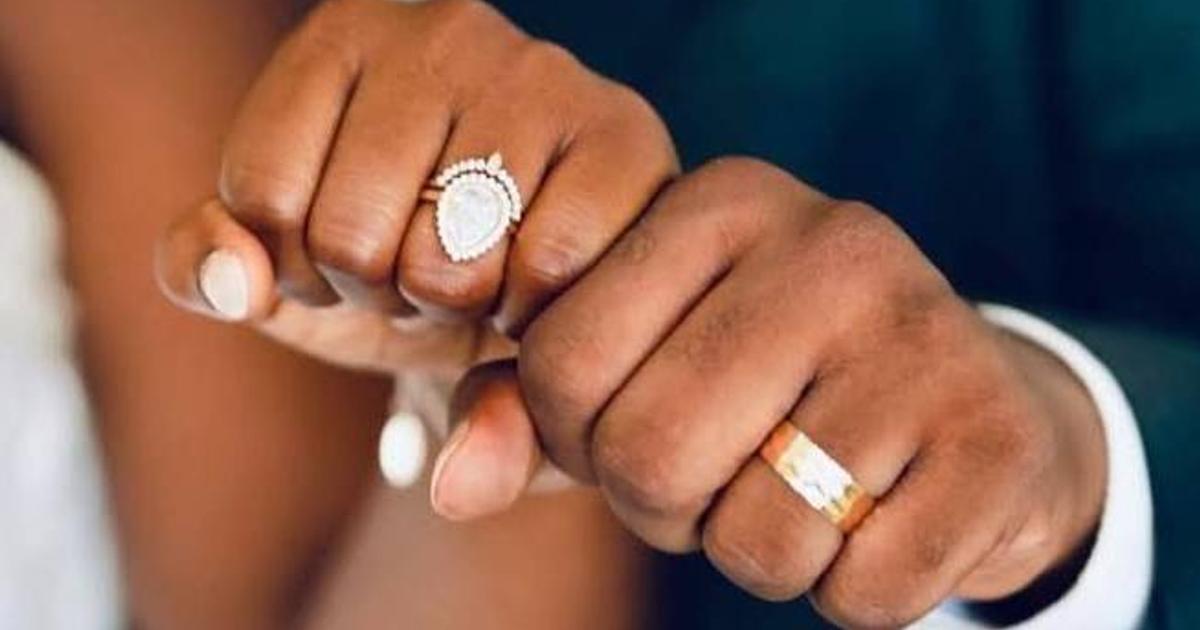
There is something almost magical about the moment a wedding ring slips onto the fourth finger of the left hand.
Advertisement
For generations, couples have followed the tradition without necessarily questioning why that particular finger was chosen. But behind the familiar custom is a centuries-old love story involving ancient beliefs, royal influence, anatomy and a romantic myth that has survived long after science proved it wrong.
The story begins in ancient Egypt, where the ring was already an important symbol of love and commitment.
Ancient Egyptians are often credited with popularising the idea that a special vein connected the fourth finger of the left hand directly to the heart.
Advertisement
Known as the vena amoris, or “vein of love”, the supposed vein was believed to carry a direct connection between the finger and the heart; the part of the body traditionally associated with love and emotion.
For couples, wearing a ring on that finger was therefore more than a fashion choice. It was believed to symbolise an emotional connection between two people.
The belief eventually spread beyond Egypt and became associated with wedding traditions in Europe. But there was one problem: the vein doesn’t actually exist.
Modern anatomy has shown that there is no special vein running directly from the fourth finger to the heart. Instead, the fingers contain interconnected networks of veins and arteries that form part of the body’s wider circulatory system. In other words, there is nothing anatomically unique about the ring finger that gives it a direct route to the heart.
Advertisement
Yet discovering that the “vein of love” was a myth did not make the tradition disappear. If anything, the story became part of what makes the wedding ring tradition so romantic.
The custom also evolved over time. According to historical accounts, wedding rings were not always worn on the fourth finger of the left hand. In some traditions, couples wore their rings on the thumb or middle finger.
In the 16th century, England’s King Edward VI reportedly helped establish the fourth finger of the left hand as the preferred location for wedding rings.
As European wedding customs spread, the practice became increasingly familiar in Western societies. But there has never been one universal rule.
READ ALSO: Police licence checks at a road stop: What the law says, your rights, plus possible penalties
Advertisement
In countries including India, Poland, Greece and Russia, for example, wedding rings have traditionally been worn on the right hand. This shows how marriage customs can vary significantly from one culture to another.
The symbolism of the wedding ring goes far beyond the finger on which it is worn. Its circular shape is perhaps its most enduring feature. With no beginning and no end, the circle has long been associated with eternity, continuity and everlasting love.
Long before today’s diamond rings and polished gold bands, ancient Egyptians are believed to have exchanged rings made from materials such as reeds and papyrus.
Historians trace the use of wedding rings in ancient Egypt back more than 4,800 years, highlighting just how deeply the tradition is rooted in human history.
Over time, materials changed. Simple rings evolved into bands made from precious metals and, eventually, elaborate engagement and wedding rings featuring diamonds and other gemstones.
But the central idea remained the same: a ring represented a lasting bond. The answer ultimately depends on your culture, tradition and personal preference.
For many couples in Western countries, the fourth finger of the left hand remains the traditional choice. Elsewhere, the right hand is preferred.
And from an anatomical perspective, there is no medical reason that requires a wedding ring to be worn on one particular finger. That means couples are free to follow tradition — or create their own.
Perhaps that is what makes the story of the ring finger so fascinating. The famous “vein of love” may have been nothing more than an ancient anatomical myth, but the emotion behind it has survived for thousands of years.
Advertisement
The tradition reminds us that not every meaningful custom needs to be scientifically accurate to have significance. Sometimes, people hold on to traditions because of the stories, emotions and memories attached to them.
And perhaps that is the real magic of the wedding ring: the vein of love may not exist, but the love the ring represents certainly does.
Advertisement
Latest Videos

Advertisement
Videos
)
)
)
Advertisement
Advertisement
More from Pulse Ghana
,fit(112:112))
,fit(112:112))
,fit(112:112))
,fit(112:112))
Advertisement

Originally published on www.pulse.com.gh