

September 1, 2026
FG Unveils Plan For High-Speed Rail Line From Lagos To Maiduguri
4 hours ago | General News
FG Unveils Plan For High-Speed Rail Line From Lagos To Maiduguri


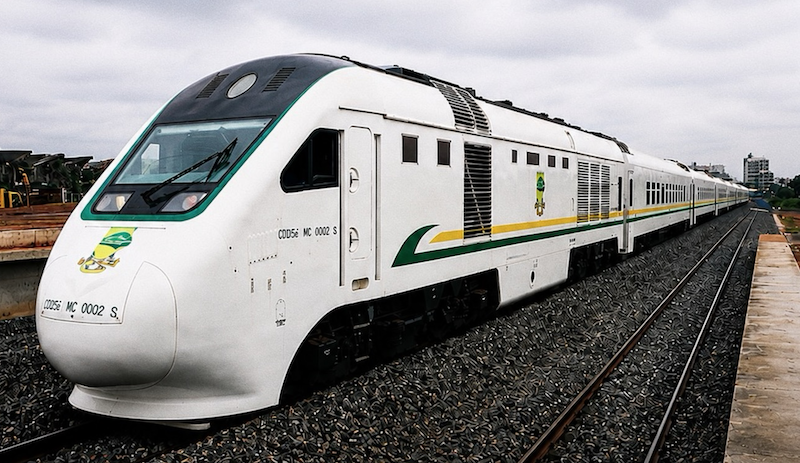
The Federal Government has unveiled plans to develop a high-speed rail line connecting Lagos with Maiduguri, with trains projected to run at speeds of up to 360 kilometres per hour.
The Permanent Secretary, Federal Ministry of Transportation, Olufunso Adebiyi, disclosed this on Monday in Abuja while declaring open the 19th National Council on Transportation.

Adebiyi said the proposed Lagos-Maiduguri rail corridor forms part of the government’s broader strategy to transform Nigeria’s transportation system and reduce the country’s heavy reliance on road travel.
He explained that the initiative was designed to provide Nigerians with more transportation choices by strengthening rail, road, air and water transportation networks.
According to him, the government’s objective is to ensure that Nigerians can choose the most efficient means of transportation rather than depending almost entirely on roads.

“The objective is to give Nigerians the freedom to choose between road, rail, air and water transportation rather than forcing citizens to depend almost entirely on roads,” Adebiyi said.
He said the government was pursuing a “rebirth” of the railway sector alongside investments in other modes of transportation, stressing that an efficient rail network would ease pressure on the nation’s roads, especially by reducing the movement of heavy-duty vehicles.
The permanent secretary further disclosed plans to establish a Smart National Transport Data Bank and construct six standardised bus terminals across the country.
He added that light rail projects were also being pursued in Lagos and Kano as part of efforts to develop an interconnected national transportation network.
Adebiyi said ongoing investments in the sector had generated about 9,000 jobs, citing approximately 4,000 workers engaged on one project and more than 5,000 on another.
He also highlighted the Federal University of Transportation as part of government’s efforts to build the technical and professional manpower required to sustain the country’s evolving transportation infrastructure.
On the maritime sector, Adebiyi said government was reconstructing and automating ports to improve cargo handling, tackle congestion and make the movement of goods more efficient.
He stressed that the development of rail, road, maritime and air transportation must be coordinated to create an integrated system capable of lowering logistics costs and improving mobility nationwide.
The four-day National Council on Transportation brought together representatives of the Federal Government, state governments, transport agencies and development partners to deliberate on reforms and investments needed to improve Nigeria’s transportation system.
Originally published on www.thenigerianvoice.com