

September 5, 2026
EFCC: When Efficiency Counts As Good Governance
4 hours ago | Opinion
EFCC: When Efficiency Counts As Good Governance

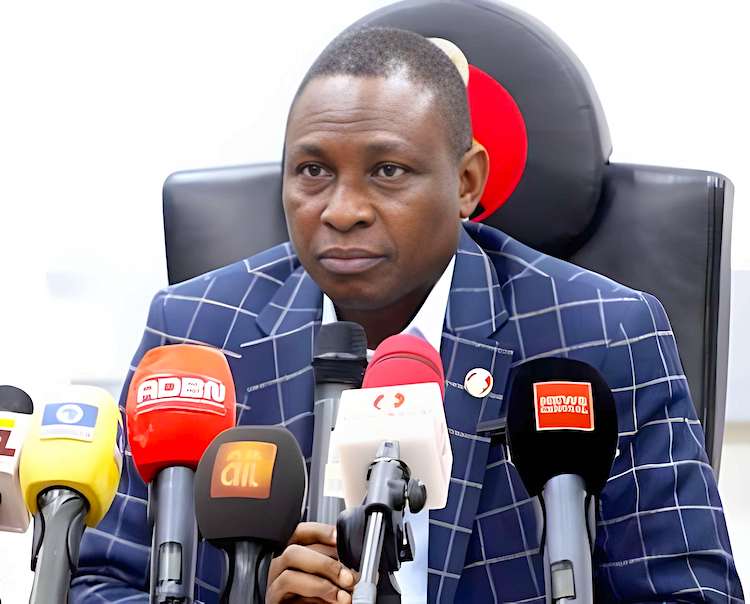
Ola Olukoyede (Chairman of Nigeria’s Economic and Financial Crimes)

Nigeria’s Economic and Financial Crimes Commission (EFCC) has been trending recently in the Nigerian media for good reasons, and even die-hard critics of President Bola Tinubu and opposition figures have been unable to fault the Commission’s unprecedented achievements in just 3 and a half years.

Under the Bola Tinubu administration, between October 2023 and June 2026, the EFCC, led by its Chairman, Ola Olukayode, a lawyer, has recovered stolen public funds and criminal assets totalling ₦1.23 trillion, US$684.48 million, and substantial sums in other foreign currencies. It also secured forfeiture orders covering more than 10,000 assets, including 1,177 properties, 251 plots of land, 370 vehicles, petroleum products, industrial equipment, company shares, and digital assets. Notable among the recoveries is the 753-unit housing estate in Abuja.
Never at any time has the world witnessed such restitutive justice, financially, in an infamously corrupt environment like Nigeria, where public servants, especially politically exposed persons and political appointees, have taken the looting of public funds to steroidal levels, even to the point of inventing fake and non-existent government agencies just to collect budgetary allocations for themselves. It is the same environment in Nigeria where many of its unscrupulous and criminally minded citizens and foreign nationals primarily operate advance-fee fraud schemes to fleece unsuspecting members of the public of their hard-earned money. It is an environment where, sadly, kidnapping for ransom payments has become an industrial complex. Against this grim backdrop of financial crime, the EFCC’s recent recoveries are significant.
More significant is how the Tinubu administration has applied part of the assets the EFCC recovered to programmes intended to deliver direct public benefits to the Nigerian people. Notably, ₦50 billion was transferred to the Nigerian Education Loan Fund (NELFUND) to expand access to tertiary education. Another ₦50 billion was allocated to the Nigerian Consumer Credit Corporation (CREDITCORP) to provide affordable credit to Nigerians. The recovered 753-unit Abuja estate was transferred to the Federal Ministry of Housing for assessment, completion and eventual allocation or sale to citizens.
Other recovered funds have been returned to federal and state government agencies, tax authorities, public institutions, companies and individual victims of financial crimes. Funds recovered from oil companies as unpaid statutory levies have also been returned or earmarked for the Niger Delta Development Commission (NDDC) to ensure developmental projects in the devastated areas of Nigeria’s oil-rich Niger Delta. Additionally, money recovered from fraudsters has been returned to Nigerian and foreign victims, thereby strengthening confidence in Nigeria’s justice system.

Overall, these applications demonstrate a positive attempt to transform proceeds of corruption and economic crimes into funding for education, housing, consumer credit, public revenue, regional development and victim compensation.
Huge commendation must be given to the leadership of Ola Olukayode who has transformed the public perception of the EFCC from that of an organization once used as an instrument of political persecution to one that is independent in its operations and is highly responsive to public complaints of financial crimes. Ask anyone who has recently petitioned the EFCC against fraud, and the usual feedback is that the agency’s men and women are eager to ensure restorative justice, especially its investigators and prosecutors, who show zero tolerance for advance-fee fraud and official corruption.
The EFCC’s remarkable achievements in less than 4 years are supposed to be a major fulfilment of a campaign promise by the Bola Ahmed Tinubu administration. How the administration will frame this success in an election season remains a challenge for a political party whose leadership has failed to practise positive communication but has often resorted to reactionary commentary. Remember that when Prof. Dora Akinyuli performed so well on her mandate at NAFDAC, former President Olusegun Obasanjo used her as one of the success posters to campaign for the re-election of the PDP.
Let not hate and anger. Not even opposition politics should blind anyone to the huge success achieved by the EFCC and the Tinubu administration’s good decision to apply funds recovered by the EFCC to tangible development. That is indeed an important aspect of good governance that must be commended.
Frank Tietie, Esq. is a Nigerian Lawyer, Media Personality and Executive Director of Citizens Advocacy for Social & Economic Rights (CASER), writes from Abuja.
Disclaimer: “The views expressed on this site are those of the contributors or columnists, and do not necessarily reflect TheNigerianVoice’s position. TheNigerianVoice will not be responsible or liable for any inaccurate or incorrect statements in the contributions or columns here.”
Originally published on www.thenigerianvoice.com