

August 25, 2026
Atiku Vows Total Restoration Of Fuel Subsidy, Disowns Spokespersons Comment
4 hours ago | General News
Atiku Vows Total Restoration Of Fuel Subsidy, Disowns Spokesperson’s Comment

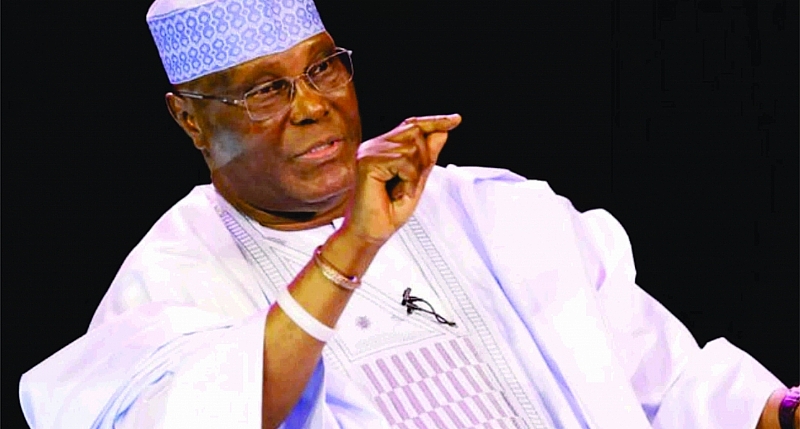
Atiku Abubakar (Presidential candidate of the African Democratic Congress (ADC)

The presidential candidate of the African Democratic Congress (ADC), Atiku Abubakar, has declared that his administration would fully restore petrol subsidy if elected president in 2027, distancing himself from comments suggesting that the policy would only be temporary.

Atiku made the clarification on Tuesday amid controversy over remarks by one of his spokespersons, Paul Ibe, who had earlier said the former vice president would restore the subsidy and subsequently phase it out.
In a statement issued by another spokesperson, Phrank Shuaibu, Atiku said Ibe’s comments did not accurately represent his position on fuel subsidy.
“Clarification became necessary following comments credited to Paul Ibe, suggesting that an Atiku administration would ‘restore fuel subsidy and remove it later,’” the statement said.
Atiku maintained that he had never proposed restoring the former import-subsidy regime and fixing a predetermined date for its withdrawal.

He explained that his proposed intervention would be targeted, capped, transparently budgeted and independently audited, with the objective of supporting domestic refining and production.
“There is no arbitrary withdrawal date. As domestic refining expands, supply stabilises, competition deepens, and the market becomes capable of delivering affordable prices without government support, the intervention progressively becomes unnecessary,” he said.
The former vice president said the policy was designed to address the economic hardship and rising cost of living Nigerians have experienced under President Bola Tinubu’s economic reforms.
“The real question is simple: Why has everything become so expensive, and what will I do to make life affordable again?” Atiku asked.
He accused the Tinubu administration of transferring the burden of its economic reforms to Nigerian households, promising to reduce production and transportation costs while strengthening domestic refining capacity.
“Tinubu transferred the shock of his reforms to Nigerian families. I will reduce production and transportation costs, strengthen domestic refining, and restore purchasing power,” he said.
“The choice is not removal of subsidy versus restoration of subsidy. It is Expensive Nigeria versus Affordable Nigeria.”
The subsidy controversy intensified last week after Atiku pledged to reverse the removal of petrol subsidy under the Tinubu administration if elected in 2027.
The Federal Government has, however, rejected the proposal, arguing that restoring the subsidy would reverse the gains it says have been achieved since the policy was removed.
Ibe had earlier sought to clarify Atiku’s position, saying the proposed subsidy would be restored as a temporary measure to cushion the impact of rising costs, stimulate economic activity and enable Nigerians and businesses to recover.
According to Ibe, the proposed arrangement would differ from the former subsidy regime, which he described as opaque, because government support would be tied to crude oil production and domestic refining.
“We are not returning to Egypt. We are not going back to the old regime that was opaque,” Ibe said.
He argued that crude oil production could provide the basis for a new intervention that would enable Nigerians to benefit more directly from the country’s petroleum resources.
Ibe also said the intervention would eventually be phased out as economic conditions improved, noting that Atiku had advocated a gradual removal of subsidy during the 2023 presidential campaign.
Originally published on www.thenigerianvoice.com