August 30, 2026
2027 Poll: Clever-By Half Defence Of APC’s PCC List
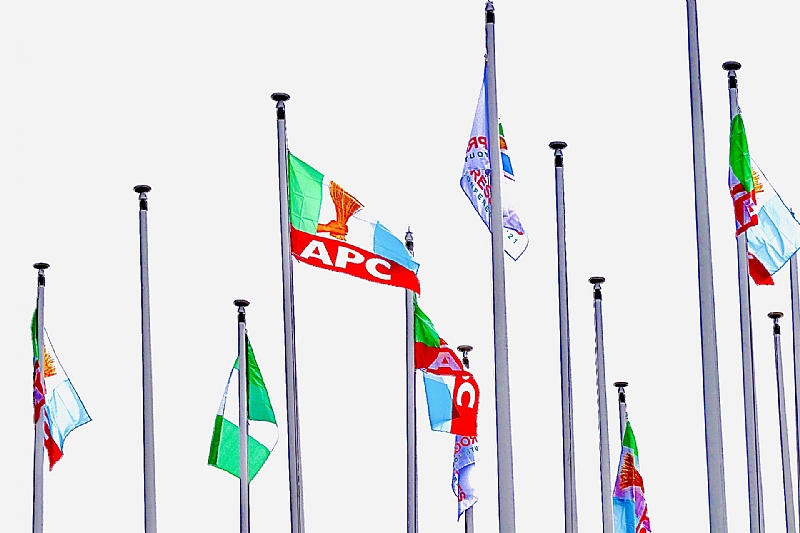
4 hours ago | Opinion
2027 Poll: Clever-By Half Defence Of APC’s PCC List


Politicians – in or out of power – don’t seem to learn any lessons from mistakes that cause negative reactions, embarrassment, odium, and even legal action. Hence the ruling All Progressives Congress (APC) constituted, and inaugurated a 223-member Presidential Campaign Council (PCC) that includes some questionable characters, for a second-term bid of President Bola Ahmed Tinubu in the 2027 General Election.
The party should’ve learned some useful lessons from a similarly-discreded initial presidential pardon and clemency list released by the Tinubu administration in October 2025 that faced severe public backlash and outrage due to its inclusion of “individuals convicted of grave and violent crimes.”

AI Overview – pouring through media reports on the issue – notes that, critics argued that freeing traffickers “undermined the hard work of agencies like the National Drug Law Enforcement Agency (NDLEA) and promoted impunity,” and that the moral cost and insensitivity toward victims of violent crimes “makes a mockery of the judicial process.”
“Following intense public pressure and consultations with the Council of State, the Tinubu administration reviewed the list, with the initial number of beneficiaries cut down significantly from 175 to around 86-120, depending on the category,” it states.
“President Tinubu removed from the mercy list individuals convicted of kidnapping, drug trafficking, human trafficking, unlawful firearms possession, and fraud,” and the full pardon/clemency granted Maryam Sanda (convicted for killing her husband) “was revoked, and her death sentence commuted to a 12-year prison term on compassionate grounds,” it adds.

Besides exclusion of some electorally-valuable party stalwarts, and inclusion of serving public officials and individuals facing corruption allegations, the APC PCC list contains names of convicted and jailed politicians for corruption; persons suspended or sacked from government for alleged fraud; and some perceived by the public as corrupt.
Controversial on the list are former Minister of Humanitarian Affairs and Poverty Alleviation, Dr Betta Edu; ex-Chairperson of the Nigeria Social Insurance Trust Fund (NSITF) board, Dr Ngozi Olejeme; Nigeria Revenue Service (NRS) Chairman, Dr Zacch Adedeji; and Director-General of the Budget Office of the Federation (BOF), Mr Tanimu Yakubu.
Also on the list is the Minister of Defence, Gen. Christopher Musa (Retd), and the Minister of State for Defence, Dr Bello Matawalle, both of whom reportedly described the appointments “as a call to higher service, and assured that security operations and reforms would continue unabated” (ahead of the 2027 election).
The Nation reported on August 22, 2026, that the full list of 223 members to serve on the PCC for the 2027 poll was made public by President Tinubu’s special adviser on Information and Strategy, Bayo Onanuga, with the council, whose members are drawn from different parts of the country, “expected to coordinate the party’s activities and campaign efforts ahead of the presidential election.”
Appointed as Chairman of the PCC, President Tinubu will work with a body of advisers comprising former Governors Bisi Akande (Osun State), Segun Osoba (Ogun), Rochas Okorocha (Imo), Abdullahi Adamu (Nasarawa), and Sen. Florence Ita-Giwa.
Vice President Kashim Shettima and the APC National Chairman, Prof. Nentawe Yilwatda, are to serve as vice chairmen; former Zamfara State governor, Sen. Abdulaziz Yari, as director-general of the campaign; Imo Governor Hope Uzodimma as secretary of the council; and APC’s National Secretary, Sen. Ajibola Bashiru and Hadiza Bala-Usman as deputy and assistant secretaries, accordingly.
While Senate President Godswill Akpabio, House of Reps Speaker Tajudeen Abass, and Yobe Governor Mai Mala Buni, assigned as deputy director-generals in the south and north, will respectively work with Senate Leader Bamidele Opeyemi and Senate Deputy President Jibril Barau in the two zones; Sen. Adams Oshiomhole will serve as deputy director-general in charge of mobilisation; and the Chief of Staff to the President, Rt Hon. Femi Gbajabiamila, will function as deputy director-general for administration.
Some of the characters on the high-profile PCC list have given the opposition the needed ammunition to shoot at the APC and its governing leadership at the very start of a five-month rallying for a repeat of the 2023 presidential match-up of the same three-horse race projected this time to be more competetive, gruelling and volatile.
Tinubu’s main challengers are vying on fresh platforms in the January 16, 2027, poll. Candidate of the main oppostion African Democratic Congress (ADC), former Vice President Atiku Abubakar ran under then-main opposition Peoples Democratic Party (PDP), and ex-Anambra Governor Peter Obi of the Nigeria Democratic Congress (NDC) vied under the Labour Party (LP).
Reacting to the APC council’s composition, former Kogi West Sen. Dino Melaye threatened legal action over Adedeji’s membership; while the 2023 candidate of New Nigeria Peoples Party (NNPP) and 2027 running mate of the NDC, Rabiu Musa Kwankwaso, questioned the inclusion of senior public officials.
Kwankwaso reportedly specifically asked Sen. Yari to reject the post of director-general of the PCC – a request polity watchers reckon as indicating the former Kano governor’s unease over the APC assignment could enhance Yari’s 2031 presidential aspiration, and affect Kwankwoso’s chances in the North-West zone, where both hail from, and in the entire North.
The question: Were those in the APC and/or government charged with compiling and vetting the names of persons to make the PCC list competent to handle such an important and sensitive assignment? Were they out to feather their nests, and advance their sectional interests above those of the APC and President Tinubu? Did they use the platform to gain political points or settle scores? Did they deliberately undermine or sabotage the PCC, to embarrass the party and its leadership?
As criticism and pressure mount to withdraw the list, APC and presidency officials have engaged in sophistry, denying reviewing, but adjusting the list to address concerns from within and outside the party and government.
A PUNCH report on August 25, 2026, quoted APC’s National Publicity Secretary Felix Morka dismissing as “rumours” reports that the party had withdrawn the PCC list, saying, “any changes to the list would be formally announced.”
“Rumours are not news. When people are carrying rumours, that is not news. There is fake news, and there is real news,” Morka said, adding, “Nobody will give any list at the moment. But if there is any reason to update it, it would be announced properly.”
During an interview on Channels Television’s ‘Sunrise Daily’ on August 26, 2026, Special Adviser to the President on Media and Public Communication, Dr Sunday Dare, denied withdrawal or wholesale review of the list, but its adjustment “where necessary,” Vanguard reported.
“As it is with every other list, there’s a room for subcommittees. Those subcommittees have not been formed, and so many other names will come into the subcommittees,” Dare said. “So that list has not been withdrawn… But, of course, there will be adjustments. The list is not cast in stone, just like every other list.”
Pressed on whether his reluctance to use the word “review” meant the list was being reconsidered, Dare restated that the expected changes didn’t amount to a comprehensive overhaul, saying, “Review is wholesale, this (adjustment) is not wholesale,” adding that the creation of additional subcommittees would “provide room for more party members and political stakeholders to participate in the campaign structure.”
The increase in the number of APC members may not necessarily translate the campaign council into a competitive body, but bloat it to an unmanageable level, such that many will be rendered redundant, and mark time for the expected payouts, while others will work at cross purposes, as they scramble to position themselves in the potential new government ahead of the poll.
Perhaps, lessons learned the hard way, the APC needs a Presidential Campaign Council of dedicated and electorally-valuable members, who’ll enhance its winning strategy that the party leadership gambled with by packing the council with characters that could distract it from the ultimate goal of returning President Tinubu in 2027.
Mr Ezomon, Journalist and Media Consultant, writes from Lagos, Nigeria. Can be reached on X, Facebook, Instagram and WhatsApp @EhichioyaEzomon. Tel: 08033078357.
Disclaimer: “The views expressed on this site are those of the contributors or columnists, and do not necessarily reflect TheNigerianVoice’s position. TheNigerianVoice will not be responsible or liable for any inaccurate or incorrect statements in the contributions or columns here.”
Originally published on www.thenigerianvoice.com